The Complete SEO and CRO Guide for Content Creators Starting Their Brand
Master SEO and CRO strategies to grow your content creator brand. Learn proven optimization techniques to boost visibility and conversions. Start today!
 Written byPrithvi Jadwani
Table of contents
Summarize this article with AI
TL;DR
Most content creators treat SEO and CRO like optional extras. They're not. SEO gets you discovered. CRO turns that discovery into followers, revenue, and real brand equity. I've worked with 250+ clients and seen this pattern repeat: creators who optimize strategically build audiences 3-5x faster than those who just 'post and hope.' Here's how to do both without losing your voice or sanity.
- SEO Drives Discovery. Voice search pulls 40.7% of results from featured snippets. Optimize for how people actually search.
- CRO Converts Traffic. Your conversion rate determines if visitors become followers, subscribers, or customers.
- Structure Beats Randomness. Topic clusters and pillar content build authority. Random posts don't.
- Technical SEO Matters. 70.4% of voice search results use HTTPS. Speed and security aren't optional.
- Test Everything. A/B testing your CTAs, opt-ins, and landing pages compounds results over time.
Why SEO and CRO Matter for Content Creators in 2024
I see this mistake every single week. Content creators pour hours into videos, podcasts, and posts, then wonder why nobody finds them. They're stuck in the 'build it and they will come' trap.
That approach died in 2015.
Today, SEO is your discovery engine. CRO is your revenue engine. You need both. SEO gets people to your content. CRO turns those visitors into followers, email subscribers, and paying customers. Without SEO, you're invisible. Without CRO, you're leaving money on the table.
Here's what the data shows: content creators who optimize strategically see 3-5x higher engagement rates than those who don't. That's not a small difference. That's the gap between struggling to hit 1,000 followers and building a six-figure brand in 18 months.

SEO Fundamentals Every Content Creator Needs to Master
Search engines don't care about your production quality or your personality. They care about relevance, authority, and user experience. If you want your content to rank, you need to understand how search engines discover and evaluate what you publish.
Let's start with voice search. According to research from Backlinko, 40.7% of voice search results come from featured snippets. That means if you want Alexa, Siri, or Google Assistant to surface your content, you need to optimize for snippet-worthy answers. Short, direct, structured responses win.
And here's something most creators ignore: 70.4% of voice search results use HTTPS. If your site isn't secure, you're not even in the running. Google prioritizes secure sites because users trust them more. Get an SSL certificate. It takes 10 minutes.
Keyword research tailored to your niche: Don't chase high-volume keywords everyone else is targeting. Find long-tail keywords your audience actually uses.
Natural language optimization: People search conversationally. 'How do I grow my YouTube channel' beats 'YouTube growth tips.'
Platform-specific SEO: YouTube SEO is different from blog SEO. Podcast SEO is different from both. Learn the nuances.
HTTPS is non-negotiable: Secure sites rank higher and convert better. No exceptions.
Featured snippet optimization: Structure your content to answer questions directly in the first 40-60 words.
Common SEO Questions for Content Creators
How long does it take to see SEO results as a content creator?
Most creators see initial movement in 3-4 months. Significant results take 6-12 months. SEO is a compound investment. The creators who start today will dominate search results a year from now while everyone else is still debating whether to start.
What's the difference between SEO for content creators vs traditional businesses?
Content creators need to optimize across multiple platforms (YouTube, podcasts, blogs, social) while businesses usually focus on one website. You're also competing for attention, not just clicks. Your SEO strategy needs to account for how people discover content in your niche.
Do I need to hire an SEO expert or can I do it myself?
You can handle the basics yourself: keyword research, optimizing titles and descriptions, securing your site. But technical SEO, backlink strategy, and advanced optimization benefit from expertise. Most creators start DIY and bring in help once they're generating revenue.
How do I optimize for SEO without sacrificing my authentic voice?
SEO doesn't mean writing like a robot. It means structuring your content so search engines understand it. Use your natural voice, then optimize titles, headings, and metadata. Your personality stays intact. The packaging just gets smarter.
What are the best free tools for SEO and CRO for content creators?
Google Search Console and Google Analytics are essential and free. For keyword research, try Ubersuggest or AnswerThePublic. For CRO, Hotjar has a free tier for heatmaps. These tools cover 80% of what you need when starting out.
Building Your SEO Content Strategy as a Creator
Random posts don't build authority. They create noise. If you want search engines to see you as an expert in your niche, you need a structured content strategy that signals relevance and depth.
Think of your content like a city. Random posts are isolated houses scattered across empty land. A content strategy is a city with roads, neighborhoods, and infrastructure. Search engines prefer cities. So do users.
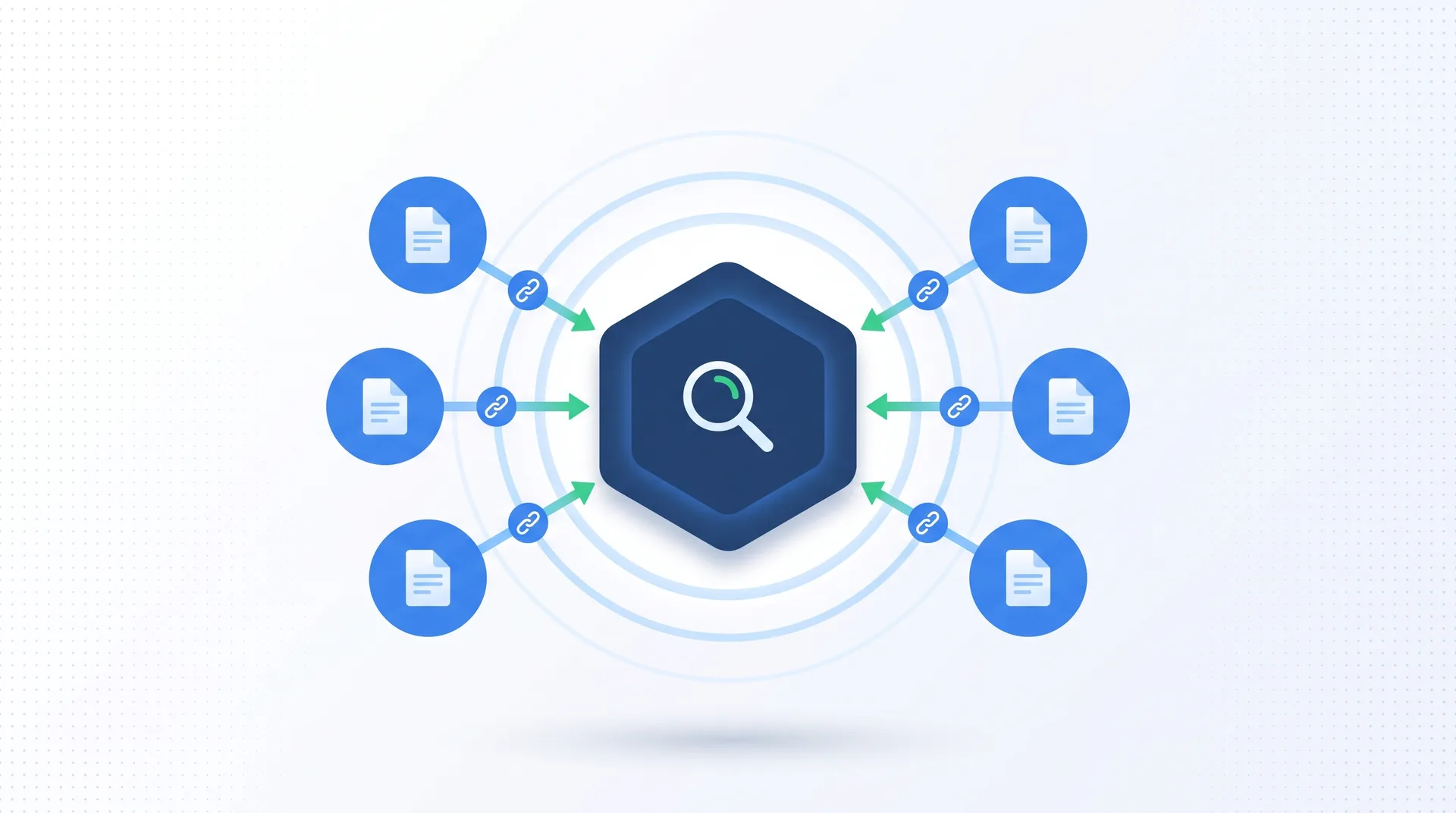
This is where topic clusters and pillar content come in. A pillar page covers a broad topic in your niche. Cluster content dives deep into specific subtopics and links back to the pillar. This structure tells search engines you own that topic. It also keeps users on your site longer because they can easily navigate to related content.
Example: If you're a fitness creator, your pillar page might be 'Complete Guide to Strength Training.' Your cluster content would be posts like 'Best Exercises for Beginners,' 'How to Progressive Overload,' and 'Common Form Mistakes.' Each cluster post links back to the pillar. Each pillar link strengthens the authority of the cluster.
Pillar Content
Comprehensive guides that cover broad topics in your niche. These are your authority-building assets.
Cluster Content
Deep dives into specific subtopics that link back to your pillar pages. These capture long-tail search traffic.
Content Calendar
A publishing schedule that balances evergreen content with trending topics. Consistency compounds results.
Topical Authority
When you publish interconnected content on related topics, search engines see you as an expert. Authority = rankings.
Your Content Strategy Checklist
Identify 3-5 core topics in your niche that you want to own
Create pillar pages for each core topic (2,000-3,000 words minimum)
Build 5-10 cluster posts for each pillar, targeting specific long-tail keywords
Interlink all cluster content back to the pillar and between related clusters
Set up clear navigation so users can easily find related content
Publish consistently (at least 2-4 pieces per month to maintain momentum)
Technical SEO Essentials for Content Creator Websites
Technical SEO is where most content creators lose the game before they even start playing. You can have the best content in your niche, but if your site is slow, broken, or hard to crawl, search engines won't rank you. Period.
Site speed matters. A lot. Google's Core Web Vitals measure loading performance, interactivity, and visual stability. If your site takes more than 3 seconds to load, you're losing visitors before they even see your content. Most creators don't realize their video embeds and unoptimized images are killing their rankings.
Mobile optimization is non-negotiable. The majority of content consumption happens on mobile devices. If your site doesn't load properly on a phone, you're invisible to half your potential audience. Test your site on mobile. If it's clunky, fix it.
Core Web Vitals: Optimize Largest Contentful Paint (LCP), First Input Delay (FID), and Cumulative Layout Shift (CLS). Use Google's PageSpeed Insights to identify issues.
Video SEO: Optimize thumbnails, titles, descriptions, and add transcripts. YouTube prioritizes watch time, but search engines need text to understand your video content.
Schema markup: Add structured data for your creator profile, videos, articles, and reviews. This helps search engines display rich results.
Internal linking: Link related content together. This keeps users on your site longer and helps search engines understand your content structure.
Mobile-first design: Your site should load fast and look good on phones. Test on real devices, not just desktop browser simulations.
Pros
DIY saves money upfront and gives you control over every decision
You learn valuable skills that help you understand your business better
Tools like Google Search Console and PageSpeed Insights are free and accessible
Cons
Technical SEO has a steep learning curve and mistakes can hurt your rankings
Time spent learning and fixing technical issues is time not spent creating content
Some issues (like React-based site crawlability) require developer expertise
CRO Fundamentals: Turning Visitors Into Followers and Customers
Getting traffic is half the battle. Converting that traffic is where real revenue happens. Your conversion rate determines whether your content business is a hobby or a six-figure operation.
For content creators, conversions look different than traditional ecommerce. You're not just selling products. You're building relationships. Your conversion goals might be email signups, social media follows, course purchases, sponsorship inquiries, or affiliate link clicks. Each goal requires a different optimization strategy.
The psychology of conversion boils down to three things: trust, clarity, and urgency. Visitors need to trust you're legitimate. They need to understand exactly what they're getting. And they need a reason to act now instead of later.
Identify your conversion goals: What action do you want visitors to take? Be specific.
Remove friction: Every extra click, form field, or confusing element reduces conversions. Simplify ruthlessly.
Test systematically: A/B test your headlines, CTAs, form placement, and button colors. Small changes compound.
Use social proof: Display follower counts, testimonials, brand partnerships, and results. Proof builds trust.
Create urgency: Limited-time offers, countdown timers, and exclusive bonuses push people to act now.
A/B testing is how you find what actually works. Don't guess. Test. Change one variable at a time and measure the impact. I've seen a simple headline change increase conversions by 40%. But you'll never know what works if you don't test.
High-Converting Content Creator Website Elements
Your website is your conversion machine. Every element should push visitors toward your primary goal. Here's what high-converting creator sites have in common.
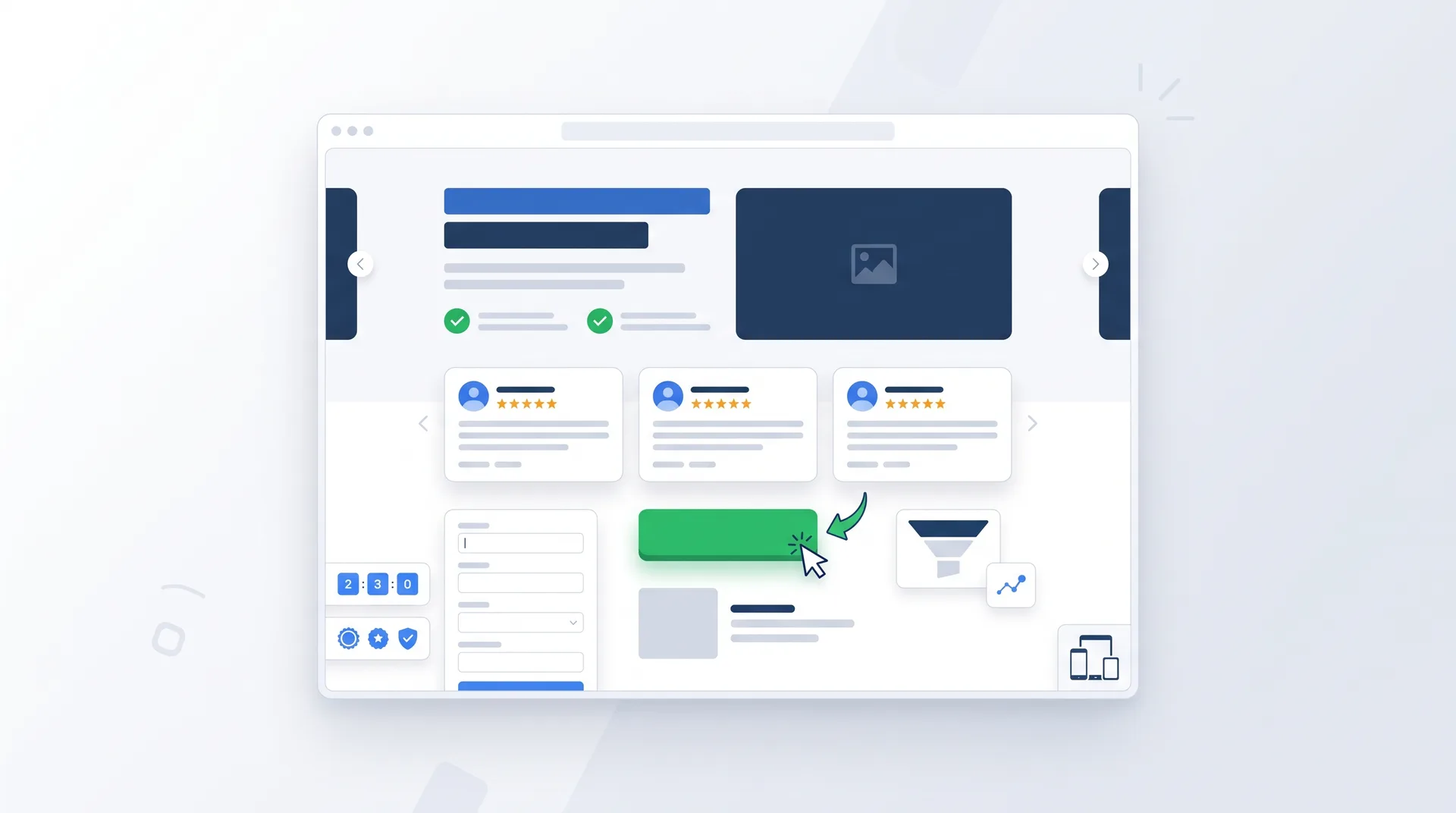
Landing pages are your heavy hitters. Each landing page should focus on one specific offer: a free guide, a course, a consultation. No distractions. No navigation menu. Just the offer and a clear call to action. The best landing pages convert at 10-15%. Most convert at 2-3%. The difference is clarity and focus.
Clear Value Proposition
Tell visitors exactly what they get and why it matters in the first 5 seconds. No fluff.
Strategic CTAs
Place calls to action above the fold, in the middle of content, and at the end. Repeat your ask.
Social Proof
Show testimonials, follower counts, media mentions, and client results. Proof converts skeptics.
Friction-Free Forms
Ask for the minimum information needed. Name and email. That's it. More fields = fewer conversions.
Email opt-in forms are your lifeblood. Email is the only platform you truly own. Social media can disappear overnight. Your email list can't. But most creators bury their opt-in forms or make them annoying pop-ups that trigger on page load. Don't do that.
Use exit-intent pop-ups. They trigger when someone is about to leave your site. You're not interrupting their reading. You're catching them on the way out. And offer something valuable in exchange for their email. A free guide, a checklist, a video tutorial. Give before you ask.
High-Converting Website Checklist
Landing pages focused on one specific offer with no navigation distractions
CTAs placed above the fold, mid-content, and at the end of every page
Exit-intent pop-ups offering valuable lead magnets in exchange for email
Social proof displayed prominently (testimonials, follower counts, partnerships)
Mobile-optimized forms that load fast and work on all devices
Clear, benefit-driven copy that speaks directly to your audience's pain points
Measuring Success: Analytics and Optimization for Content Creators
You can't optimize what you don't measure. Most content creators look at vanity metrics like total followers or page views. Those numbers feel good but don't tell you if your strategy is working.
Track what matters. For SEO, that's organic traffic, keyword rankings, backlinks, and domain authority. For CRO, it's conversion rate, bounce rate, time on page, and goal completions. These metrics tell you if people are finding your content and taking action.
Organic traffic: How many people find you through search? Track this monthly. Growth should be consistent.
Keyword rankings: Are you ranking for your target keywords? Use tools like Ahrefs or SEMrush to monitor positions.
Conversion rate: What percentage of visitors complete your primary goal? Industry average is 2-5%. Aim higher.
Bounce rate: Are people leaving immediately? High bounce rates signal poor content-audience fit or slow load times.
Time on page: Longer time on page means engaged readers. If people leave in 10 seconds, your content isn't resonating.
Goal completions: Track specific actions like email signups, course purchases, or social follows.
Google Analytics and Google Search Console are your foundation. They're free and give you 90% of what you need. Set up goal tracking for your primary conversions. Create a custom dashboard that shows your key metrics at a glance.
Heatmaps and session recordings show you what users actually do on your site. Where do they click? Where do they get stuck? Where do they leave? Tools like Hotjar or Microsoft Clarity (free) record real user sessions. Watch 10-20 recordings and you'll spot patterns. Maybe your CTA is too far down the page. Maybe your form is confusing. You can't see this in analytics alone.
Analytics and Optimization FAQ
What's a good conversion rate for a content creator website?
Industry average is 2-5%. If you're converting at 5-10%, you're doing well. Above 10% is excellent. But conversion rate depends on your traffic quality. 100 highly targeted visitors converting at 10% is better than 10,000 random visitors converting at 1%.
Should I focus on SEO or CRO first when starting my brand?
Start with both, but prioritize based on your traffic. If you have less than 1,000 monthly visitors, focus on SEO first. You need traffic to optimize. Once you're getting consistent traffic, shift focus to CRO. Optimize what you have before chasing more.
Your 90-Day SEO and CRO Action Plan for Brand Growth
Theory is useless without execution. Here's your 90-day roadmap to implement everything we've covered. Follow this plan and you'll see measurable results by month three.
Days 1-30: Foundation and Quick Wins
Start with an audit. Use Google Search Console to see what keywords you're already ranking for. Check your site speed with PageSpeed Insights. Set up Google Analytics goal tracking. These are your baselines.
Do keyword research for your top 3-5 topics. Use free tools like Ubersuggest or AnswerThePublic. Look for long-tail keywords with search volume between 100-1,000 per month. These are your low-hanging fruit.
Fix technical issues. Get an SSL certificate if you don't have one. Optimize your images. Remove broken links. These quick wins improve your rankings immediately.
Days 31-60: Content Creation and Optimization
Create your first pillar page. Pick your strongest topic and write a comprehensive guide (2,000-3,000 words). Optimize it for your primary keyword. Add internal links to related content.
Publish 4-6 cluster posts that support your pillar content. Target specific long-tail keywords. Link each cluster post back to the pillar.
Set up one high-converting landing page. Focus on your primary conversion goal (email signup, course enrollment, etc.). Use exit-intent pop-ups with a valuable lead magnet.
Days 61-90: Testing, Refining, and Scaling
A/B test your primary CTA. Change the headline, button color, or placement. Measure the impact. Keep what works.
Review your analytics. Identify your top-performing content and create similar pieces. Find your worst-performing pages and either improve them or delete them.
Start building backlinks. Reach out to other creators in your niche for guest posts or collaborations. Quality backlinks boost your domain authority.
90-Day Action Plan Checklist
Audit current SEO performance using Google Search Console and PageSpeed Insights
Complete keyword research for your top 3-5 topics
Fix technical SEO issues (SSL, image optimization, broken links)
Create one comprehensive pillar page (2,000-3,000 words)
Publish 4-6 cluster posts targeting long-tail keywords
Set up one high-converting landing page with exit-intent pop-up
A/B test your primary CTA and measure results
Review analytics monthly and optimize top and bottom performers
Build 3-5 quality backlinks through guest posts or collaborations
Most content creators give up right before their SEO efforts start compounding. The first 90 days are hard. The next 90 days are when you see real traction. By month six, you're unstoppable.
Prithvi Jadwani, TechDevs
Ready to Build a Content Brand That Ranks and Converts?
I've helped 250+ clients generate over $35M in revenue through strategic SEO and CRO. If you're serious about turning your content into a scalable business, let's talk. Book a free discovery call and I'll show you exactly what's holding your brand back and how to fix it.