The Ultimate Guide to Scale Your Fashion Brand with SEO and Conversion Rate Optimization in 2026
Discover how to scale your fashion brand in 2026 with proven SEO strategies and conversion rate optimization techniques. Boost traffic, sales, and ROI today.
 Written byPrithvi Jadwani
Table of contents
Summarize this article with AI
TL;DR
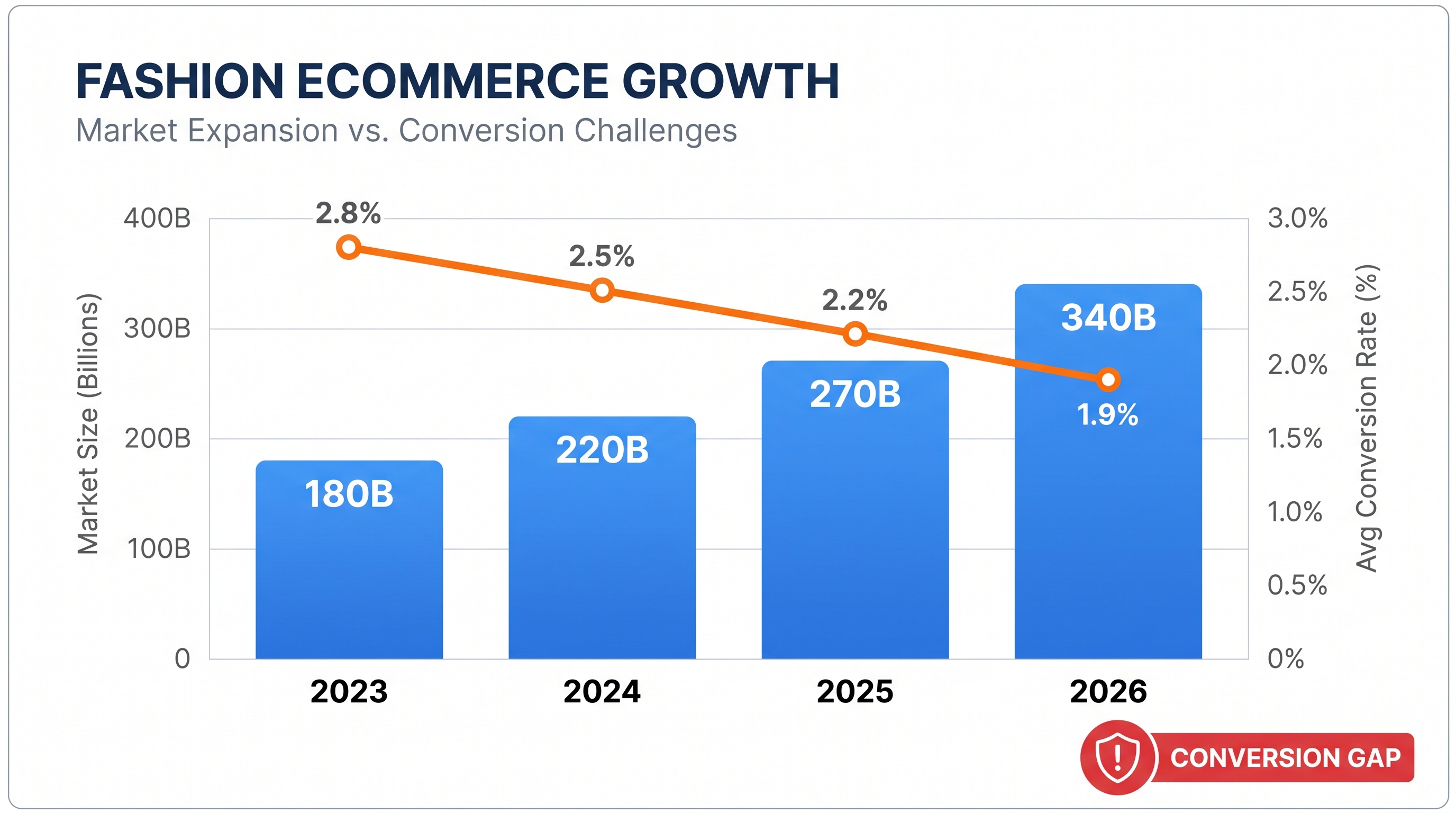
Scaling a fashion brand in 2026 means mastering two disciplines: SEO to drive qualified traffic and CRO to convert that traffic into buyers. The online fashion retail market is exploding toward $1.65 trillion by 2029, but return rates hit 29% and Google's tightened performance standards punish slow sites. You need both engines firing to win.
- Market Size Demands Dual Strategy. Fashion ecommerce is racing to $1.65 trillion, but only brands optimizing for both search visibility and conversion will capture that growth
- Technical Performance Is Non-Negotiable. Google's INP metric means media-heavy fashion sites must load fast and stay responsive or lose rankings and sales
- Returns Kill Profitability. With 29% return rates driven by fit issues, CRO tactics like AI sizing and better product pages are survival tools
- Composable Architecture Wins. Best-of-breed tech stacks that unify SEO, CRO, and personalization let you scale without platform limitations
- 90-Day Roadmap to Results. Start with quick wins in month one, launch experiments in month two, and scale what works by month three
Why Scaling Your Fashion Brand in 2026 Requires Both SEO and CRO
The online fashion retail market is projected to hit $1.65 trillion by 2029. That's not a typo. But here's what nobody tells you: demand is surging while profitability is tanking. Fast-fashion retailers are seeing return rates approach 29%, mostly because shoppers can't figure out if something will fit before they buy it.
And it gets worse. Google shifted its Core Web Vitals from First Input Delay to Interaction to Next Paint in 2024, which means if your product pages are slow or unresponsive, you're losing both search rankings and sales. Media-heavy fashion sites got hit hardest.
So here's the reality: SEO alone won't save you. Neither will CRO. You need both.
SEO drives qualified traffic to your store. CRO converts that traffic into revenue. Most fashion brands optimize one or the other and wonder why they're stuck. The winners in 2026 will be the ones who treat SEO and CRO as two sides of the same coin.
Building Your Fashion Brand's SEO Foundation for Scalable Growth
Fashion SEO isn't like B2B SaaS SEO. Your customers aren't searching for "enterprise solutions" or "best practices." They're searching for "black leather jacket" and "summer dresses under $100." That means your keyword research needs to target transactional intent and visual search behavior.
Start with the technical stuff. If your site takes more than three seconds to load, you've already lost. Image-heavy catalogs are notorious for dragging down performance, so you need aggressive image optimization, lazy loading, and a content delivery network that doesn't suck.
Technical SEO Essentials for Fashion Brands
Optimize all product images with WebP format and compression without quality loss
Implement lazy loading for images below the fold to improve initial page load
Set up structured data for products, reviews, and breadcrumbs so Google shows rich snippets
Ensure mobile-first indexing with responsive design that actually works on small screens
Monitor Core Web Vitals weekly, especially INP for interactive elements like size selectors
Create XML sitemaps for product categories, collections, and editorial content separately
Content strategy is where most fashion brands drop the ball. They optimize product pages but ignore everything else. You need a mix: product pages for transactional keywords, style guides for mid-funnel searches, and trend-focused editorial content to capture top-of-funnel traffic.
Link building in fashion is different too. You're not chasing backlinks from industry publications. You're building relationships with influencers, getting featured in fashion blogs, and encouraging user-generated content that naturally links back to your site.
Common Fashion SEO Questions
What is the average conversion rate for fashion ecommerce in 2026?
Industry benchmarks hover around 1.5% to 3% for fashion ecommerce, but top performers with optimized CRO strategies can hit 4% to 6%. The key is reducing friction at every step of the buyer journey.
How long does it take to see results from fashion SEO strategies?
Technical fixes and on-page optimization can show results in 4 to 8 weeks. Building authority through content and backlinks takes 3 to 6 months. If someone promises you page-one rankings in 30 days, they're lying or using tactics that will get you penalized.
What are the most important SEO ranking factors for fashion brands?
Site speed and mobile experience are table stakes. After that: high-quality product images with proper alt text, structured data for rich snippets, user reviews and ratings, and editorial content that targets informational queries. Backlinks from fashion publications and influencer mentions still carry weight.
How can AI reduce return rates for online fashion retailers?
AI-powered size recommendation engines analyze customer data to suggest the right fit, reducing returns by up to 30%. Virtual try-on tools using AR let shoppers see how items look before buying. Predictive analytics can also flag high-return products so you can improve descriptions or imagery.
What is a composable commerce stack and why do fashion brands need it?
Composable commerce means using best-of-breed solutions for each function (CMS, search, checkout, personalization) instead of a monolithic platform. Fashion brands need it because you can swap out underperforming tools without rebuilding your entire site, and you can scale individual components independently as traffic grows.
Advanced Technical Architecture to Scale Fashion Brand SEO
Here's where most fashion brands hit a wall: their platform can't keep up with growth. You're adding products, traffic is climbing, and suddenly your site is crawling. That's when you need to think about architecture, not just tactics.
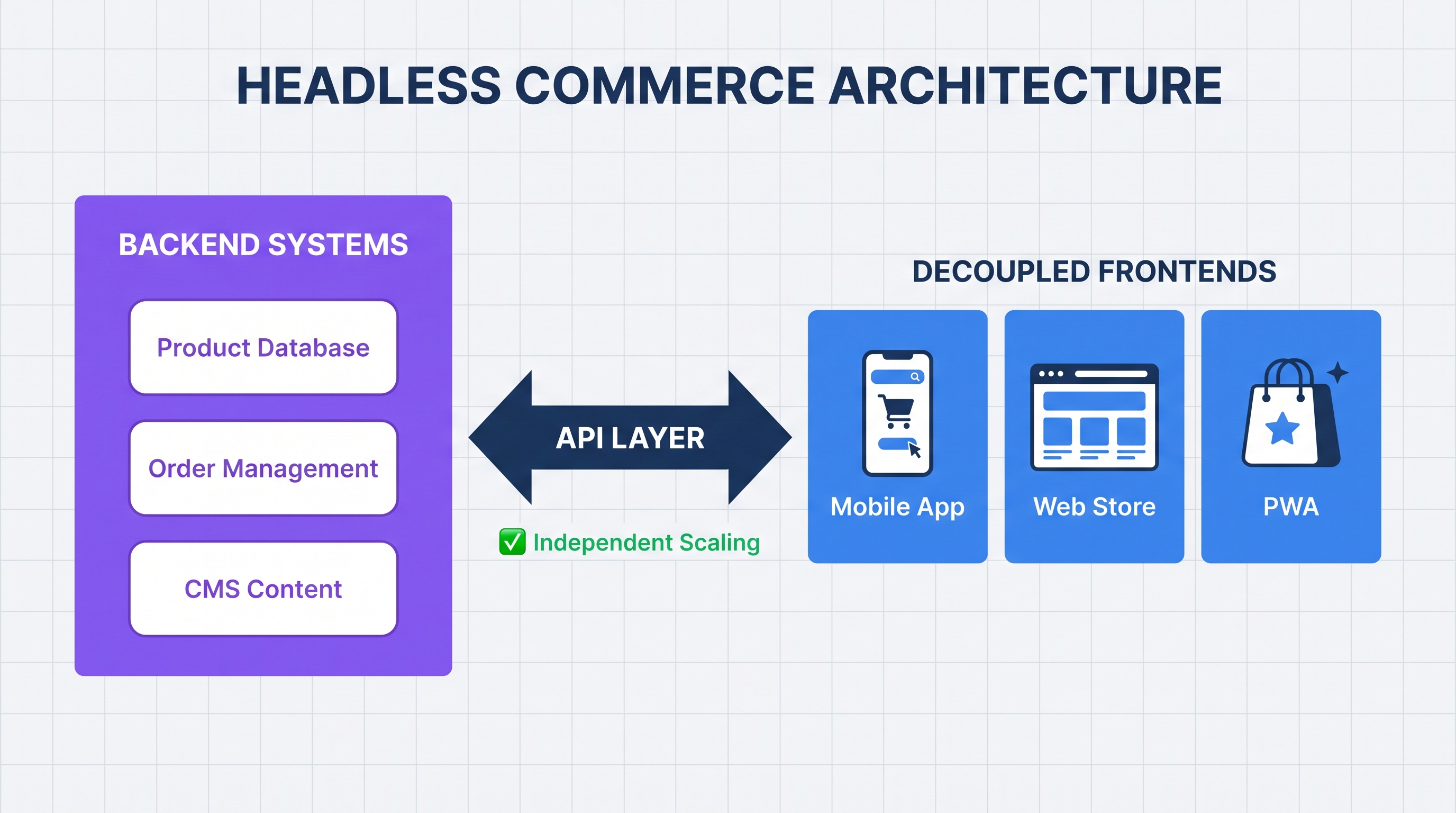
Headless commerce decouples your frontend from your backend. Your product catalog lives in one system, your content management in another, and your storefront pulls from both via APIs. This means you can rebuild your frontend for speed without touching your product data.
Headless Commerce
Decouple frontend performance from backend systems so you can optimize page speed without migrating your entire product catalog.
API-First Approach
Seamlessly integrate SEO tools, analytics platforms, and content management without vendor lock-in or custom code nightmares.
Microservices Architecture
Scale product search, personalization, and checkout independently so one component doesn't bottleneck the entire system.
Edge Computing & CDN
Deliver product pages from servers closest to your customers for sub-second load times globally.
Microservices let you scale individual pieces of your stack. If your search functionality is getting hammered, you scale that service without touching checkout or personalization. This is how you handle Black Friday traffic without crashing.
Use edge computing to serve static assets (images, CSS, JS) from CDN nodes close to your users
Implement real-time monitoring for Core Web Vitals, especially INP for interactive elements like filters and size selectors
Set up automated alerts when page load times exceed thresholds so you catch issues before they tank conversions
Run synthetic monitoring to test performance from different geographic locations and device types
And pay attention to INP. It measures how quickly your site responds to user interactions. If someone clicks a size option and nothing happens for two seconds, they're gone. Fashion sites with lots of interactive elements (filters, quick views, color selectors) need to obsess over this metric.
Conversion Rate Optimization Strategies for Fashion Ecommerce in 2026
Mobile is your primary shopping channel now. Not desktop. Not tablet. Mobile. If your checkout process requires six taps and a scroll to complete, you're losing sales.
Product detail pages are where the magic happens. High-quality imagery isn't optional. Neither are 360-degree views or video content. Shoppers can't touch your products, so you need to show them everything. Zoom functionality, multiple angles, lifestyle shots, detail close-ups.
Mobile-first checkout: One-tap payment options like Apple Pay and Google Pay reduce friction by 40%
AI-driven sizing: Predictive sizing tools that analyze past purchases and returns to recommend the right fit
Social proof everywhere: Reviews, ratings, and user-generated content on every product page
Exit-intent offers: Catch abandoning visitors with targeted discounts or free shipping thresholds
Live chat support: Real-time help during the buying process reduces hesitation and cart abandonment
That 29% return rate? It's killing your margins. AI-powered sizing recommendations can cut returns by up to 30% by suggesting the right size based on customer data and product measurements. Virtual try-on tools using AR let shoppers see how items look before they order.
Pros
Reduces return rates by 20% to 30% with accurate size recommendations
Increases average order value through smart product bundling and cross-sells
Improves customer lifetime value by learning preferences over time
Scales personalization without hiring an army of stylists
Cons
Requires significant upfront investment in data infrastructure and AI tools
Needs clean customer data and purchase history to work effectively
Can feel creepy if not implemented with transparency and user control
May recommend out-of-stock items if inventory systems aren't synced in real-time
The Composable Tech Stack: Unifying SEO, CRO, and Personalization
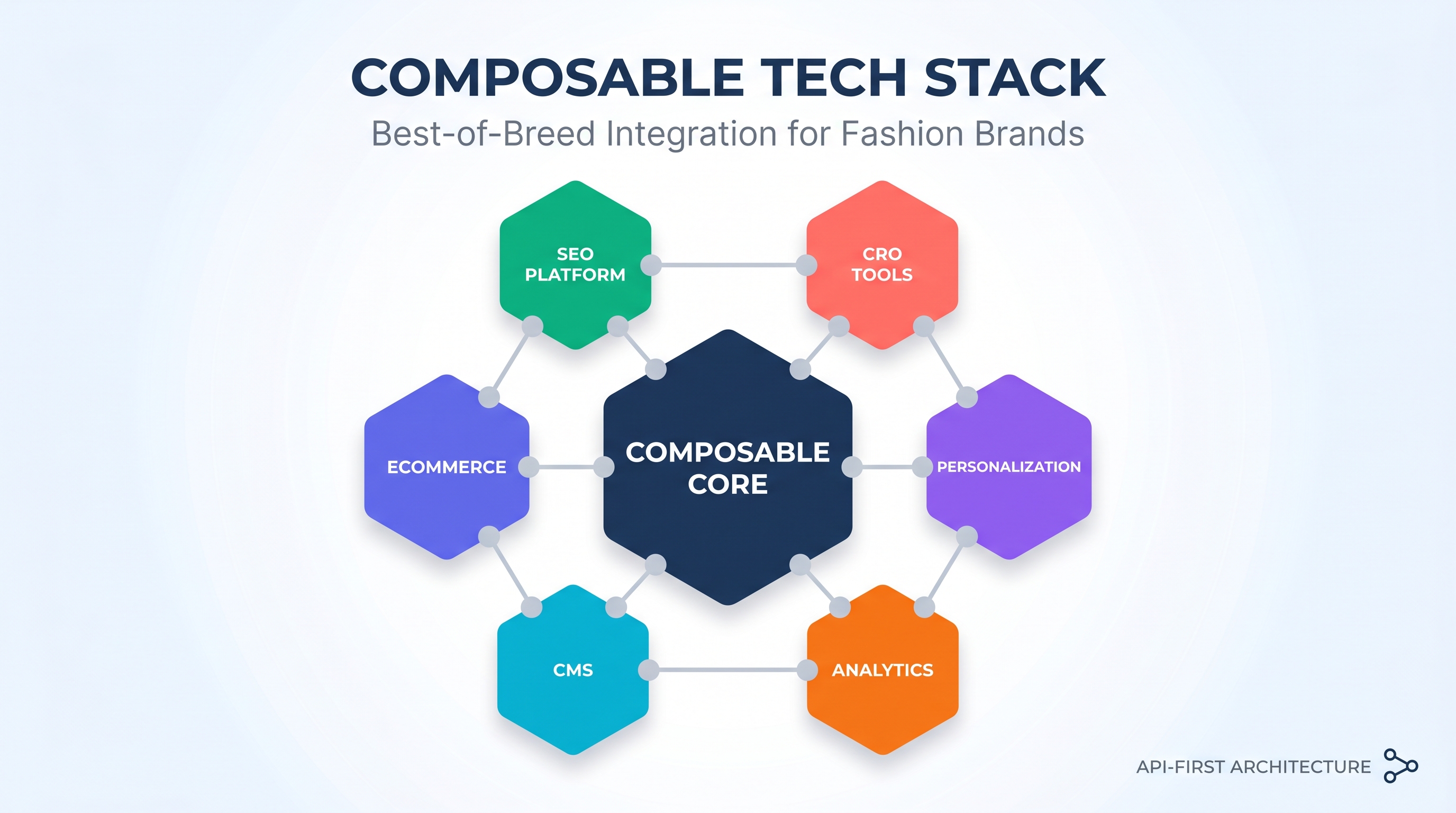
Most fashion brands are stuck on monolithic platforms that promise to do everything but excel at nothing. Composable architecture flips that model. You pick the best tool for each job and connect them via APIs.
Here's what that looks like in practice: a headless CMS for content, a dedicated search engine for product discovery, an A/B testing platform for experimentation, and a recommendation engine for personalization. Each tool is best-in-class, and they all talk to each other.
Headless CMS
Manage editorial content, style guides, and landing pages independently from your product catalog.
Search Optimization
Dedicated search engines that understand fashion queries and return relevant results fast.
A/B Testing Platform
Run experiments on product pages, checkout flows, and navigation without engineering bottlenecks.
Recommendation Engine
AI-powered product suggestions based on browsing behavior, purchase history, and similar customer profiles.
Analytics & Attribution
Unified customer data platform that tracks journeys across channels and attributes conversions accurately.
Automation Layer
Orchestrate workflows across tools using APIs, webhooks, and middleware to keep everything in sync.
The data pipeline is critical. Customer behavior insights need to flow across all systems in real-time. If someone abandons a cart, your email tool needs to know. If they return an item, your recommendation engine should adjust. This requires APIs, webhooks, and middleware that don't break.
Integration is where most brands fail. They buy great tools but can't connect them properly. That's where automation and AI come in. At TechDevs, we use AI to orchestrate the entire stack so data flows seamlessly and you're not manually syncing systems every week.
Data-Driven Experimentation Framework for Fashion Shoppers
You can't optimize what you don't measure. And you can't improve conversion rates by guessing. You need a structured experimentation framework that tests hypotheses, measures results, and scales what works.
A/B testing for fashion ecommerce is different from testing a SaaS landing page. You're testing product imagery, pricing displays, size charts, color swatches, and shipping thresholds. Small changes can have outsized impacts.
Real-Time Experimentation Tactics
What should fashion brands A/B test first?
Start with high-traffic, high-impact pages: product detail pages and checkout. Test one variable at a time: hero image vs. lifestyle shot, free shipping threshold at $50 vs. $75, size chart placement above vs. below the fold. Run tests for at least two weeks to account for weekly traffic patterns.
How do feature flags help fashion brands?
Feature flags let you roll out personalization features to a small percentage of users first. If the feature performs well, you expand it. If it tanks conversions, you turn it off without deploying new code. This is critical for testing AI recommendations or new checkout flows.
What is multivariate testing and when should you use it?
Multivariate testing examines multiple variables simultaneously to see how they interact. For example, testing product image style AND pricing format AND CTA button color together. Use it when you have enough traffic to reach statistical significance (usually 10,000+ visitors per week) and want to understand complex interactions.
Micro-conversions matter as much as purchases. Track wishlist adds, size guide views, filter usage, and video plays. These signals tell you what's working even if someone doesn't buy immediately.
Build a Culture of Continuous Experimentation
Run at least one A/B test per week on high-traffic pages
Document every test hypothesis, methodology, and results in a shared knowledge base
Set up automated alerts for statistically significant results so you can act fast
Review losing tests to understand why they failed and generate new hypotheses
Scale winning tests across similar pages and product categories
Involve your entire team in brainstorming test ideas, not just marketers
Analytics setup is non-negotiable. You need event tracking for every interaction: clicks, scrolls, form submissions, video plays. Google Analytics 4 is fine, but you'll want a customer data platform that unifies behavior across sessions and devices.
Emerging Channels and Omnichannel Integration for Fashion Brands
AR try-on technology isn't a gimmick anymore. It's a conversion driver. Shoppers who use virtual try-on features are 2x more likely to complete a purchase and 30% less likely to return items. That directly attacks the 29% return rate problem.
Social commerce is exploding. TikTok Shop and Instagram Shopping aren't just discovery channels. They're full-funnel sales platforms where Gen Z and millennial shoppers complete purchases without leaving the app. If you're not optimizing for social commerce, you're invisible to an entire demographic.
AR/VR Try-On
Let shoppers visualize how products look on them before buying, reducing returns and boosting confidence.
Social Commerce
Sell directly on TikTok, Instagram, and Pinterest where your customers are already scrolling and discovering.
Voice Search Optimization
Optimize for conversational queries like 'find me a black dress for a wedding under $200' as voice shopping grows.
Omnichannel Integration
Unify online and offline experiences with BOPIS, virtual styling appointments, and showroom bookings.
Voice search is coming. Alexa and Google Assistant aren't just playing music anymore. Shoppers are using voice to search for products, and the queries are conversational. 'Find me a black leather jacket under $300' is different from typing 'black leather jacket.' Your content needs to match that intent.
BOPIS (Buy Online, Pick Up In Store): Bridges online convenience with offline immediacy, driving foot traffic to physical locations
Virtual styling appointments: Live video consultations with stylists who can recommend products and complete sales remotely
Showroom bookings: Let online shoppers book in-person appointments to see products before committing to a purchase
Unified customer data platform: Track cross-channel journeys so you know if someone browsed on mobile, visited a store, and bought on desktop
Omnichannel isn't buzzword fluff. It's table stakes. Customers don't think in channels. They browse on Instagram, research on Google, check reviews on your site, visit your store, and buy on mobile. If you can't track that journey and attribute conversions accurately, you're flying blind.
Your 90-Day Action Plan to Scale Your Fashion Brand with SEO and CRO
Let's make this concrete. Here's what the first 90 days look like when you commit to scaling with SEO and CRO.
Month 1: Audit and Foundation
Run a full technical SEO audit. Identify site speed issues, mobile usability problems, and structured data gaps. Fix the low-hanging fruit first: compress images, implement lazy loading, add product schema markup. Simultaneously, audit your conversion funnel. Where are people dropping off? Is it the product page? Checkout? Shipping costs?
Set up proper analytics and event tracking. If you're not measuring micro-conversions, you're missing the story.
Month 2: Experimentation and Content
Launch your first A/B tests on high-traffic product pages. Test hero images, CTA button copy, and social proof placement. Build a content calendar that targets informational keywords: style guides, trend reports, how-to articles. Start reaching out to fashion bloggers and influencers for backlinks and partnerships.
Month 3: Scale and Optimize
Take your winning tests and apply them across similar product categories. Expand to emerging channels: set up TikTok Shop, optimize for social commerce, test AR try-on if you have the budget. Establish ongoing optimization processes so this doesn't stop after 90 days.
90-Day Implementation Checklist
Complete technical SEO audit and fix critical issues (site speed, mobile usability, structured data)
Set up comprehensive analytics with event tracking for all key interactions
Launch at least 3 A/B tests on high-traffic pages (product pages, checkout, homepage)
Publish 8-12 pieces of SEO-optimized content targeting informational and transactional keywords
Build relationships with 5-10 fashion influencers or bloggers for backlinks and partnerships
Implement AI-powered size recommendations or virtual try-on to reduce return rates
Expand to at least one new sales channel (TikTok Shop, Instagram Shopping, or voice commerce)
Document all test results and create a knowledge base for future optimization efforts
Key metrics to track: organic traffic growth (aim for 20% to 30% increase in 90 days), conversion rate improvement (even a 0.5% lift is significant), return rate reduction (target 5% to 10% decrease), and customer lifetime value (repeat purchases matter more than one-time buyers).
Ready to Scale Your Fashion Brand with SEO and CRO?
We've helped fashion brands cut return rates, boost conversions, and scale profitably using the exact strategies in this guide. Let's talk about your growth goals and build a custom roadmap.