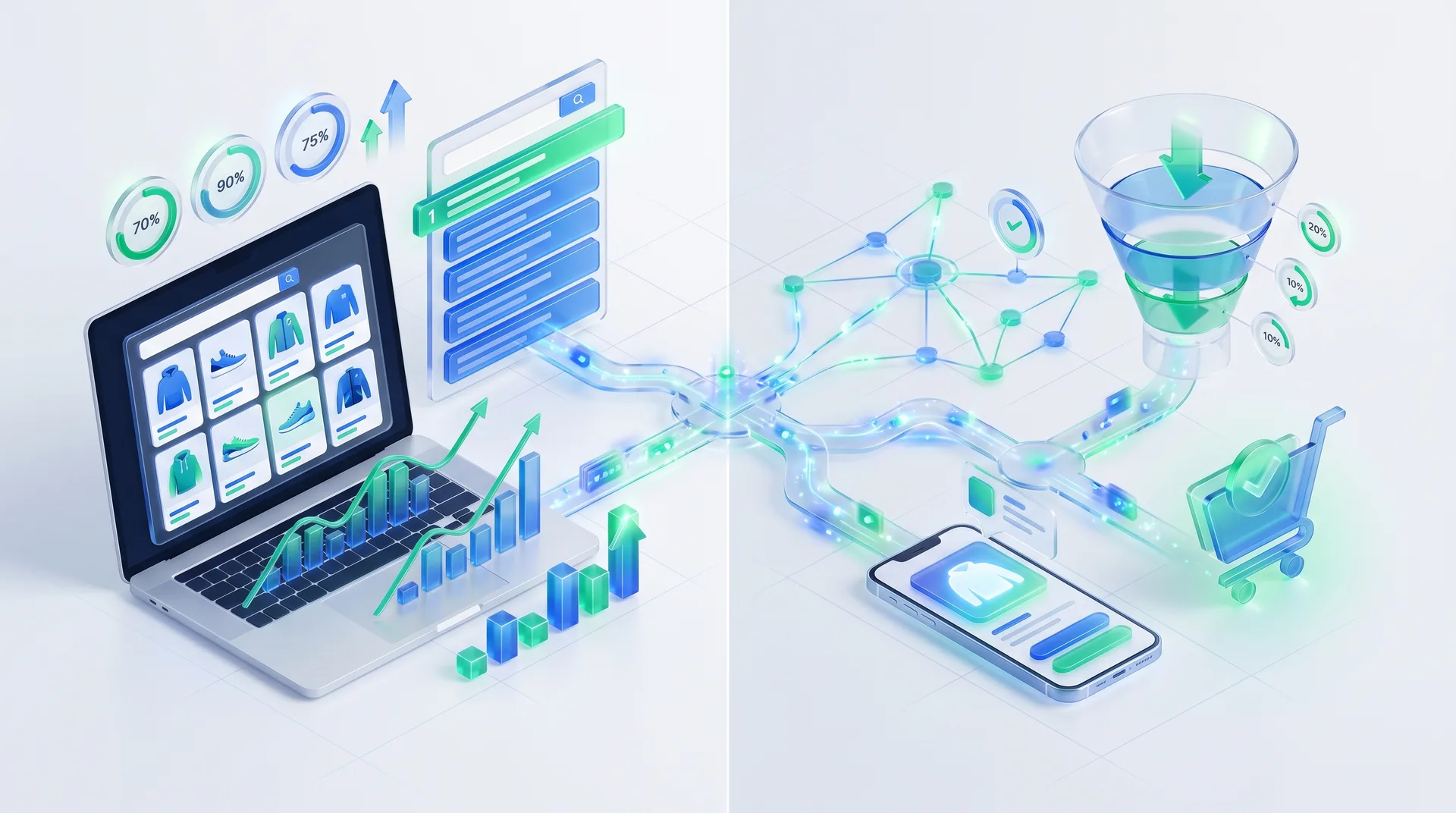
The Ultimate Framework to Scale Your Hospitality Brand Through SEO and CRO
Master the ultimate framework combining SEO and CRO to scale your hospitality brand. Boost bookings, increase revenue, and dominate search rankings today.
 Written byPrithvi Jadwani
Table of contents
Summarize this article with AI
TL;DR
Most hospitality brands waste money on traffic that never converts. The real play? Combine SEO that brings qualified travelers to your site with CRO that turns those visitors into confirmed bookings. This framework shows you exactly how to build a growth engine that reduces OTA dependence and prints money through direct bookings.
- SEO Brings the Right Guests. Rank for destination-based searches and capture travelers actively looking for what you offer
- CRO Converts Traffic Into Revenue. Optimize booking flows, speed, and trust signals to turn visitors into confirmed reservations
- Cut OTA Dependency. Drive more direct bookings and keep commission dollars in your pocket
- Compound Growth Over Time. Each improvement to SEO and CRO builds on the last, creating sustainable momentum
Why SEO and CRO Are the Power Duo for Hospitality Growth
Here is what kills me about the hospitality industry: brands spend thousands on beautiful websites and then watch 90% of their traffic bounce without booking. They rank on page two of Google and wonder why occupancy is down. They pay 15-20% commissions to OTAs because their own site can't convert.
The truth? Most travelers start their accommodation search on Google. If you are not showing up in those first few results, you might as well not exist. And if you do show up but your booking flow is broken, you are just sending free traffic to Booking.com.
SEO and CRO are not separate strategies. They are two halves of the same growth engine. SEO gets qualified travelers to your site. CRO makes sure they book. One without the other is like having a storefront with no door.
Understanding Hospitality SEO: The Foundation of Online Visibility
Hospitality SEO is not generic SEO with a hotel logo slapped on it. Travelers search differently than B2B buyers or e-commerce shoppers. They use destination-based queries. They search for specific amenities. They want to see exactly what they are getting before they book.
When someone searches 'boutique hotel downtown Austin with rooftop pool', they are not browsing. They are ready to book. That search has intent baked into it. Your job is to show up for those high-intent searches and make the booking decision easy.
Geo-Specific Visibility
Most hotel searches include a location. Optimize for 'hotels in [city]', '[neighborhood] accommodation', and local landmarks to capture travelers at the decision stage.
Attract Your Ideal Guests
Target searches that match your property type: 'family-friendly resort', 'pet-friendly hotel', 'business hotel near convention center'. Specificity brings better-fit guests.
Reduce OTA Dependence
When you rank organically, you own the customer relationship. No 15% commission. No competing with yourself on third-party platforms. Just direct bookings at full margin.
Build Long-Term Assets
Paid ads stop working the moment you stop paying. SEO compounds. Every piece of optimized content, every quality backlink, every technical improvement builds equity that keeps working.
Destination terms dominate hotel searches (city names, neighborhoods, landmarks)
Amenity-specific queries signal high intent ('hotel with spa', 'ocean view rooms')
Traveler type keywords help you attract the right guests ('romantic getaway', 'corporate retreat')
Local SEO signals like Google Business Profile and local citations capture mobile searchers
The Complete Hospitality SEO Strategy Framework
Most hotels treat SEO like a checklist. They stuff keywords into meta tags and call it done. That is not a strategy. That is checking boxes. Here is what actually moves the needle.
Core SEO Components for Hospitality Brands
How do I approach keyword research for a hotel website?
Start with destination terms (your city, neighborhood, nearby attractions). Then layer in your property type (boutique, resort, business hotel) and key amenities (pool, spa, pet-friendly). Use tools like Ahrefs or SEMrush to find search volume, but also talk to your front desk staff. They hear exactly how guests describe what they want. Those phrases are gold.
What technical SEO factors matter most for hotel websites?
Site speed is non-negotiable. A slow booking engine kills conversions before they start. Mobile responsiveness is critical because significant hotel searches happen on smartphones. Structured data markup (schema.org/Hotel) helps Google understand your property details and show rich results. Clean URL structure and proper XML sitemaps ensure all your pages get crawled and indexed.
How should I optimize on-page elements for better rankings?
Title tags and meta descriptions should include your location and primary amenity (example: 'Boutique Hotel in Downtown Austin | Rooftop Pool & Spa'). Use H1 tags for page headlines, H2s for major sections. Internal linking between your room pages, amenities, and location guides helps Google understand your site structure and passes authority between pages. Every page should answer a specific traveler question.
What kind of content actually helps hotel SEO?
Create content that answers real traveler questions. Neighborhood guides. Event calendars. 'Things to do near our hotel' posts. Room comparison pages. These rank well because they satisfy search intent. But here is what most hotels miss: the content should guide toward booking, not just inform. Every piece should have a clear path to your booking engine.
Why is local SEO so important for hospitality brands?
Because travelers search locally. They use phrases like 'hotels near me' or 'best hotel in [neighborhood]'. Your Google Business Profile is often the first thing they see. Optimize it with accurate info, high-quality photos, and fresh reviews. Get listed in local directories. Build citations with consistent NAP (name, address, phone) across the web. Local backlinks from tourism boards, local blogs, and event sites signal relevance to Google.
Technical SEO Priorities for Hotels
Audit site speed and optimize images, scripts, and hosting for sub-3-second load times
Implement mobile-first design with responsive booking flows across all devices
Add structured data markup (schema.org/Hotel) to help search engines understand your property
Create and submit XML sitemaps to Google Search Console and Bing Webmaster Tools
Fix crawl errors, broken links, and duplicate content issues flagged in Search Console
Optimize internal linking structure to distribute page authority and improve navigation
I tested this framework with a boutique hotel in San Diego. They were ranking on page three for their primary keywords. We rebuilt their technical foundation, created location-specific content, and optimized their Google Business Profile. Six months later, they were ranking in the top three for 'boutique hotel Gaslamp Quarter' and direct bookings were up 40%.

Conversion Rate Optimization: Turning Traffic Into Bookings
You can have all the traffic in the world. If your booking engine loads slowly, if your pricing is confusing, if your trust signals are weak, you are just paying for visitors who leave and book on Expedia.
CRO is about removing friction. Every extra click is a chance for someone to bounce. Every unclear step in your booking flow is revenue walking out the door. Website performance and speed optimization keeps users engaged and drives them toward that 'confirm booking' button.
Page speed matters more than you think. A one-second delay can tank your conversion rate by double digits. Compress images. Lazy-load content. Use a CDN. Make your site fast.
Simplify your booking flow. Remove unnecessary form fields. Show pricing clearly upfront. Make the path from room selection to confirmation as short as possible.
Mobile optimization is not optional. Most hotel searches start on mobile. If your booking engine is clunky on a phone, you have already lost the booking.
Trust signals close deals. Guest reviews, security badges, clear cancellation policies, and visible contact info all reduce booking anxiety. Show them prominently.
Test everything. A/B test your CTAs, your room descriptions, your photo galleries. Small changes compound into major revenue lifts.
Pros
Clear, prominent 'Book Now' buttons on every page
Fast-loading pages with optimized images and scripts
Simple booking flows with minimal required fields
Visible trust signals like reviews, security badges, and contact info
Mobile-first design that works seamlessly on all devices
Cons
Hiding pricing until the last step of the booking process
Requiring account creation before allowing a booking
Slow-loading image galleries that frustrate mobile users
Complicated booking engines with too many steps and unclear navigation
Buried contact information and lack of visible customer support options
I worked with a resort that had solid traffic but terrible conversion. Their booking engine took seven clicks to complete a reservation. We simplified it to three clicks, added trust badges, and optimized for mobile. Conversion rate jumped from 1.8% to 4.2% in six weeks. Same traffic, more than double the bookings.
The Integrated SEO-CRO Framework for Hospitality Brands
Here is where it clicks: SEO and CRO are not separate projects. They feed each other. Better user experience improves your rankings. Higher rankings bring more traffic to convert. It is a flywheel, not a linear process.
When you optimize page speed for CRO, you are also improving your SEO. When you create content that ranks well, it should also guide visitors toward booking. When you fix your mobile experience, you are helping both search visibility and conversion rates. Every improvement serves both goals.
Speed Impacts Everything
Fast-loading pages rank better in search results AND convert more visitors into bookings. One optimization, two benefits. Start here.
User Experience is a Ranking Factor
Google measures engagement metrics like bounce rate and time on site. A confusing booking flow hurts your SEO, not just your conversion rate.
Content Should Rank AND Convert
Your blog posts and landing pages need to satisfy search intent (for rankings) and include clear paths to booking (for conversions). Write for both.
Data Informs Both Strategies
Use Search Console to find high-traffic, low-conversion pages. Those are your CRO opportunities. Use Analytics to find high-converting content. Create more of it.

Leveraging AI and Automation for Scalable Hospitality Marketing
AI is not going to replace your marketing team. But marketers who use AI are going to replace marketers who don't. The difference is knowing where AI adds value and where it creates garbage.
Use AI to handle the repetitive, data-heavy tasks. Keyword research. Competitor analysis. A/B test monitoring. Content optimization suggestions. These are areas where AI can process more data faster than any human. But strategy, brand voice, and final decision-making? That is still you.
Automate keyword research and competitor tracking. Tools like Ahrefs and SEMrush use AI to surface opportunities you would miss manually. Let them do the heavy lifting.
Use AI for content optimization, not content creation. AI can suggest improvements to existing content, identify gaps, and recommend internal links. But AI-generated blog posts are easy to spot and hard to rank.
Deploy chatbots to guide booking decisions 24/7. An AI assistant can answer common questions, show available rooms, and push visitors toward booking when your team is offline.
Automate A/B testing and conversion tracking. Platforms like Optimizely and VWO can run continuous tests and surface winning variations faster than manual testing.
Set up marketing automation for guest engagement. Pre-arrival emails, post-stay review requests, and re-engagement campaigns can all run on autopilot once configured properly.
The best use of AI in hospitality marketing is to make your team faster and more efficient, not to replace human judgment. Use it to analyze data, automate repetitive tasks, and surface insights. But keep a human in the loop for strategy and brand decisions.
Prithvi Jadwani, TechDevs
One warning: AI hallucinates. It makes up statistics. It generates meta descriptions that sound good but are factually wrong. Always verify AI output before it goes live. I have seen too many hotel sites publish AI-generated content that ranks for a week and then tanks because Google figured out it was low-quality slop.
Measuring Success: Key Metrics and Analytics
You can't optimize what you don't measure. And most hotels are measuring the wrong things. Vanity metrics like total traffic or social media followers don't pay the bills. Here is what actually matters.
Essential Metrics to Track
Organic search traffic and keyword rankings in Google Search Console
Conversion rate by traffic source (organic, direct, referral, paid)
Booking abandonment rate and where users drop off in the funnel
Average booking value and revenue per visitor
Direct booking percentage vs OTA bookings
Page load speed and Core Web Vitals scores
Mobile vs desktop conversion rates
Set up Google Analytics 4 and Google Search Console if you haven't already. Connect them. Create custom dashboards that show your key metrics at a glance. Review them weekly. When you see a metric trending down, dig into the data to understand why. When you see something working, double down on it.
Calculate your ROI by comparing the increase in direct booking revenue against your marketing investment. If you spend $5,000 a month on SEO and generate an extra $25,000 in direct bookings, that is a 5x return. Most hotels see 3-7x ROI from a properly executed SEO and CRO strategy within 12 months.
Your Action Plan: Implementing the Framework
Strategy without execution is just a PDF that sits in a folder. Here is how to actually implement this framework and start seeing results.
Step-by-Step Implementation Guide
What should I do first to improve my hotel's SEO?
Start with a comprehensive SEO audit. Use tools like Screaming Frog, Ahrefs, and Google Search Console to identify technical issues, keyword gaps, and content opportunities. Fix the low-hanging fruit first: broken links, slow pages, missing meta tags. Then move to keyword research and content creation. Quick wins build momentum.
How do I prioritize CRO improvements with limited resources?
Focus on high-traffic pages first. Your homepage, room listing pages, and booking engine are where most conversions happen (or don't). Run speed tests. Simplify your booking flow. Add trust signals. These changes have the biggest impact with the least effort. Save complex redesigns for later.
What content should I create to rank for hospitality keywords?
Build a content calendar around destination guides, local events, amenity highlights, and traveler questions. 'Best restaurants near [your hotel]', 'Things to do in [neighborhood]', 'Your guide to [local event]'. These rank well and guide readers toward booking. Publish consistently, not in bursts.
How often should I test and optimize my booking funnel?
Run at least one A/B test per month on high-impact elements: CTAs, room descriptions, photo placements, pricing displays. Let tests run for at least two weeks or 1,000 visitors per variation to get statistical significance. Implement winners, archive losers, move to the next test. Continuous improvement compounds.
What tools do I need to track SEO and CRO performance?
Google Analytics 4 and Google Search Console are non-negotiable and free. Add a heatmap tool like Hotjar or Microsoft Clarity to see where users click and scroll. Use an SEO platform like Ahrefs, SEMrush, or Moz for keyword tracking and competitor analysis. For A/B testing, Optimizely or VWO work well. Start with the free tools and add paid ones as you scale.
How do I know if my SEO and CRO efforts are working?
Track organic traffic growth, keyword rankings, conversion rate, and direct booking percentage. Set quarterly goals and review progress monthly. If organic traffic is up but conversions are flat, focus on CRO. If conversions are strong but traffic is stagnant, double down on SEO. The data tells you where to focus next.
Should I hire an agency or build an in-house team?
Depends on your scale and budget. Small to mid-size hotels usually get better ROI from an agency because you get experienced specialists without full-time salaries. Large hotel chains with multiple properties often benefit from an in-house team supplemented by agency expertise for specialized work. Either way, make sure whoever is doing the work has hospitality experience. Generic SEO does not work for hotels.
Create a 90-day roadmap. Weeks 1-4: audit and quick fixes. Weeks 5-8: content creation and on-page optimization. Weeks 9-12: CRO testing and measurement setup. Review results at the end of the quarter, adjust strategy, and plan the next 90 days. Momentum builds faster than you think when you stay consistent.
Ready to Scale Your Hospitality Brand?
Stop losing bookings to OTAs. Let's build an SEO and CRO strategy that drives direct reservations and keeps more revenue in your pocket. Book a free discovery call and I will show you exactly where your biggest opportunities are.