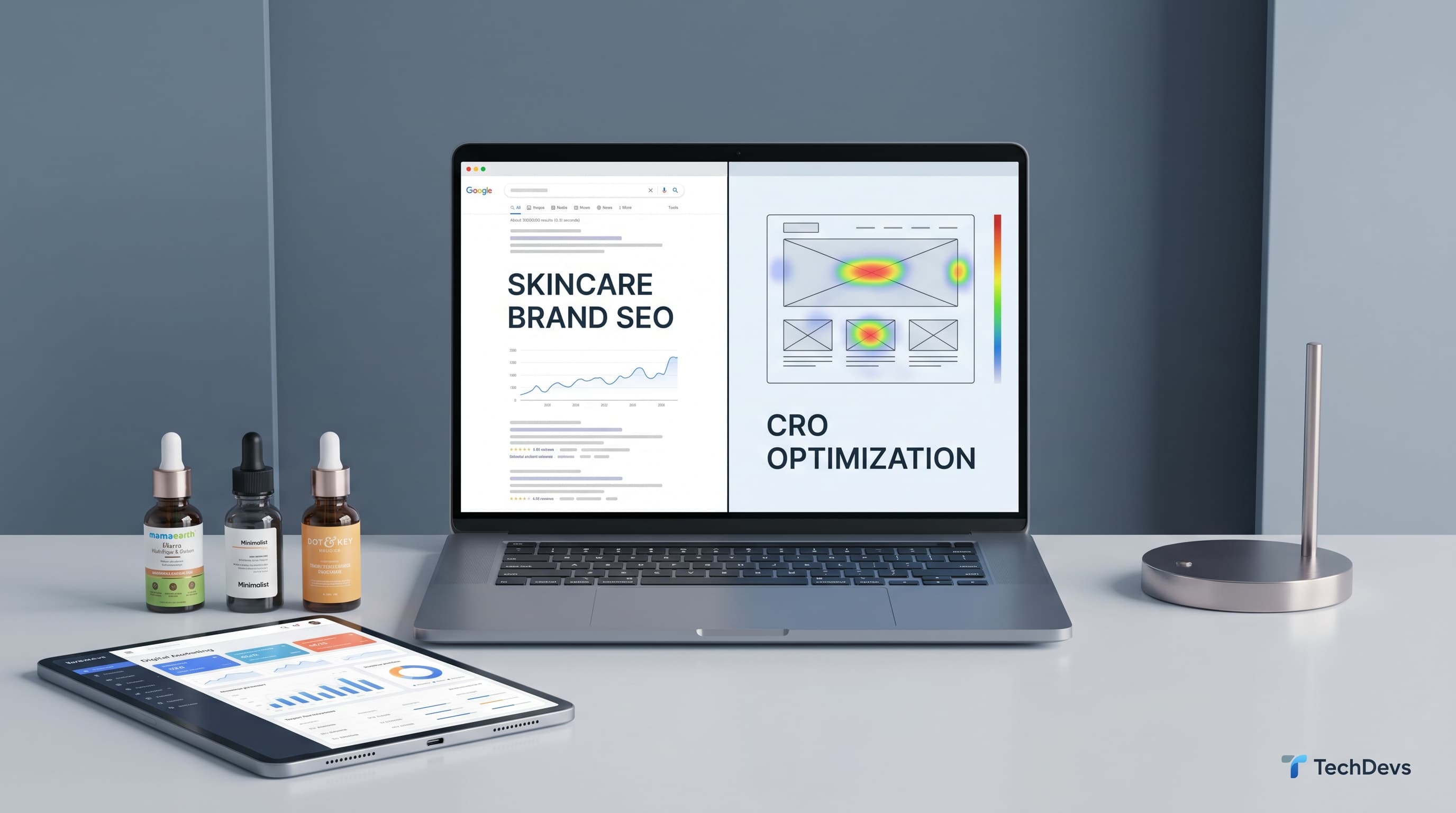
The Ultimate SEO and CRO Framework for Streetwear Brands in 2026
Master the ultimate SEO and CRO framework for streetwear brands in 2026. Boost visibility, conversions, and revenue with proven strategies. Read now!
 Written byPrithvi Jadwani
Table of contents
Summarize this article with AI
TL;DR
Most streetwear brands throw money at Instagram ads and pray something sticks. The ones printing money in 2026? They're combining SEO and CRO into a single framework that captures demand at every stage and converts it efficiently. I've watched brands go from $15K to $300K monthly revenue using this exact approach.
- SEO Without CRO is Traffic Without Revenue. Ranking for 'oversized graphic hoodie' means nothing if your product page converts at 0.8%. The best streetwear brands optimize both simultaneously.
- Technical SEO is Your Competitive Edge. Image-heavy sites that load in under 2 seconds rank higher and convert better. Most streetwear brands ignore this and lose to faster competitors.
- Search Intent Drives Product Development. Smart brands use keyword data to decide what products to make, not just how to market them. Search volume tells you what customers actually want.
- The Framework Reduces CAC by 60%+. Paid ads cost money forever. SEO + CRO compounds. Brands allocating 15-25% of revenue to marketing in year one can cut that to 8-12% by year two with this approach.
Why Streetwear Brands Need an Integrated SEO and CRO Framework in 2026
The streetwear market is drowning in competition. Every week, another brand launches with the same playbook: build hype on Instagram, drop a limited collection, pray the algorithm shows it to the right people. Most clothing brands allocate 15-25% of revenue to marketing in their first year, and the majority of that budget goes to paid social ads that stop working the second you stop paying.
Here is what nobody tells you: the brands winning in 2026 are the ones who figured out how to own their traffic. They're not renting attention from Meta. They're building search real estate that compounds over time.
I've worked with streetwear brands doing $15K a month who jumped to $300K within 18 months by implementing an integrated SEO and CRO framework. Not because they had better products. Because they stopped bleeding money on ads and started capturing demand that already existed.
The shift is real. Consumers are moving from social-first to search-first buying behavior. They're typing 'minimalist streetwear brand' into Google before they scroll Instagram. They're searching 'oversized graphic hoodie' when they know what they want. If you're not showing up in those searches, you don't exist.
AI and automation have leveled the playing field. Small streetwear brands can now compete with established retailers without hiring a full marketing team. You just need the right framework and the discipline to execute it.
Phase 1: Foundation - Technical SEO Setup for Streetwear Ecommerce
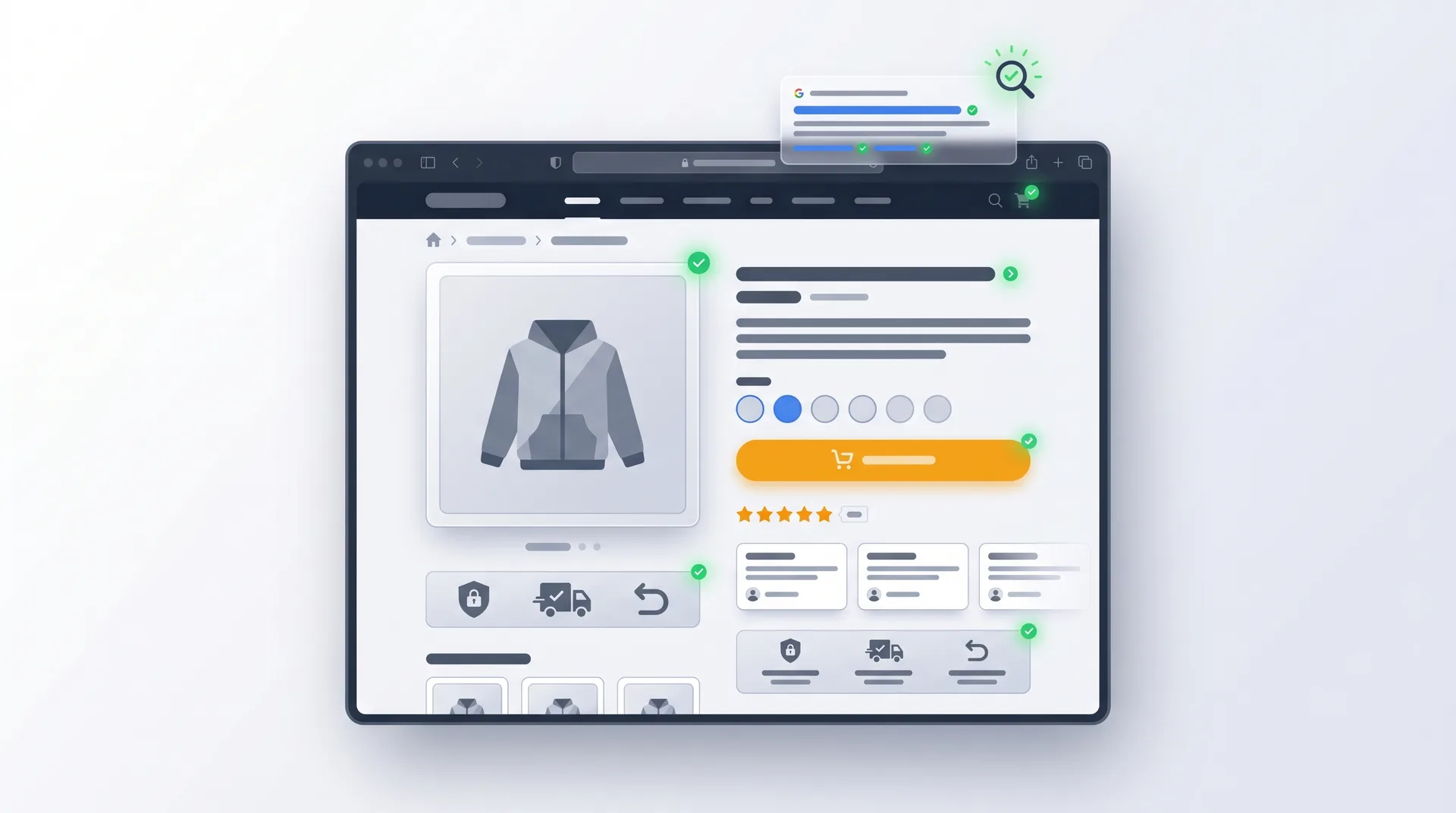
Most streetwear brands launch with a Shopify theme, upload their lookbook photos, and wonder why they're not ranking. Here is the problem: your site is probably slow, your images are massive, and Google's crawler is struggling to understand what you're selling.
Technical SEO is not glamorous. But it's the foundation everything else is built on. If your site loads in 6 seconds on mobile, nothing else you do will matter. The best product photography in the world won't save a site that makes users wait.
Technical SEO Checklist for Streetwear Sites
Site loads in under 2 seconds on mobile (compress images, use lazy loading, enable caching)
URL structure follows best practices: /collections/hoodies, /products/oversized-graphic-hoodie-black
Schema markup installed for products, reviews, pricing, and availability
Mobile-first design tested on actual devices (not just Chrome DevTools)
Core Web Vitals passing Google's thresholds (LCP under 2.5s, FID under 100ms, CLS under 0.1)
XML sitemap submitted to Google Search Console
HTTPS enabled with valid SSL certificate
Image optimization is critical for streetwear brands. Your product photos and lookbook shots are probably 5-10MB each. Google penalizes slow sites. Compress every image to under 200KB without losing quality. Use WebP format. Enable lazy loading so images only load when users scroll to them.
Schema markup is how you tell Google exactly what's on your page. Product schema shows your price, availability, and reviews directly in search results. That little star rating you see under some search results? That's schema markup. It increases click-through rates by 20-30% because users trust sites that show reviews before they even click.
Common Technical SEO Questions
How do I know if my site is mobile-friendly?
Use Google's Mobile-Friendly Test tool. But also test it yourself on your phone. If you have to pinch and zoom to read text or tap buttons, it's not mobile-friendly. Most streetwear traffic comes from mobile devices, so this is non-negotiable.
What's the fastest way to improve site speed?
Compress your images. That's the single biggest win for most streetwear sites. Use a tool like TinyPNG or Squoosh to compress images to under 200KB each. Then enable caching and lazy loading. Those three changes will cut your load time in half.
Do I need to hire a developer for technical SEO?
Not necessarily. If you're on Shopify, most technical SEO can be handled with apps and theme settings. But if you're on a custom build or WordPress, you'll probably need developer help for schema markup and Core Web Vitals optimization.
How often should I audit my technical SEO?
Monthly at minimum. Set up Google Search Console and check it weekly for errors. Run a full technical audit quarterly. Sites change, plugins update, and things break. Catching issues early prevents ranking drops.
Phase 2: Streetwear-Specific Keyword Research and Content Strategy
Keyword research for streetwear is different than keyword research for SaaS or B2B services. You're dealing with style tribes, subcultures, seasonal drops, and rapidly shifting trends. The keywords that worked six months ago might be dead now.
Start by separating high-intent keywords from informational ones. 'Oversized graphic hoodie' is high-intent. Someone searching that is ready to buy. 'How to style oversized hoodies' is informational. They're researching, not purchasing. You need both, but your product pages should target high-intent keywords while your blog targets informational ones.
Product category keywords: 'cargo pants streetwear', 'minimalist hoodie', 'vintage wash tee' (high intent, lower volume)
Style niche keywords: 'techwear brands', 'gorpcore clothing', 'y2k streetwear' (medium intent, growing volume)
Lifestyle content keywords: 'how to build a capsule wardrobe', 'streetwear styling tips', 'best sneakers for wide feet' (low intent, high volume)
Branded keywords: 'your-brand-name hoodie', 'your-brand-name review' (high intent, low volume until you build awareness)
Here is something most brands miss: you should be using search data to inform what products you make, not just how you market them. If 'cropped cargo pants' has 10x the search volume of 'full-length cargo pants', that tells you what to design next. Search volume is market research.
Long-tail keywords are gold for new streetwear brands. You're not going to rank for 'hoodie' when you're competing with Nike and Adidas. But you can absolutely rank for 'oversized vintage wash hoodie with embroidered logo'. Lower volume, but way higher conversion rates because the search is so specific.
High-Intent Keywords
Focus on product-specific searches where users are ready to buy. Example: 'black cargo pants men', 'oversized graphic tee'. These should go on product and collection pages.
Informational Keywords
Target how-to and style guide searches to build authority and capture early-stage buyers. Example: 'how to style cargo pants', 'streetwear trends 2026'. These go on blog posts.
Seasonal Keywords
Plan content around drops, seasons, and trends. Example: 'summer streetwear essentials', 'fall layering pieces'. Update these quarterly.
Subculture Keywords
Niche down into specific style communities. Example: 'techwear cargo pants', 'skate brand hoodies'. Lower competition, higher loyalty.
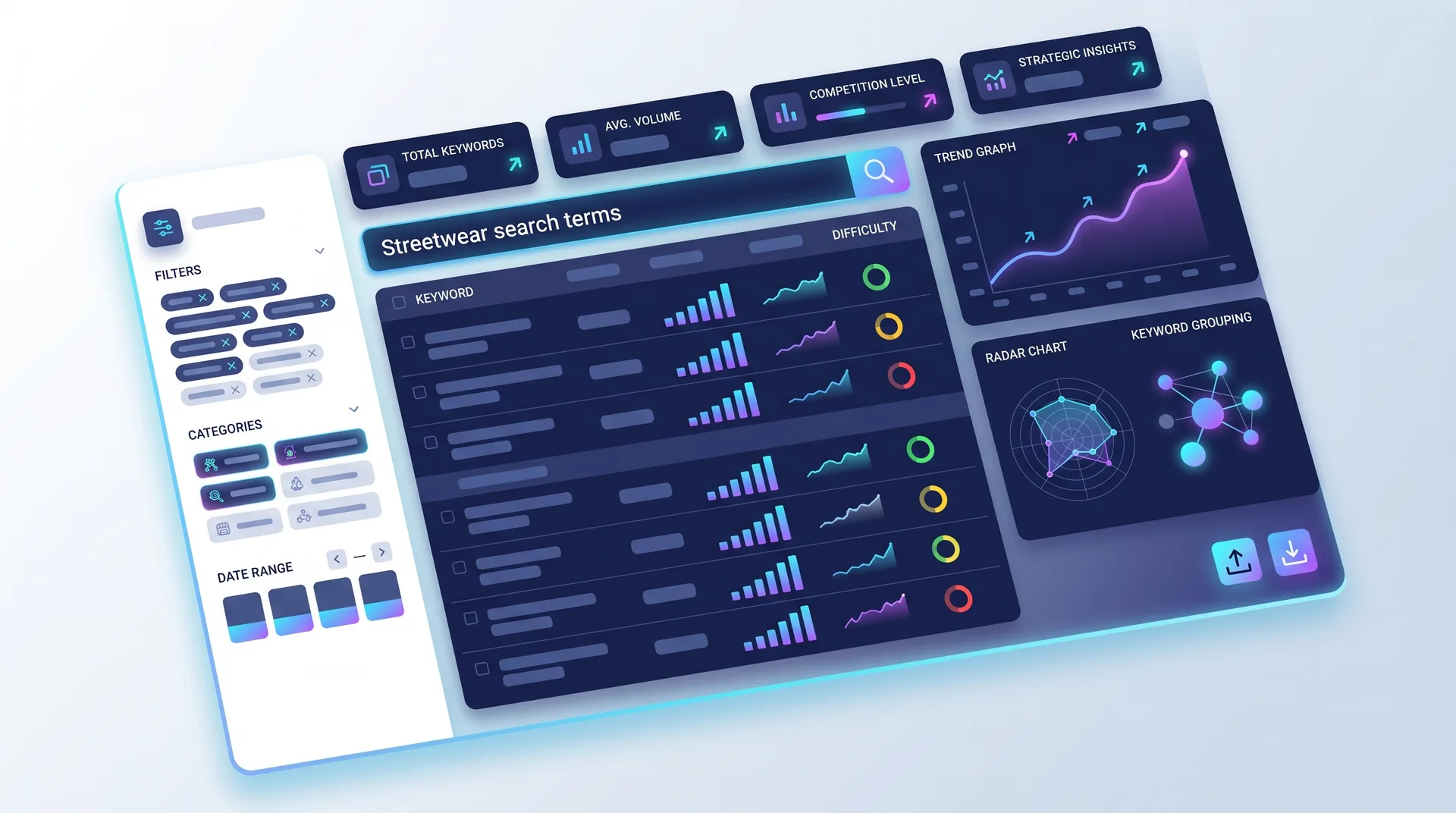
Use tools like Google Keyword Planner, Ahrefs, or SEMrush to find keyword volume and competition. But also pay attention to what your customers are actually saying. Check your Instagram DMs, read your customer service emails, look at what people ask in comments. That's real keyword research.
Phase 3: On-Page SEO Optimization for Product and Collection Pages
Your product pages need to do two things: rank in search results and convert visitors into buyers. Most brands optimize for one or the other. The best brands do both.
Product descriptions are where most streetwear brands fail. They either write one-sentence descriptions that say nothing ('Premium quality hoodie') or they keyword-stuff so hard that it reads like a robot wrote it ('Buy our oversized hoodie, best oversized hoodie, oversized hoodie for men').
Here is the formula: Start with one sentence that includes your target keyword naturally. Then describe the product in a way that makes someone want to buy it. Include fabric details, fit information, and styling suggestions. End with a benefit statement. Keep it under 150 words.
On-Page SEO Elements That Actually Matter
How do I write meta titles for product pages?
Formula: [Product Name] | [Key Feature] | [Brand Name]. Example: 'Oversized Graphic Hoodie | Vintage Wash | YourBrand'. Keep it under 60 characters so it doesn't get cut off in search results. Include your target keyword at the beginning.
What should my meta descriptions say?
Write a compelling 150-character pitch that includes your keyword, a benefit, and a call-to-action. Example: 'Premium oversized graphic hoodie in vintage wash. 100% cotton, embroidered details. Free shipping on orders over $100. Shop now.' This shows up under your title in search results.
How do I optimize product images for SEO?
Name your image files descriptively before uploading: 'oversized-graphic-hoodie-black-front.jpg' instead of 'IMG_1234.jpg'. Add alt text that describes what's in the image: 'Model wearing black oversized graphic hoodie with embroidered logo'. This helps Google understand your images and improves accessibility.
Should I use the same product description across color variants?
No. Each variant should have a unique description, even if you're just changing one sentence. Duplicate content hurts your rankings. If you sell the same hoodie in five colors, write five slightly different descriptions focusing on how each color fits different styles or occasions.
How important is internal linking?
Critical. Link from product pages to related products, from collection pages to individual products, and from blog posts to relevant products. This helps Google understand your site structure and keeps users browsing longer. Aim for 3-5 internal links per page.
Image optimization goes beyond compression. Your image file names matter. Instead of 'IMG_1234.jpg', name it 'oversized-graphic-hoodie-black-front.jpg'. Google reads file names. Your alt text should describe what's in the image: 'Model wearing oversized graphic hoodie in black with embroidered chest logo'.
Internal linking is how you tell Google which pages are most important. Link from your homepage to your best-selling collections. Link from collection pages to individual products. Link from blog posts to relevant products. Every page should have 3-5 internal links to other pages on your site.
User-generated content is the most underrated SEO asset streetwear brands have. Customer reviews, styling photos, and fit feedback all add fresh, keyword-rich content to your product pages without you having to write it.
Prithvi Jadwani, TechDevs SEO Framework
Reviews are SEO gold. They add unique content to your product pages, they include natural keyword variations, and they build trust. A product page with 50 reviews will almost always outrank the same product with zero reviews. Use review apps that display reviews directly on the page, not in a popup that Google can't crawl.
Phase 4: Content Marketing and Link Building for Streetwear Authority
Content marketing for streetwear is not about pumping out generic blog posts. It's about building authority in your niche and earning backlinks from sites that matter.
Your blog should have four content pillars: styling guides, culture pieces, brand stories, and sustainability. Styling guides target informational keywords and help early-stage buyers. Culture pieces position you as part of the community, not just a seller. Brand stories build emotional connection. Sustainability content addresses the concerns of conscious consumers.
Styling guides: 'How to Style Cargo Pants for Every Season', '5 Ways to Wear an Oversized Hoodie'. These rank for informational keywords and link to your products naturally.
Culture pieces: 'The History of Streetwear in LA', 'How Skateboarding Influenced Modern Fashion'. These get shared and linked by other sites in your niche.
Brand stories: 'Why We Started This Brand', 'Behind the Scenes of Our Latest Drop'. These build connection and get picked up by local media.
Sustainability content: 'Our Commitment to Ethical Manufacturing', 'How We Reduced Our Carbon Footprint by 40%'. These attract backlinks from sustainability-focused publications.
Micro-influencer partnerships are a dual strategy. You get social exposure and you get backlinks. When an influencer with a blog or website features your brand, ask them to link to your site. That link passes SEO value. It's not just about the Instagram post.
Getting backlinks from streetwear blogs, fashion publications, and local media is easier than you think. Most of these sites are hungry for content. Pitch them a story: 'Local Streetwear Brand Donates 10% of Profits to Skate Parks', 'How This Brand is Making Sustainable Streetwear Affordable'. Make it newsworthy and they'll cover it.
Pros
Micro-influencers (5K-50K followers) have higher engagement rates than mega-influencers
Costs are lower ($200-$1,000 per post vs $5,000+ for traditional PR)
You get both social exposure and backlinks if they have a blog
Easier to build long-term relationships and repeat collaborations
More authentic audience connection in niche communities
Cons
Requires managing multiple relationships instead of one PR agency
Results are harder to predict than established media outlets
Not every influencer will agree to include a backlink
Takes time to vet influencers and ensure audience alignment
Pop-ups and events are link magnets. Local news sites, event calendars, and community blogs will link to your event page. After the event, write a recap blog post with photos. Reach out to everyone who attended and ask them to share it. Those shares turn into backlinks.
Community-driven content works. Run a styling contest where customers submit photos of how they styled your pieces. Feature the best ones on your blog. Tag the customers. They'll share it. Their friends will share it. Some of those friends have blogs or websites. That's how you earn natural backlinks without begging for them.
Phase 5: Conversion Rate Optimization (CRO) Framework for Streetwear Sites
SEO gets people to your site. CRO turns those visitors into customers. The average ecommerce conversion rate is only 2-4%, which means 96-98% of your traffic leaves without buying. That's the problem we're solving.
Your homepage has one job: make visitors want to explore. Use hero imagery that represents your brand aesthetic. State your value proposition in one sentence. Show social proof (customer photos, review count, press mentions). Make your best-selling collection the most prominent element.
Product Page CRO Checklist
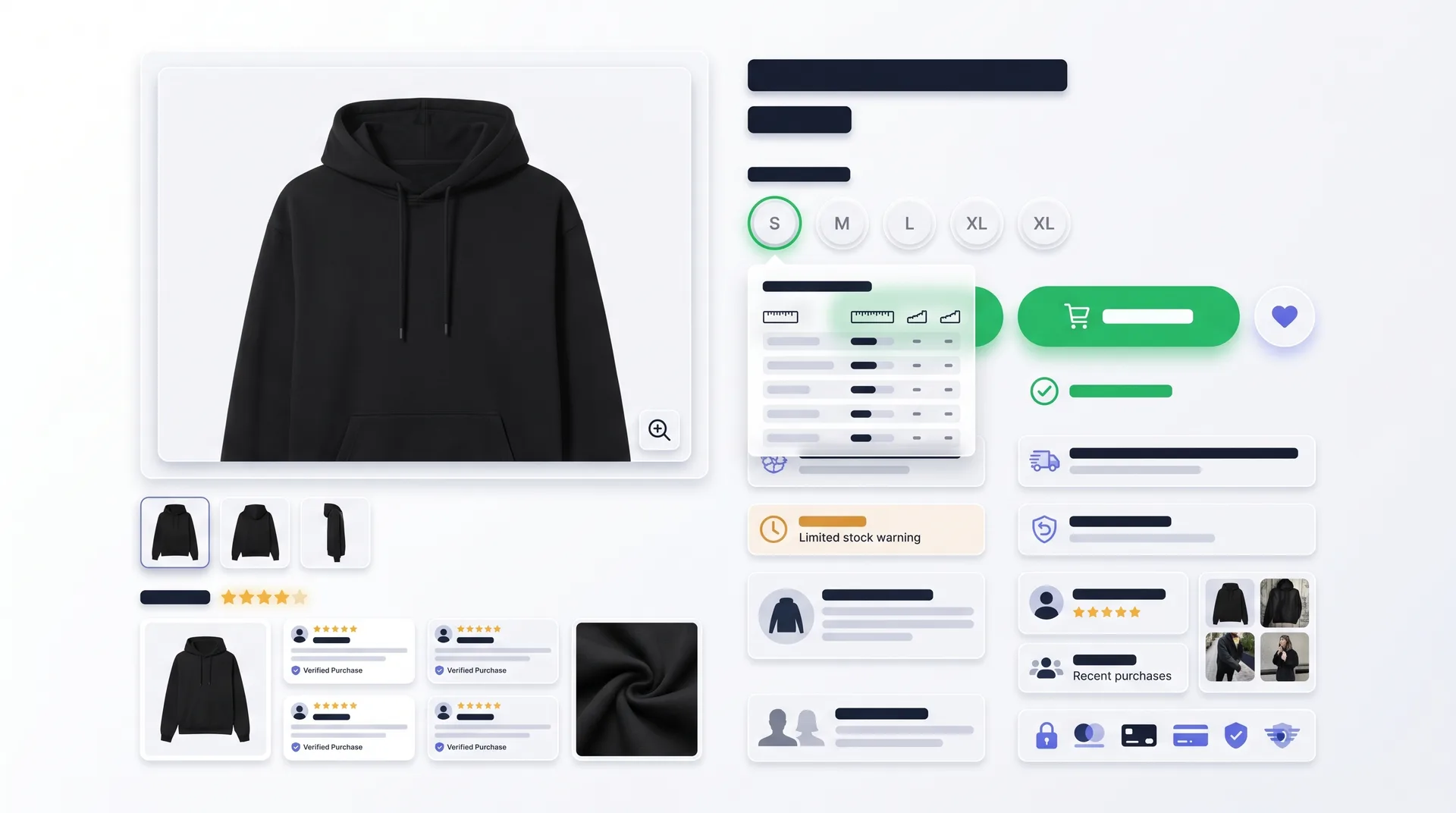
High-quality product photos from multiple angles (minimum 5 images per product)
Lifestyle photos showing the product being worn in real situations
Size guide that's easy to find and actually helpful (include model height and size worn)
Clear pricing with no hidden fees (show shipping costs upfront)
Scarcity indicators when genuine ('Only 3 left in this size', 'Restocking in 2 weeks')
Styling suggestions or 'Complete the Look' section with related products
Customer reviews visible without scrolling
Add-to-cart button that stays visible as you scroll
Product pages are where conversion happens. Most streetwear brands show one or two product photos and wonder why people don't buy. You need minimum five photos: front, back, side, detail shot, and lifestyle shot. People can't touch the fabric online. Your photos have to compensate.
Size guides are critical for fashion. 'True to size' means nothing. Show measurements. Include a photo of your model with their height and the size they're wearing. Cart abandonment in fashion is often because people are unsure about sizing. Remove that uncertainty.
Scarcity works, but only when it's real. 'Only 3 left in size M' increases urgency. But if that message shows up every time someone visits, they'll stop believing you. Use real inventory numbers. If you're restocking in two weeks, say that. Honesty builds trust.
Mobile Checkout
Streamline your mobile checkout to 3 steps maximum. Enable Apple Pay and Shop Pay for one-tap purchasing. Mobile users have zero patience for long forms.
Trust Signals
Display security badges, return policy, and customer service contact info above the fold. First-time buyers need reassurance before they enter payment info.
Exit Intent
Use exit-intent popups to capture emails before visitors leave. Offer 10% off their first order. Even if they don't buy today, you can remarket to them.
Cart abandonment is normal in fashion. People add items to their cart to save them for later or to see shipping costs. Send cart abandonment emails within 2 hours, not 24 hours. The first email should just remind them what they left behind. The second email (24 hours later) can offer a small discount if they're still hesitating.
A/B testing priorities: test your product imagery styles first (flat lay vs lifestyle), then test CTA copy ('Add to Cart' vs 'Add to Bag'), then test pricing display (show savings vs just show price). Don't test everything at once. One variable at a time.
Phase 6: Integrating SEO Traffic with CRO for Maximum Revenue
This is where the framework comes together. SEO brings traffic. CRO converts it. But the real power is in how you connect the two.
Landing pages optimized for both search rankings and conversion are your secret weapon. Create dedicated landing pages for your top keywords: '/oversized-hoodies', '/cargo-pants-men', '/vintage-wash-tees'. These pages should rank well and convert well. That's the integration.
Email capture for organic traffic: Use exit-intent popups specifically for first-time visitors from search. They're already interested (they searched for you), so capture their email before they leave.
Heatmaps and session recordings: Install Hotjar or Microsoft Clarity to watch how organic visitors behave. Where do they click? Where do they drop off? This tells you what to optimize.
Personalization based on search intent: If someone lands on your site from 'affordable streetwear brands', show them your budget-friendly collection. If they searched 'premium oversized hoodie', show them your high-end pieces.
Full-funnel measurement: Track from keyword ranking to page visit to add-to-cart to purchase. Most brands only look at rankings or only look at conversion rate. You need both.
Email capture strategies for organic traffic are different than for paid traffic. Paid traffic is cold. Organic traffic is warm. They searched for something you offer. Use a less aggressive popup. Instead of 'Get 15% off!', try 'New here? Join our community for early access to drops.' It feels less transactional.
Heatmaps show you what's working and what's not. I've seen brands discover that nobody was scrolling past the first product image. They added a 'Scroll for more photos' indicator and conversion rate jumped 12%. You can't fix what you don't measure.
Measuring the full funnel means connecting Google Search Console data to Google Analytics to your Shopify sales data. You should be able to say: 'The keyword oversized graphic hoodie drove 500 visitors last month, 15 of them bought, generating $2,250 in revenue.' That's how you know what's working.
Automation and AI Tools to Scale Your SEO and CRO Framework
You can't manually optimize every product page, write every blog post, and analyze every piece of data. That's where automation comes in.
AI-powered keyword research tools like Ahrefs, SEMrush, and SurferSEO can analyze thousands of keywords in seconds and tell you which ones to target. They'll even suggest content topics based on what's ranking for your competitors. This cuts keyword research time from days to hours.
Tools and When to Use Them
What's the best tool for automated technical SEO monitoring?
Google Search Console is free and catches most issues. Set up email alerts for coverage errors, mobile usability problems, and Core Web Vitals failures. For deeper monitoring, Screaming Frog (paid) can crawl your entire site weekly and alert you to broken links, missing meta tags, and other issues.
When should I start A/B testing?
Not until you have at least 1,000 visitors per month. Below that, your sample size is too small to get statistically significant results. Focus on implementing best practices first. Once you hit 1,000+ monthly visitors, start testing one variable at a time.
What email automation should I set up first?
Cart abandonment is the highest ROI email automation for ecommerce. Set up a three-email sequence: first email at 2 hours (reminder), second at 24 hours (add urgency), third at 72 hours (offer small discount). This alone can recover 10-15% of abandoned carts.
How do I connect SEO metrics to revenue?
Use Google Analytics 4 with ecommerce tracking enabled. Set up custom reports that show: organic traffic by landing page, conversion rate by landing page, and revenue by landing page. This tells you which SEO efforts are actually making money.
Should I use AI to write product descriptions?
Use AI to draft, but always edit. AI-generated product descriptions often sound generic. Use AI to create a first draft with your target keywords, then rewrite it in your brand voice. The combination of AI speed and human touch is the sweet spot.
Automated technical SEO monitoring saves you from ranking drops. Set up Google Search Console to email you when it detects errors. Set up Screaming Frog to crawl your site weekly. These tools catch problems before they hurt your rankings.
CRO testing platforms like VWO, Optimizely, or Google Optimize let you run A/B tests without touching code. But don't start testing until you have enough traffic. You need at least 1,000 visitors per month to get meaningful results. Below that, just implement best practices.
Email automation triggered by organic traffic behavior is powerful. Someone lands on your 'cargo pants' collection page from Google, browses for 2 minutes, then leaves. Send them an email the next day: 'Still looking for cargo pants? Here are our bestsellers.' That's behavior-triggered automation.
We don't just deliver traffic. We deliver outcomes. The brands we work with see 40-60% of their revenue coming from organic channels within 18 months because we integrate SEO and CRO from day one. It's not about ranking for vanity keywords. It's about ranking for keywords that convert and building pages that turn those visitors into customers.
Prithvi Jadwani, TechDevs Client Results
Analytics dashboards that connect SEO metrics to revenue outcomes are the final piece. Build a dashboard that shows: organic traffic, conversion rate by landing page, revenue from organic traffic, and top-performing keywords by revenue. This is how you prove ROI and decide where to invest more effort.
At TechDevs, we help streetwear brands implement this entire framework without hiring a full team. We use automation to handle the repetitive work (monitoring, reporting, email sequences) so you can focus on design and community. We've helped brands go from zero organic traffic to $50K+ monthly organic revenue in under a year. It's not magic. It's just a system that works.
Frequently Asked Questions
Common Questions About SEO and CRO for Streetwear
What's the difference between SEO and CRO for streetwear brands?
SEO (Search Engine Optimization) gets your site found in Google searches. CRO (Conversion Rate Optimization) turns those visitors into paying customers. SEO is about visibility. CRO is about persuasion. You need both. High traffic with low conversion rate means you're wasting the traffic. Low traffic with high conversion rate means you're not reaching enough people.
How long does it take to see results from SEO for a new streetwear brand?
Expect 3-6 months for meaningful results. The first month is technical setup. Months 2-3 are content creation and optimization. Months 4-6 are when you start seeing traffic growth and rankings. By month 12, if you've executed consistently, you should be seeing 30-50% of revenue from organic channels. Anyone promising results in 30 days is lying.
What's a realistic marketing budget for streetwear brands combining SEO and CRO?
In year one, allocate 15-25% of revenue to marketing, with 40% of that going to SEO/CRO and 60% to paid ads. As your organic channels mature, flip that ratio. By year two, you should be spending 60% on SEO/CRO and 40% on paid ads. Actual dollar amounts: if you're doing $10K/month in revenue, spend $1,500-$2,500/month on marketing, with $600-$1,000 going to SEO/CRO work.
Should streetwear brands focus on SEO or paid ads first?
Start with both, but weight paid ads heavier in the first 90 days. You need immediate sales to validate product-market fit. Use paid ads to get your first customers while you build your SEO foundation. Once you have proof that people will buy, shift more budget to SEO because it compounds over time. Paid ads are renting attention. SEO is buying real estate.
What are the most important CRO metrics for fashion ecommerce?
Track these five: (1) Conversion rate by traffic source (organic vs paid), (2) Average order value, (3) Cart abandonment rate, (4) Product page bounce rate, (5) Time to purchase. These tell you where people are dropping off and what's working. Ignore vanity metrics like page views. Focus on metrics that connect to revenue.
How do I optimize product pages for both SEO and conversions?
Write product descriptions that include your target keyword naturally in the first sentence, then focus on benefits and details that make people want to buy. Use high-quality photos (minimum 5 per product). Add customer reviews. Include a size guide. Show related products. Make the add-to-cart button prominent. The page should rank well and convert well. It's not either/or.
Can small streetwear brands compete with established names in search results?
Yes, but not for generic keywords like 'hoodie' or 'streetwear'. You'll compete for long-tail keywords like 'sustainable oversized hoodie' or 'techwear cargo pants'. Established brands often ignore these specific searches. That's your opportunity. Niche down, dominate the long-tail keywords, build authority, then expand to broader terms.
Ready to Build Your SEO + CRO Framework?
We've helped streetwear brands go from zero organic traffic to $50K+ monthly organic revenue in under a year. No fluff, no vanity metrics. Just a proven framework that ranks, converts, and prints money. Book a discovery call and we'll show you exactly how this works for your brand.