10 Powerful AEO Strategies to Get Your Brand Recommended by ChatGPT and AI Search Engines
Master Answer Engine Optimization with 10 proven AEO strategies. Get your brand recommended by ChatGPT, Perplexity & AI search when customers need solutions.
 Written byPrithvi Jadwani
Table of contents
Summarize this article with AI
TL;DR
AI answer engines like ChatGPT and Perplexity handle millions of buying queries daily. This guide breaks down 10 practical ways to optimise your website for AEO (Answer Engine Optimization) so your brand gets cited, recommended, and converts AI-referred visitors into clients.
- Way 1-2: Structure & Authority. Write conversational, question-first content and build multi-platform proof so AI engines trust and cite you.
- Way 3-5: Intent, Citations & Tech. Win semantic search, publish citation-worthy assets, and add schema plus crawl-friendly technical setup.
- Way 6-8: Reviews, Questions & Niche Depth. Dominate review sites, answer real buyer questions, and own topical authority in your category.
- Way 9-10: Measure & Multiply Formats. Track AI visibility weekly and repurpose content across video, social, and audio for more citation surface area.
- Step-by-Step Execution. Follow the 30-day action plan at the end to audit, prioritise, and ship AEO improvements that bring clients.
AEO Guide: 10 Ways to Optimise Your Website and Get Clients Through Answer Engines
ChatGPT handles tens of millions of shopping queries a day. Perplexity is answering questions your sales team used to field. If your brand is not showing up in those AI-generated answers, you are invisible to a fast-growing segment of buyers.
42% of CRM software buyers now use AI search as part of their evaluation process. Not as a curiosity - as part of the actual buying journey.
Answer Engine Optimization (AEO) is how you fix that. It is the practice of improving how often and how accurately your business appears in AI-generated answers - so when a buyer asks for recommendations, your brand is in the response, ideally with a citation back to your site.
This guide gives you 10 ways to optimise your website for AEO, each with a clear step-by-step breakdown you can run. SEO gets you ranked on a results page. AEO gets you recommended directly in the answer. No ten-tab comparison shopping - just: Here is the solution, and here is why.
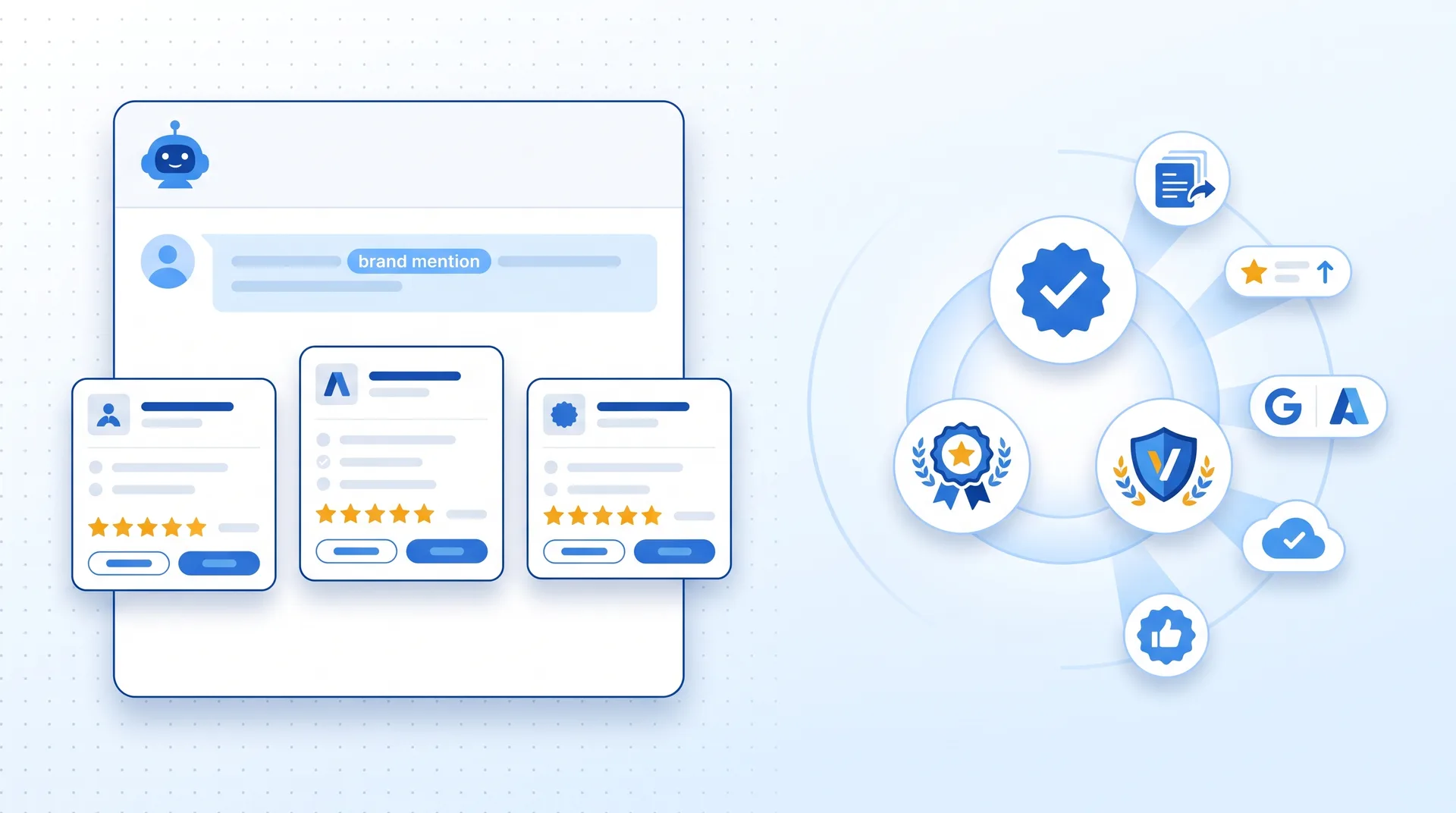
Before the 10 ways, here is how answer engines work - and what they look for - so every step below maps to real behaviour.
They interpret user intent from full-sentence, conversational queries
They search the web or indexed databases for credible, relevant content
They synthesise that content into a coherent answer
They cite the sources they pulled from (this is your opportunity)
They pull from blog posts, product pages, Reddit, YouTube, LinkedIn, G2, Capterra, and more - not only your homepage. Clear, structured, authoritative content gets cited. Vague or gated content does not.
Way 1: Structure Content for Direct, Conversational Answers
Most sites are written for Google’s algorithm. AEO content is written for how people actually ask questions - the same way they talk to ChatGPT.
Instead of: SEO Services for E-commerce Websites
Write: How do I improve organic traffic for my Shopify store without running ads?
Step-by-step breakdown:
List the top questions your buyers ask sales and support in full sentences
Rewrite key page and blog titles/H2s as those natural questions
Answer the core question in the first 100-150 words - no teaser intros
Add clear H2/H3s that mirror follow-up questions
Keep paragraphs to 2-4 sentences; use bullets and numbered lists for steps
Cover who, what, when, where, why, and how so the page stands alone as a complete answer
Publish the full answer publicly - do not gate the part AI would need to cite
Way 1 checklist
Answer the core question in the first 100-150 words
Use clear H2 and H3 headings that mirror natural questions
Break content into short, scannable paragraphs (2-4 sentences max)
Cover who, what, when, where, why, and how comprehensively
Use bullet points and numbered lists for clarity
Way 2: Build Authority Across Multiple Platforms
Your website is one data point. AI engines look for consensus. Mentions on Reddit, third-party blogs, G2, and LinkedIn signal authority. Existing only on your own site makes you just another vendor claiming things about yourself.
Step-by-step breakdown:
Publish one strong pillar guide on your site (clear, structured, citable)
Answer related threads on Reddit and Quora with genuine value and a link back when relevant
Post a LinkedIn breakdown of the same topic for professional discovery
Earn one third-party mention (guest post, partner blog, or newsletter)
Collect client reviews on Clutch, G2, or Capterra that name the service or outcome
Recheck target queries in ChatGPT/Perplexity after external proof exists
Reddit & Quora
Answer real questions in your niche. AI engines pull heavily from these because they reflect authentic experience.
YouTube
Video with transcripts gets indexed and cited. Tutorials, case studies, and explainers all count.
Third-Party Blogs
Guest posts, partner content, and affiliate reviews create external validation AI engines trust.
Review Platforms
G2, Capterra, Trustpilot - frequently cited when AI recommends solutions.
At TechDevs, a Generative Engine Optimization guide only started getting consistent citations after Reddit answers, LinkedIn posts, a newsletter mention, and Clutch reviews existed alongside the blog. The website alone was not enough.
Way 3: Optimise for Semantic Search and User Intent
Keyword stuffing is dead. AI engines understand topics and relationships. Write about email marketing automation and you also become relevant for drip campaigns, lead nurturing, and automated follow-ups.
Step-by-step breakdown:
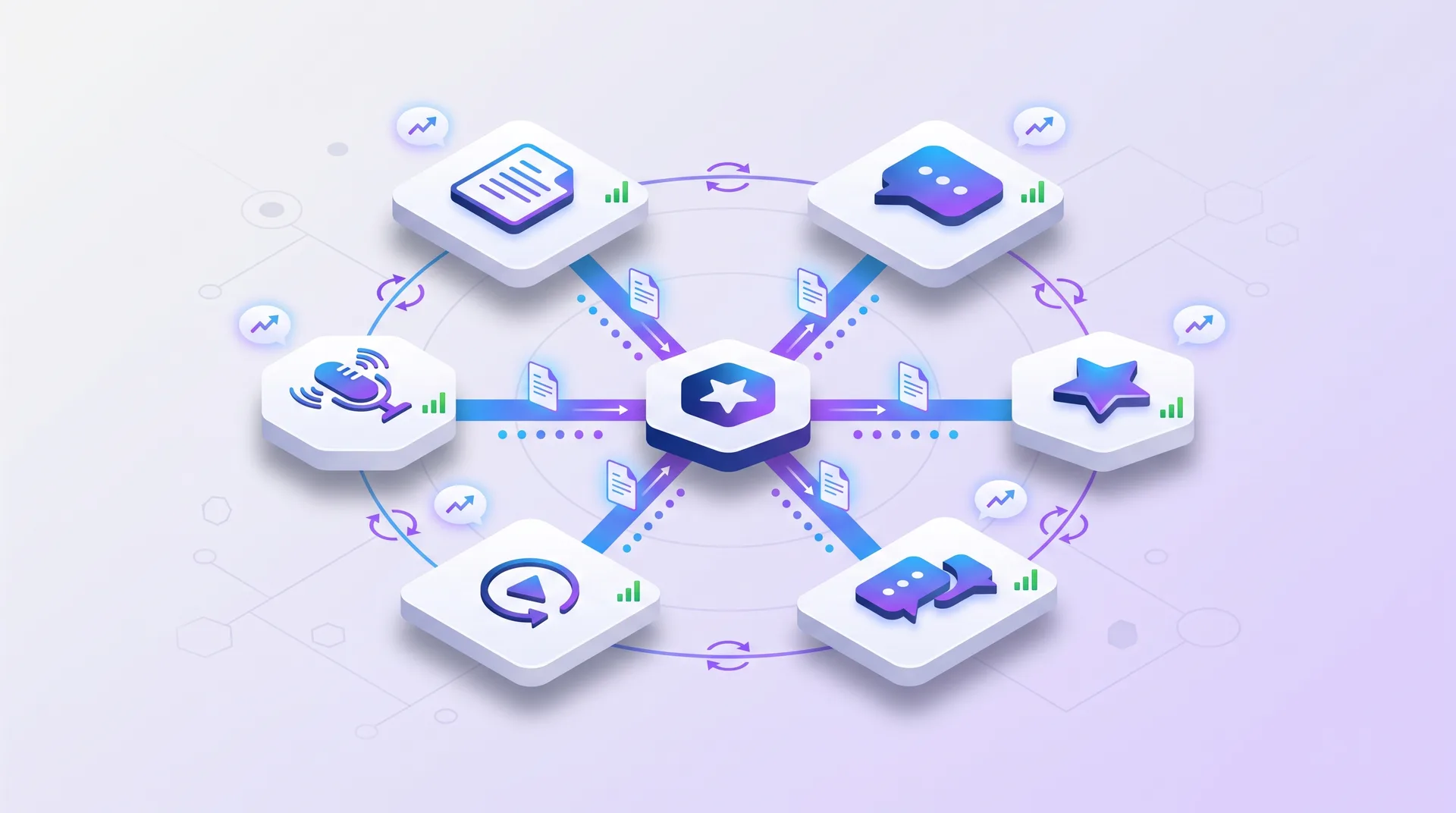
Pick one core topic your ideal client pays you for (e.g. Email Marketing for SaaS)
Build a pillar page that defines the topic and links out to subtopics
Write supporting articles for each subtopic and long-tail question
Interlink pillar ↔ clusters so engines see depth of expertise
Add schema where it clarifies page type and relationships
Map each piece to an intent stage: learn → compare → choose/buy
Target full conversational queries in headings and intros (How do I set up email automation in HubSpot? not only HubSpot automation)
Way 4: Create Citation-Worthy, Authoritative Content
AI engines cite content that adds unique value. Generic posts that repeat the same advice as fifty other sites get skipped.
Step-by-step breakdown:
Choose a narrow problem your clients actually hire you to solve
Add original proof: data, screenshots, code, process, or before/after results
Include named expert quotes or credentials where they strengthen trust
Write a detailed, actionable guide - not a summary of other blogs
Refresh dates, stats, and examples on a fixed cadence (e.g. quarterly)
Ensure the page can stand alone as the “best single source” on that question
A 3,000-word technical SEO guide for React sites - with real code, screenshots, and tools tested - gets cited because it is a specific, actionable resource, not generic advice.
AI engines frequently cite review platforms when recommending solutions. Managing your presence on G2, Capterra, and Trustpilot isn't optional anymore.
Marcel Digital, What is Answer Engine Optimization?
Keep it updated. Stale 2021 guides get skipped when fresher sources exist.
Way 5: Leverage Structured Data and Technical Optimisation
Schema and crawlability remove ambiguity. AI engines love clarity - and they cannot cite what they cannot read.
Step-by-step breakdown:
Implement FAQ schema on Q&A and high-intent pages
Add HowTo schema on step-by-step guides
Use Article schema on blog posts
Fix heading hierarchy (one H1, then H2 → H3)
Get page load under ~2 seconds; prioritise mobile
Confirm SSR or static generation on React/Next.js so content is in the HTML
Create and submit XML sitemaps; verify indexation in Search Console
Spot-check key URLs for JS-only content with a crawler (e.g. Screaming Frog)
Technical AEO checklist
Implement FAQ schema on Q&A pages
Add HowTo schema for step-by-step guides
Use Article schema for blog posts
Ensure proper heading hierarchy (H1 → H2 → H3)
Optimize page speed (under 2 seconds)
Make site mobile-first and responsive
Create and submit XML sitemaps
Technical AEO questions
Do I need every schema type at once?
No. Start with FAQ and Article schema. Add HowTo and others as you scale.
How do I check crawlability for AI engines?
If Google can index the page, AI engines likely can too. Use Search Console plus a crawler to catch JavaScript rendering gaps.
Way 6: Dominate Review Sites and Third-Party Platforms
When buyers ask ChatGPT for software or agency recommendations, citations often go to G2, Capterra, and Trustpilot - not only your homepage. Thin or outdated profiles lose to competitors with hundreds of recent, detailed reviews.
Step-by-step breakdown:
Claim and complete profiles (description, pricing/features, screenshots, categories)
Automate review requests after wins (email/SMS sequences to happy clients)
Ask for specific use cases and outcomes in the review text - long-tail phrases AI can pick up
Respond to every review professionally, positive or negative
Refresh profiles when offers or product change
Never fake reviews - detection risk destroys trust and client pipeline
Pros
AI engines cite review platforms frequently
Reviews provide social proof and third-party validation
Detailed reviews often include long-tail keywords AI engines pick up
Responding to reviews signals active engagement
Cons
Negative reviews are public and permanent
Building a review base takes time and consistent effort
Some platforms charge for premium listings
Way 7: Optimise for Question-Based Queries
People do not type “CRM software” into ChatGPT. They ask: What’s the best CRM for a 10-person sales team that integrates with Gmail? Your site must answer specific questions to win the citation and the client click.
Step-by-step breakdown:
Mine questions from Reddit, Quora, sales FAQs, People Also Ask, and support tickets
Prioritise 10-15 high-intent questions tied to revenue
Create one page or section per question; use the question as the H2
Answer in the first paragraph, then support with proof, steps, and comparisons
Add FAQ blocks (and FAQ schema) for related follow-ups
Retest those exact questions in ChatGPT and Perplexity on a weekly cadence
Example question-based content (use this structure on your site)
What's the difference between AEO and traditional SEO?
AEO focuses on being cited and recommended in AI-generated answers, while traditional SEO focuses on ranking in search engine results pages. AEO requires multi-platform authority (Reddit, YouTube, review sites) and conversational, question-based content. Traditional SEO prioritises backlinks, keyword optimisation, and on-page technical factors.
Which AI search engines should I optimise for first?
Start with ChatGPT and Perplexity. ChatGPT has the largest user base; Perplexity is strong among professionals. Both cite sources often. Google AI Overviews and Bing Copilot matter too but lean more on classic SEO signals you may already have.
How long does it take to see results from AEO?
Many brands see initial citations in 4-8 weeks with structured content plus external validation (reviews, Reddit, third-party mentions). Stronger, steady momentum often takes 3-6 months.
Do I need to abandon SEO to do AEO?
No. AEO builds on good SEO. Fast, mobile-friendly sites with quality content are halfway there. AEO adds conversational structure, multi-platform presence, and clearer schema.
How can I track if ChatGPT recommends my brand?
Manually test key queries in ChatGPT and Perplexity. Use visibility tools where available, and monitor referral traffic from AI-related sources in analytics.
What content types perform best in answer engines?
How-to guides, comparisons, detailed reviews, and FAQ pages. Direct answers plus stats, examples, and expert proof get cited more.
Is AEO only for B2B?
No. B2B uses AI for vendor research; B2C uses it for products, local services, and purchase decisions. Ignoring AEO hands clients to competitors in both models.
Way 8: Build Topical Authority in Your Niche
AI engines cite authorities, not one-off posts. Thirty in-depth pieces on one niche beat three shallow posts across random topics.
Step-by-step breakdown:
Pick 3-5 topics you can own that map to services clients buy
Create a hub (pillar) for each topic
Publish 10-15 supporting articles per hub over time
Interlink aggressively inside the hub
Ship 2-4 pieces per month on those cores - consistency signals active expertise
Update hubs quarterly so citations stay accurate
Align hubs to commercial pages (e.g. SEO services) so citations can become clients
Content hubs
Central pillar plus 10-15 supporting articles that cover subtopics in depth.
Consistent publishing
2-4 pieces per month on your core topics signals active expertise.
Internal linking
Connect related articles so engines see the breadth of your knowledge.
Way 9: Monitor and Adapt Using AI Visibility Metrics
You cannot optimise what you do not measure. Treat AI answers like a channel: query set, weekly checks, content iteration, client outcomes.
Step-by-step breakdown:
Define 10-15 high-intent queries your ideal clients ask before buying
Test them weekly in ChatGPT, Perplexity, and Gemini (same wording)
Log: brand mentioned? cited? competitor cited? accuracy of the summary?
See which URLs and formats earn citations; double down on those patterns
Watch analytics for AI-referred or high-intent landing behaviour
If you are cited but misrepresented, tighten the page wording and update facts
Optionally use an AEO visibility tool to score brand presence over time
Citation accuracy matters. Wrong summaries lose trust - and lose clients. Fix the source content when the model mangles your position.
Way 10: Create Multi-Format Content for Maximum Reach
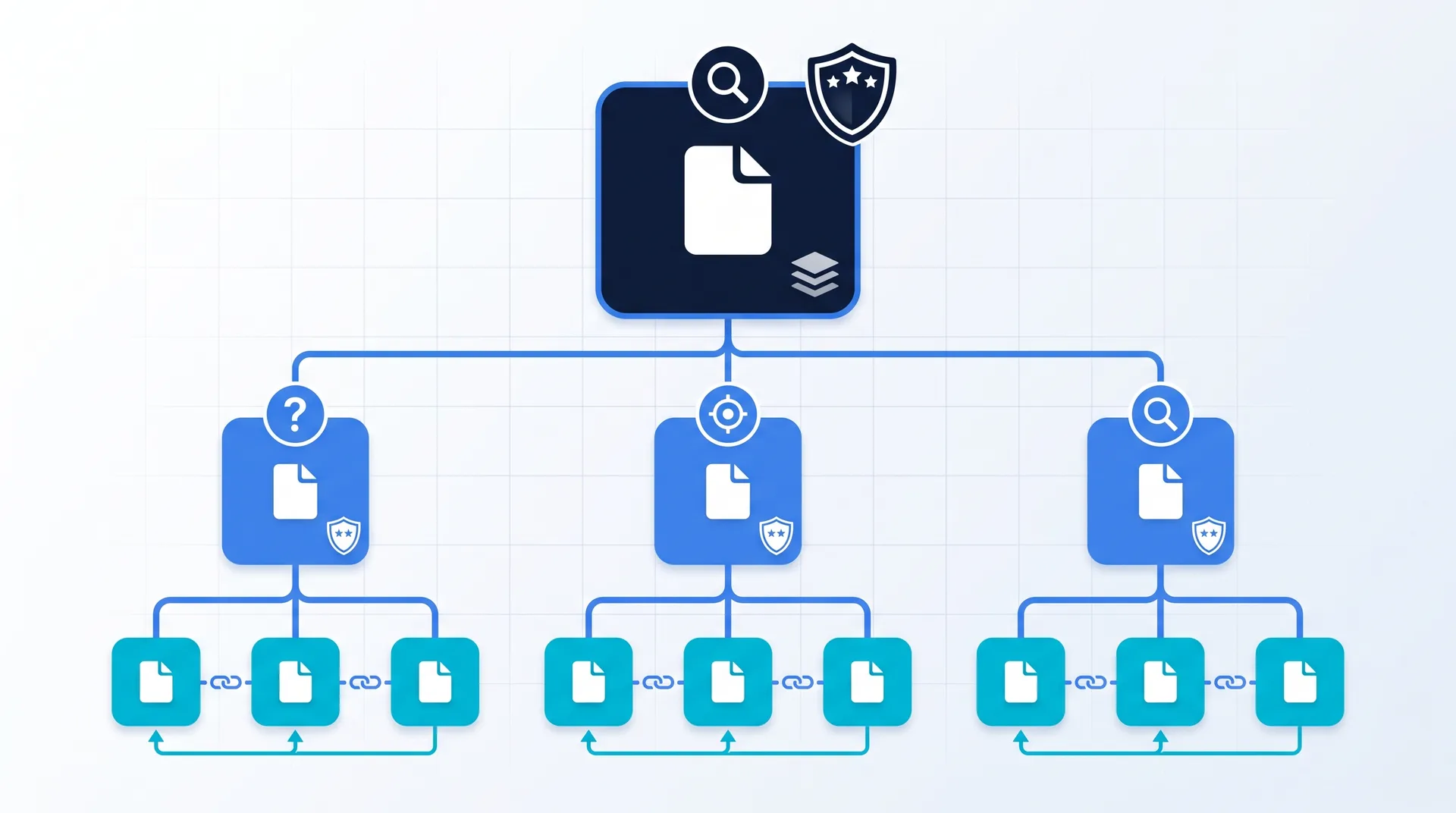
Answer engines pull from YouTube, podcasts, LinkedIn, Reddit, and more - not only blogs. One format leaves citation (and client) surface area on the table.
Step-by-step breakdown:
Publish the core answer as a structured blog post first (Ways 1, 4, 7)
Record a video version; upload to YouTube with a full transcript
Turn key points into a LinkedIn post or carousel
Share bite-sized insights on X/Twitter
Answer matching Reddit/Quora questions with links to the full guide
Add podcast/audio only when you can provide a complete transcript
Reuse the same proof (stats, steps, examples) so every format reinforces consensus
Video content
Tutorials, explainers, case walkthroughs - always with transcripts for crawlability.
Social content
LinkedIn, X, Reddit. Engines pull from authentic public discussion.
Long-form guides
In-depth posts, whitepapers, case studies - citation gold and sales enablement.
Podcasts & audio
Episodes with full transcripts so audio can be parsed and cited.
Multi-format checklist
Publish core content as a blog post first
Record a video version and upload to YouTube with full transcript
Break key points into a LinkedIn post or carousel
Share bite-sized insights on Twitter/X
Answer related questions on Reddit with links back to your content
How to Implement This AEO Guide: Step-by-Step Next Actions
Most brands will read a guide like this and change nothing - while competitors take the AI recommendation slots that send pipeline.
Master sequence (do this in order):
Audit: run your top 10 customer questions through ChatGPT and Perplexity; note who gets cited
Prioritise: pick 2-3 ways from this guide (recommended start: Way 1 structure, Way 5 schema, Way 6 reviews)
Ship content: question-based pages with early direct answers and unique proof
Seed consensus: Reddit/LinkedIn + review ask cadence
Instrument: weekly query log + analytics on converting landing pages
Expand: topical hubs, multi-format repurposing, tighter intent clusters
Repeat: every month add queries, refresh winners, and retire content that never earns citations
Your 30-day AEO action plan (website → clients)
Audit AI visibility with 10 key customer queries
Create question-based pages for your top 5 high-intent queries
Implement FAQ and Article schema on priority URLs
Claim and optimise G2, Capterra, and Trustpilot profiles
Answer niche questions on Reddit and Quora weekly
Repurpose your best post into a YouTube video with transcript
Set a weekly AI visibility tracking ritual for core queries
Start today: choose two ways, run the step-by-step lists, then add two more. AEO is ongoing - but it is one of the clearest paths to show up where buyers already ask for recommendations and turn that visibility into clients.
See you in the answers.
Ready to Turn AEO Into a Client Channel?
This guide covers 10 ways to optimise your website for answer engines. If you want a hands-on partner to prioritise the steps, ship the content system, and track citations that drive revenue, we have helped 250+ brands build AI visibility that shows up in real buying conversations.