The Ultimate SEO Guide & Checklist to Dominate Google Rankings in 2026
Master Google rankings with our complete SEO guide and checklist for 2026. Learn proven strategies, best practices, and actionable steps to boost your website.
 Written byPrithvi Jadwani
Table of contents
Summarize this article with AI
TL;DR
SEO in 2026 isn't about tricks or hacks. It's about building real authority, creating content that actually helps people, and making sure your site works fast and flawlessly. The rules have changed, but the fundamentals haven't: give users what they want, make it easy to find, and earn trust.
- AI Changed the Game. Zero-click searches and AI overviews mean you need to optimize for visibility, not just clicks
- Technical SEO is Non-Negotiable. Core Web Vitals, mobile-first indexing, and site speed directly impact your rankings
- E-E-A-T Drives Trust. Experience, Expertise, Authoritativeness, and Trustworthiness are how Google judges content quality
- User Intent Wins Every Time. Match what people actually want when they search, not just keywords you want to rank for
- Quality Over Quantity. One great backlink beats 100 spammy ones, and one deep article beats 10 shallow ones
Why SEO in 2026 Is Different (And What You Need to Know)
Here's what nobody tells you about SEO in 2026: the rules didn't just change. The entire playing field shifted.
We're not talking about another algorithm update you can adapt to in a week. This is structural. Search itself has evolved from a list of blue links to a complex ecosystem of AI-generated answers, featured snippets, and zero-click results. According to Advanced Web Ranking, we're in a period of continuous change where information discovery has become fluid, layered, and increasingly complex.
And honestly? Most businesses are still optimizing for 2019.
The shift isn't just about technology. Privacy regulations like GDPR and CCPA have fundamentally changed how we track, measure, and attribute SEO success. Third-party cookies are gone. Traditional analytics are broken. If you're still relying on the old playbook, you're flying blind.
So what does this mean for you? It means your SEO strategy needs to account for how people actually find information today, not how they found it five years ago. It means building for trust and authority first, then optimizing for algorithms second.
Foundation: Technical SEO Essentials for 2026
Technical SEO is the foundation everything else sits on. Get this wrong, and your brilliant content strategy doesn't matter. Your site won't rank, won't get crawled properly, and won't convert.
Core Web Vitals are still critical. Google hasn't backed off on page experience signals. If your site loads slowly, shifts content around while loading, or feels unresponsive, you're losing rankings and users. Mobile-first indexing means Google uses your mobile site to determine rankings, even for desktop searches. If your mobile experience is broken, you're done.
Technical SEO Checklist
Core Web Vitals passing (LCP under 2.5s, FID under 100ms, CLS under 0.1)
Mobile-responsive design with touch-friendly elements
HTTPS enabled across all pages
XML sitemap submitted and error-free in Search Console
Robots.txt properly configured to allow crawling of important pages
Structured data implemented for relevant content types
Canonical tags set to prevent duplicate content issues
Internal linking structure logical and crawlable
Site architecture matters more than most people think. A flat, logical structure helps Google understand your content hierarchy. Deep pages that require six clicks to reach? They're not getting crawled often, and they're not ranking well. Keep important pages within three clicks of your homepage.
Structured data is how you tell Google exactly what your content is about. FAQ schema, HowTo schema, Product schema, these aren't optional anymore. They're how you get rich results, featured snippets, and enhanced listings. And they're how AI systems understand and surface your content.
Common Technical SEO Questions
How often should I run technical SEO audits?
Quarterly at minimum, but ideally integrate checks into your CI/CD pipeline so you catch issues before they go live. Use tools like Screaming Frog, Ahrefs, or Semrush to automate the process.
Do I really need HTTPS if I'm not collecting payments?
Yes. HTTPS is a ranking signal, and browsers flag non-HTTPS sites as 'not secure.' Users bounce, and Google notices. It's table stakes in 2026.
What's the biggest technical SEO mistake you see?
Blocking important pages in robots.txt or with noindex tags. We've seen sites accidentally block their entire blog or product catalog. Always double-check your robots.txt and meta tags.
How do I know if my site is mobile-friendly?
Use Google's Mobile-Friendly Test tool and check your Search Console for mobile usability errors. But more importantly, actually use your site on a phone. If it's frustrating for you, it's frustrating for users.
Content Strategy: Creating E-E-A-T-Driven Content That Ranks
Content is still king. But not just any content. Google's E-E-A-T framework (Experience, Expertise, Authoritativeness, Trustworthiness) is how they separate real value from AI-generated fluff.
Here's the thing: AI can write decent content now. ChatGPT, Claude, and a dozen other tools can pump out blog posts faster than any human. So Google had to get better at detecting what's real and what's not. E-E-A-T is their answer.
Experience
Show you've actually done the thing you're writing about. Real examples, screenshots, case studies. Not generic advice anyone could write.
Expertise
Demonstrate deep knowledge. Cite sources, reference data, explain the 'why' behind recommendations. Surface-level content doesn't rank.
Authoritativeness
Build a reputation in your niche. Get mentioned by other sites, earn backlinks, have real people vouch for your work.
Trustworthiness
Be transparent about who you are, update outdated content, fact-check everything. Trust is earned, not claimed.
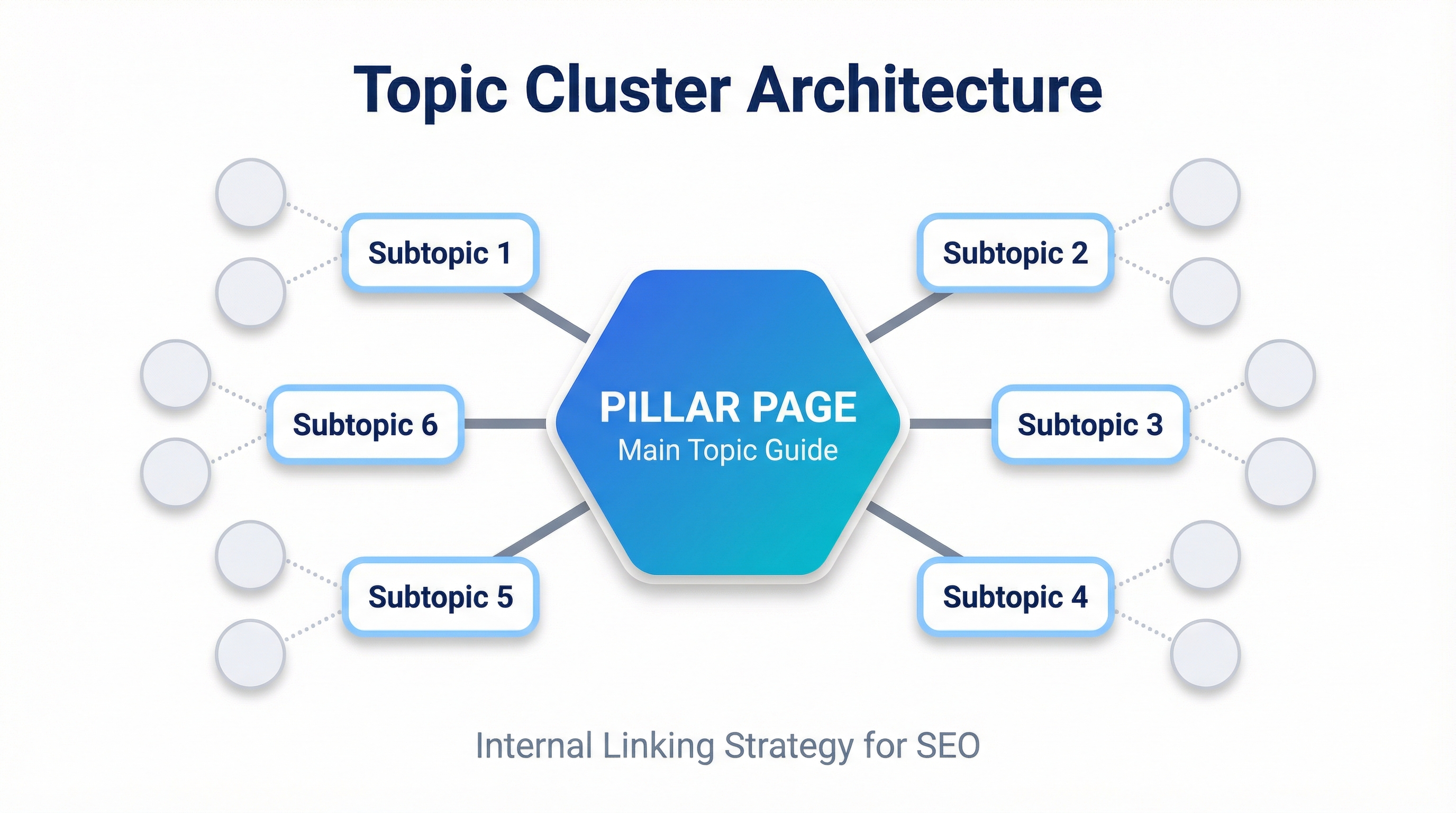
Topic clusters work. Instead of writing random blog posts, build content hubs around core topics. One pillar page that covers a broad topic in depth, supported by cluster pages that go deep on subtopics. Link them all together. This structure helps Google understand your topical authority.
But here's where most people mess up: they optimize for keywords instead of user intent. Someone searching 'best CRM software' doesn't want a definition of CRM. They want a comparison, real pros and cons, pricing info, and honest recommendations. Match the intent, or you won't rank.
And yes, you can use AI to help write content. But you can't just hit 'generate' and publish. AI content needs human editing, fact-checking, and injection of real experience. Google can detect purely AI-generated content that lacks depth and originality. Don't risk it.
Advanced On-Page Optimization Tactics
On-page SEO in 2026 isn't about keyword density. It's about semantic relevance, structured data, and user satisfaction signals.
Keywords still matter, but not the way they used to. Google understands synonyms, related terms, and context. Stuffing your target keyword 47 times into a blog post doesn't help. Using the keyword naturally in your title, H1, first paragraph, and a few subheadings does. Then use related terms and semantic variations throughout the rest.
On-Page Optimization Checklist
Target keyword in title tag (front-loaded when possible)
Compelling meta description that drives clicks (150-160 characters)
H1 tag includes target keyword and matches user intent
Subheadings (H2, H3) use semantic variations and related terms
Internal links to related content (3-5 per article)
Images optimized with descriptive alt text and compressed file sizes
URL structure clean and keyword-rich
Schema markup implemented for relevant content types
Structured data is your secret weapon for rich results. FAQ schema gets you those expandable question boxes in search results. HowTo schema gets you step-by-step snippets. Product schema gets you star ratings and price info right in the SERP. Implement these, and you stand out from competitors who don't.
Internal linking is underrated. Every piece of content should link to 3-5 other relevant pages on your site. This helps Google understand your site structure, distributes page authority, and keeps users engaged longer. But don't overdo it. Forced links hurt more than they help.
On-Page SEO FAQs
How long should my content be?
Long enough to fully answer the user's question. Some topics need 500 words, others need 3,000. Match the depth to the intent. But in general, longer content tends to rank better because it covers topics more thoroughly.
Should I optimize images for SEO?
Absolutely. Use descriptive file names, add alt text that describes the image, and compress files to reduce load time. Google Images is a significant traffic source for many sites.
What's the ideal keyword density?
There isn't one. Write naturally. If your content reads well and covers the topic thoroughly, keyword density takes care of itself. Aim for 1-2% if you need a number, but don't obsess over it.
How important are meta descriptions for rankings?
They don't directly impact rankings, but they heavily influence click-through rates. A compelling meta description can double your traffic from the same ranking position.
Should I include videos in my blog posts?
Yes, when relevant. Video increases time on page and engagement, both positive ranking signals. Plus, video results show up in search, giving you another way to capture visibility.
Image optimization matters more than you think. Compress your images so they load fast. Use descriptive file names like 'seo-checklist-2026.jpg' instead of 'IMG_1234.jpg'. Write alt text that actually describes the image. And consider using next-gen formats like WebP for better compression.
Next-Gen SEO: Voice, AI, and Conversational Search Optimization
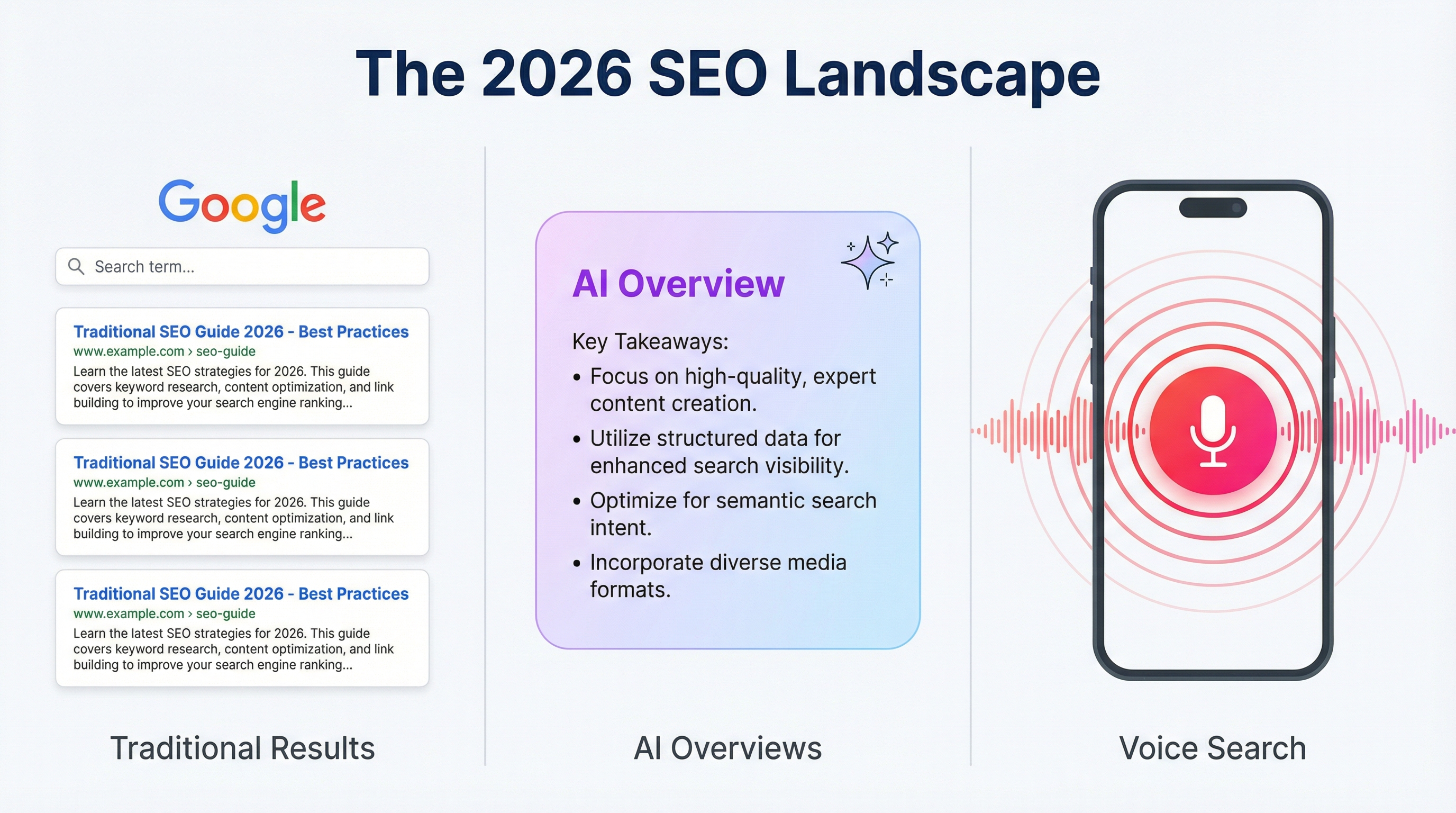
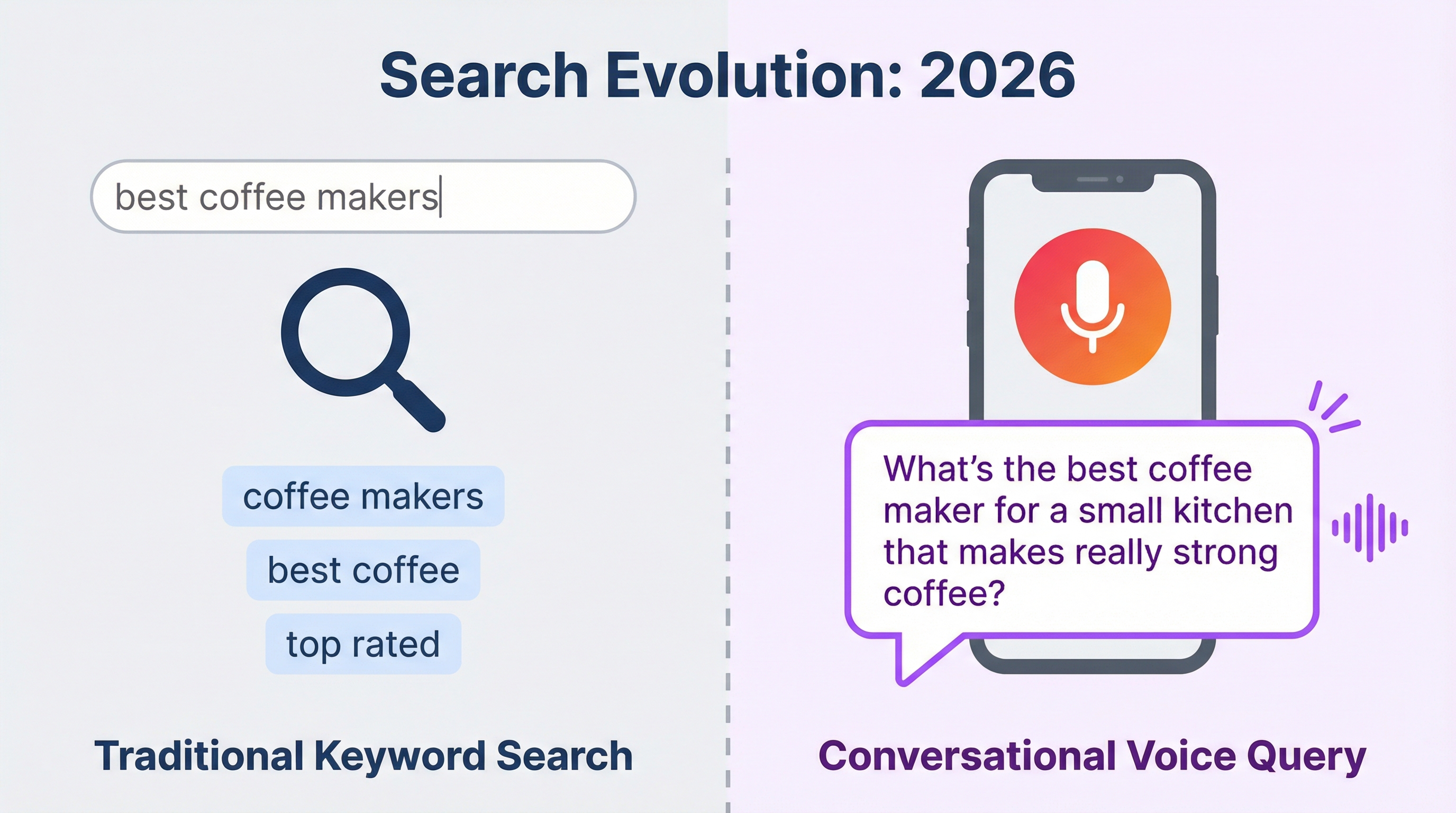
Voice search isn't the future anymore. It's the present. People ask Siri, Alexa, and Google Assistant questions all day long. And those queries look nothing like typed searches.
Typed search: 'best Italian restaurant Chicago.' Voice search: 'Hey Google, what's the best Italian restaurant near me that's open right now?' See the difference? Voice queries are longer, more conversational, and often include context like location and time.
Optimize for Questions
Voice searches are questions. Structure content to directly answer who, what, where, when, why, and how queries.
Natural Language Matters
Write like people talk. Conversational tone and long-tail keywords match voice search patterns better than formal language.
Featured Snippets Win
Voice assistants often read featured snippet answers aloud. Optimize for position zero to capture voice search traffic.
Local Intent Dominates
Most voice searches have local intent. Optimize your Google Business Profile and local citations to appear in voice results.
Featured snippets are how you win voice search. When someone asks a question, Google often reads the featured snippet answer out loud. So optimize your content to appear in position zero: use clear, concise answers at the top of sections, format content with lists and tables, and structure it so Google can easily extract the answer.
AI overviews are changing the game too. Google now generates AI-powered summaries at the top of search results for many queries. These overviews pull information from multiple sources and synthesize it into a single answer. Getting cited in an AI overview is the new featured snippet.
Pros
Captures growing segment of search traffic
Less competition than traditional keyword optimization
Aligns with natural language and user intent
Positions you for future AI-driven search evolution
Cons
Harder to track and measure directly
Often zero-click results with no traffic to your site
Requires different content structure than traditional SEO
The key is optimizing for visibility, not just clicks. If your brand gets mentioned in an AI overview or read aloud by a voice assistant, that's brand exposure even if you don't get the click. In a zero-click world, visibility is the new currency.
Off-Page SEO & Authority Building in a Cookie-Less World
Backlinks still matter. But the game has changed. One high-quality link from a relevant, authoritative site beats 100 spammy directory links.
Link building in 2026 is about earning links, not buying them. Google's algorithm is too good at detecting paid links, link farms, and other manipulative tactics. Focus on creating content so good that people naturally want to link to it. Then amplify it through digital PR and outreach.
Create linkable assets: original research, data studies, comprehensive guides, and tools that others want to reference
Digital PR campaigns: pitch journalists and bloggers with newsworthy angles, not generic 'please link to us' emails
Guest posting on relevant sites: write for publications your audience reads, with genuine value, not just for the backlink
Broken link building: find broken links on relevant sites, offer your content as a replacement
Unlinked brand mentions: find places where your brand is mentioned without a link, reach out and ask for one
Brand mentions matter even without links. Google understands co-occurrence and entity relationships. If your brand is frequently mentioned alongside industry leaders, that signals authority. Monitor brand mentions using tools like Google Alerts, Mention, or Ahrefs, and engage with them.
Privacy regulations changed everything about tracking and attribution. Third-party cookies are gone. You can't track users across sites the way you used to. This makes measuring SEO impact harder, but it also levels the playing field. Focus on first-party data: email subscribers, direct traffic, and conversions you can track on your own site.
Social signals aren't direct ranking factors, but they matter indirectly. Content that performs well on social gets more visibility, more backlinks, and more brand mentions. Don't ignore social just because it's not a direct ranking factor.
Local SEO & Multi-Location Optimization
If you have a physical location or serve specific geographic areas, local SEO isn't optional. It's how you show up when people search 'near me' or include a city name in their query.
Your Google Business Profile is your most important local SEO asset. Keep it updated with accurate hours, address, phone number, and categories. Add photos regularly. Respond to reviews (both positive and negative). Post updates and offers. Google rewards active, well-maintained profiles with better visibility in local pack results.
Local SEO Checklist
Google Business Profile claimed and fully optimized
NAP (Name, Address, Phone) consistent across all citations
Local business schema markup on website
Location pages created for each service area
Citations built on relevant local directories
Reviews actively solicited and responded to
Local content created targeting area-specific keywords
NAP consistency matters more than most people realize. Your business name, address, and phone number need to be identical everywhere they appear online: your website, Google Business Profile, Yelp, Facebook, industry directories, everywhere. Inconsistencies confuse Google and hurt your local rankings.
Reviews are a major local ranking factor. More reviews, higher ratings, and recent activity all boost your visibility. Ask happy customers to leave reviews. Respond to every review, positive or negative. Show that you care about customer feedback.
Local SEO Questions
How do I rank in the local pack?
Optimize your Google Business Profile, build local citations, earn positive reviews, and create location-specific content. Proximity to the searcher also matters, so you can't control everything.
Do I need a separate page for each location?
Yes, if you serve multiple locations. Each page should have unique content about that specific area, not just a template with the city name swapped out.
How important are online reviews for local SEO?
Extremely important. Reviews are a top-three ranking factor for local search. More reviews and higher average ratings directly improve your visibility.
What if my business doesn't have a physical location?
You can still optimize for local search by creating service area pages, building local citations, and targeting geo-specific keywords. Just be honest about your service area in your Google Business Profile.
Voice search has massive implications for local SEO. 'Near me' searches are almost always voice-based now. Optimize for conversational queries like 'where's the closest coffee shop' or 'best pizza place open now.' Include natural language and question-based content on your location pages.
Your Complete 2026 SEO Checklist: Step-by-Step Action Plan
Here's the action plan. This is what you actually need to do, in order, to rank in 2026.
Pre-Launch Technical Setup
Install Google Search Console and Google Analytics 4
Set up HTTPS and ensure all pages load securely
Create and submit XML sitemap
Configure robots.txt to allow crawling of important pages
Implement mobile-responsive design
Optimize Core Web Vitals (LCP, FID, CLS)
Add structured data for relevant content types
Set up 301 redirects for any moved or deleted pages
Monthly Content & On-Page Tasks
Publish 2-4 high-quality, in-depth articles targeting relevant keywords
Update and refresh 1-2 existing articles with new data and insights
Optimize new content with target keywords, internal links, and schema markup
Review and improve meta titles and descriptions for top pages
Add alt text and compress images on new and existing pages
Monitor Search Console for crawl errors and fix issues
Quarterly Link Building & Authority Campaigns
Conduct digital PR outreach to earn backlinks from relevant sites
Publish guest posts on industry blogs and publications
Create and promote one linkable asset (research, tool, or comprehensive guide)
Monitor and reclaim unlinked brand mentions
Audit backlink profile and disavow toxic links if needed
Continuous monitoring is what separates good SEO from great SEO. Set up weekly rank tracking for your target keywords. Review Search Console monthly for new opportunities and issues. Run a full technical audit quarterly to catch problems before they hurt rankings.
Track Rankings
Monitor keyword positions weekly using tools like Ahrefs, Semrush, or Moz. Identify wins and losses.
Fix Errors Fast
Check Search Console weekly for crawl errors, indexing issues, and manual actions. Address immediately.
Audit Quarterly
Run comprehensive technical audits every three months. Catch issues before they compound.
And here's the truth: you can do a lot of this manually, but automation saves time and catches things you'd miss. Use tools like Screaming Frog for technical audits, Ahrefs or Semrush for rank tracking and backlink monitoring, and Google Search Console for crawl data and indexing insights. Set up alerts so you know immediately when something breaks.
Ready to Dominate Search in 2026?
SEO isn't something you figure out once and forget. It's an ongoing process that requires expertise, time, and the right strategy. If you want to rank higher, drive more organic traffic, and actually see ROI from your SEO efforts, let's talk.
We've helped dozens of companies build SEO strategies that work, not just look good on paper. Book a free discovery call, and we'll show you exactly what's holding your site back and how to fix it.