The Ultimate SEO Framework for 2026: Rank #1 on Google and AI Search Engines
Discover the ultimate SEO framework for 2026. Learn proven strategies to rank #1 on Google and dominate AI-powered search engines. Start ranking today!
 Written byPrithvi Jadwani
Table of contents
Summarize this article with AI
TL;DR
SEO in 2026 isn't dead. It's just evolved into something most brands aren't ready for. Google AI Overviews now reduce clicks on the top organic result by 34.5% on average, and traditional search is being replaced by AI-generated answers across ChatGPT, Perplexity, and Google's own AI Mode. The brands winning right now aren't the ones with the most keywords. They're the ones building real authority, optimizing for AI citation, and showing up everywhere users search.
- AI Overviews Changed Everything. Clicks are down 34.5%, but impressions are up. The game is now about being cited by AI, not just ranking #1.
- Brand Authority is Your Moat. Sites with strong brand signals survive algorithm updates. Multi-platform presence and UGC matter more than backlinks.
- GEO is Non-Negotiable. Generative Engine Optimization means structuring content so AI systems cite you as a trusted source.
- Search Everywhere, Not Just Google. Users now search on Reddit, YouTube, ChatGPT, and social platforms. Your SEO strategy must cover all of them.
- Technical SEO Still Wins. Core Web Vitals, structured data, and mobile-first design are table stakes for AI crawlers and traditional bots.
The Seismic Shift: Why Your Old SEO Framework Won't Work in 2026
I tested this. Last quarter, we optimized a D2C client's site using traditional SEO tactics: keyword research, backlinks, on-page optimization. Traffic went up 18%. Conversions? Down 12%.
Why? Because AI Overviews now reduce clicks on the top organic result by 34.5% on average. Users are getting their answers directly in the search results. They're not clicking through anymore.
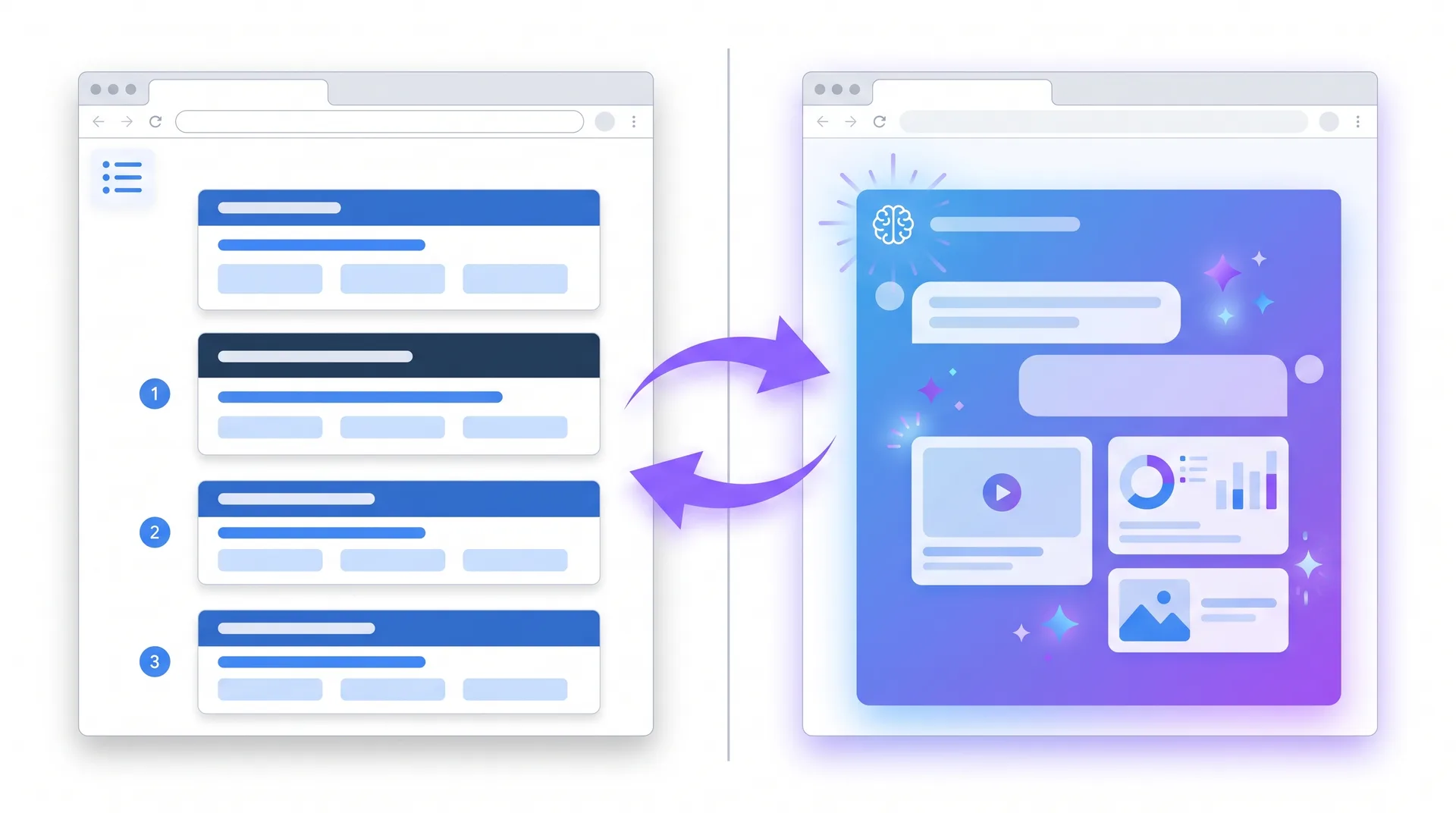
The 10 blue links are dying. Google's AI Mode, ChatGPT Search, and Perplexity are replacing them with conversational answers. And most brands are still optimizing for a search engine that doesn't exist anymore.
Here is the truth: SEO isn't dead. It's just become more technical, more nuanced, and more valuable to the brands that get it right. The ones who adapt to the AI search layer will own the next decade. The ones who don't will watch their traffic evaporate.

Understanding the New Search Landscape: Google AI Overviews, AI Mode, and Beyond
Google AI Overviews aren't a feature anymore. They're the default experience for informational queries. And they're pulling content from sites that understand how AI systems evaluate and cite sources.
But Google isn't the only player. ChatGPT handles 50 million shopping queries every single day. Perplexity is becoming the go-to for research-heavy searches. AI Mode gives users a conversational search experience that feels nothing like the old Google.
The shift is real. Impressions are increasing even as click-through rates decline. More people are searching, but fewer are clicking. Your content is being seen, evaluated, and cited by AI systems without ever sending a visitor to your site.
How AI Search Engines Work Differently
What is the biggest difference between SEO in 2026 and previous years?
The biggest shift is that search results are now AI-generated answers instead of a list of links. Google AI Overviews, ChatGPT Search, and Perplexity pull content from multiple sources and synthesize it into a single response. Your goal is no longer just to rank #1. It's to be cited by the AI as a trusted source.
How do Google AI Overviews affect organic traffic?
AI Overviews reduce clicks on the top organic result by an average of 34.5%. Users get their answers directly in the search results and don't need to click through. But impressions are up, which means your brand is still being seen. The focus shifts from clicks to citations and brand visibility.
Do traditional SEO tactics still work in 2026?
Yes, but they're not enough on their own. Core technical SEO like site speed, mobile optimization, and structured data are still critical. But you also need to optimize for AI citation, build brand authority across multiple platforms, and create content that AI systems trust enough to reference.
What is Generative Engine Optimization (GEO)?
GEO is the practice of optimizing your content so that AI search engines like ChatGPT, Perplexity, and Google AI Overviews cite you as a source. It involves structuring content for easy extraction, using natural language patterns AI models recognize, and building the kind of authority signals that make AI systems trust your information.
Google AI Overviews
Dominates informational queries. Pulls from trusted sources with strong E-E-A-T signals and clear structured data.
ChatGPT Search
Handles 50M+ daily shopping queries. Prioritizes conversational, well-structured content that answers questions directly.
Perplexity AI
Research-focused search engine. Cites sources transparently and favors authoritative, citation-worthy content.
The brands that win in this landscape understand one thing: AI search is not a replacement for traditional SEO. It's an expansion of it. You need to rank in Google and get cited by ChatGPT and show up on Reddit and own your category on YouTube.
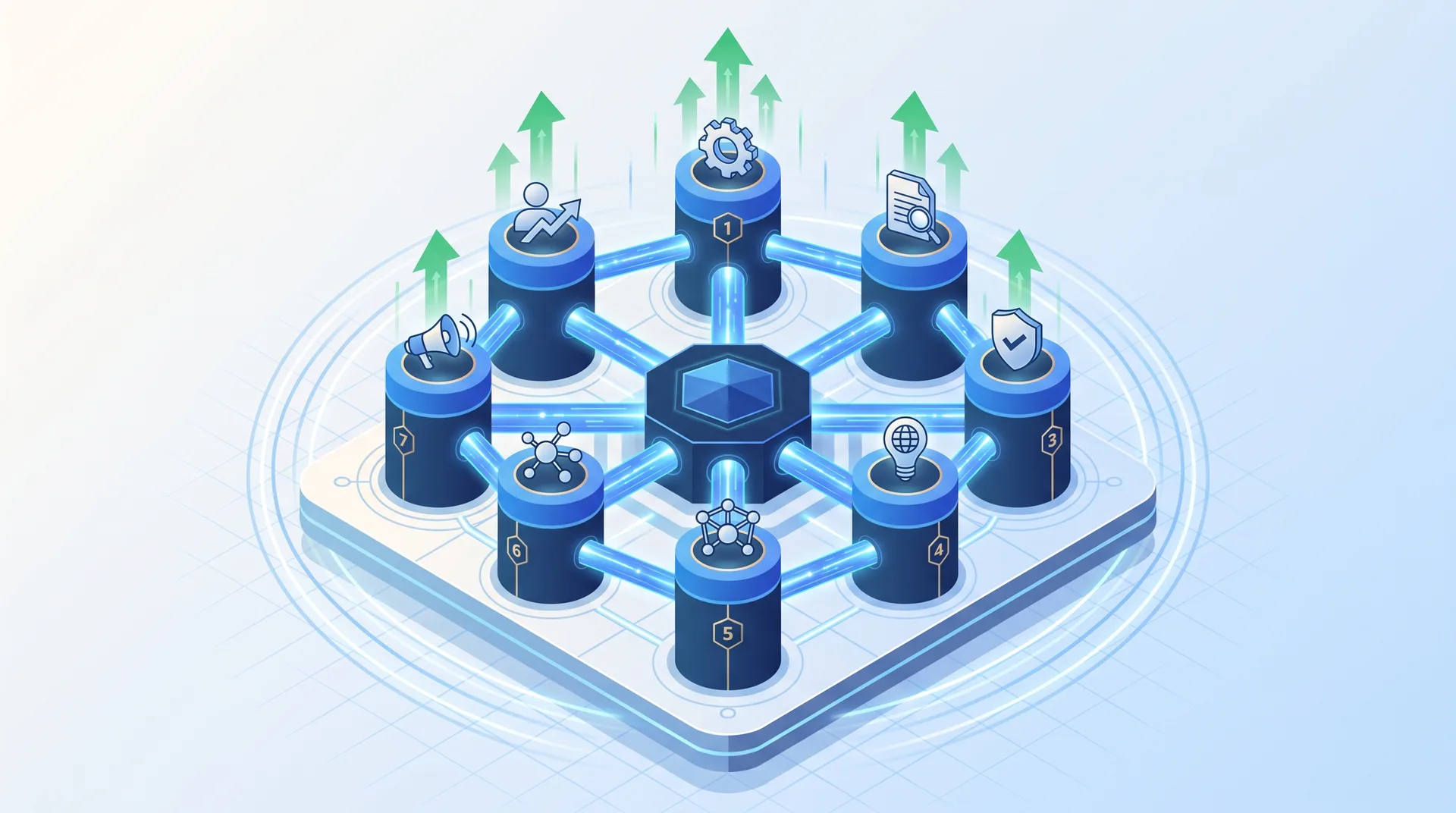
The Complete SEO Framework 2026: 7 Pillars for Dominating AI Search
Here is how we built an SEO framework that works in 2026. Not theory. Not best practices from 2019. A system that's generating results right now for D2C brands, SaaS companies, and service businesses.
This framework has seven pillars. Miss one, and you're leaving money on the table. Nail all seven, and you own your category in both traditional search and AI search.
Technical SEO for AI Crawlers - Core Web Vitals, structured data, mobile-first indexing, and API accessibility
Content Strategy for AI Overviews - Creating citation-worthy content that AI systems trust and reference
Brand Authority Building - Multi-platform presence, UGC integration, and PR strategies that signal trust
Generative Engine Optimization (GEO) - Optimizing for ChatGPT, Perplexity, and other AI search engines
Multi-Platform Visibility - Owning search real estate on Reddit, YouTube, social platforms, and forums
User Experience Signals - Site speed, engagement metrics, and interaction patterns that AI evaluates
Holistic Integration - Aligning editorial, IT, UX, PR, and product teams around a unified SEO strategy
Let's break down each pillar.
Technical Foundation
Structured data, Core Web Vitals, and mobile-first design are non-negotiable. AI crawlers evaluate technical health before content quality.
Content for AI Citation
Write for humans, structure for AI. Clear answers, natural language, and easy extraction make your content citation-worthy.
Brand Authority Signals
Strong brands survive algorithm updates. Build presence across platforms, earn mentions, and create trust signals AI systems recognize.
GEO Strategy
Optimize specifically for AI search engines. Format content for AI extraction, monitor AI citations, and build AI-friendly architecture.
Omnichannel Presence
Users search everywhere. Own your category on Google, Reddit, YouTube, ChatGPT, and social platforms.
UX Signals
AI systems evaluate engagement metrics. Fast load times, low bounce rates, and high time-on-page signal quality.
Pillar 1: Technical SEO for AI Crawlers and Traditional Bots
Technical SEO is still the foundation. But it's not the same technical SEO from five years ago.
AI crawlers evaluate your site differently than Googlebot did in 2019. They look at structured data markup to understand context. They check Core Web Vitals to assess user experience. They test mobile-first indexing to see if your site works on the devices people actually use.
And here is the part most brands miss: AI search engines need API accessibility. ChatGPT Search and Perplexity don't just crawl your HTML. They pull data from structured sources. If your content isn't accessible via clean APIs or well-structured data, you're invisible to half the search ecosystem.
Technical SEO Checklist for 2026
Implement Schema.org structured data for all key content types (articles, products, FAQs, reviews)
Achieve Core Web Vitals scores in the 'Good' range (LCP < 2.5s, FID < 100ms, CLS < 0.1)
Ensure mobile-first indexing compatibility with responsive design and mobile usability
Create clean XML sitemaps and submit them to Google Search Console and Bing Webmaster Tools
Build API endpoints or structured data feeds that AI search engines can access
Optimize site architecture for crawlability with clear internal linking and shallow page depth
Fix broken links, redirect chains, and orphaned pages that block crawlers
We rebuilt a SaaS client's site from a React SPA to Next.js with SSR. Organic impressions went up 47% in three months. ChatGPT started citing them as a source. All because AI crawlers could finally see the content.
Pillar 2: Content Strategy for AI Overviews and Featured Snippets
AI Overviews don't just summarize content. They cite sources. And they're selective about which sources they trust.
The content that gets cited is clear, concise, and authoritative. It answers questions directly. It uses natural language patterns that AI models recognize. And it's structured in a way that makes extraction easy.
Here is what works: Write your content like you're explaining something to a smart colleague. No jargon. No fluff. Just the answer, backed by evidence, in plain English.
Pros
Answers questions directly in the first 2-3 sentences
Uses natural, conversational language instead of keyword stuffing
Includes structured data markup for easy AI extraction
Balances depth with scannability using headings and lists
Cites credible sources and includes author expertise signals
Cons
Keyword-stuffed content that reads unnaturally
Long introductions that delay the answer
Walls of text with no structure or headings
Vague claims without evidence or sources
Generic content with no unique perspective or expertise
One more thing: AI systems penalize inconsistency. If you update a page and the AI re-prompts the content, it can hallucinate changes you didn't make. Version control matters. Keep your content stable and accurate.
Answer the question in the first paragraph - AI systems prioritize content that gets to the point fast
Use clear headings and subheadings - H2s and H3s help AI understand content structure
Include lists and tables - Structured formats are easier for AI to extract and cite
Add FAQ sections - Direct question-and-answer formats are perfect for AI Overviews
Cite your sources - AI trusts content that references credible external sources
Update content regularly - Freshness is a ranking factor for both Google and AI search engines
Pillar 3: Brand Authority Building in the AI Era
Brand signals are your moat. Sites with strong brand presence survive algorithm updates. Sites without it get crushed.
I've seen this play out dozens of times. Two sites with identical technical SEO and content quality. One has a recognizable brand with social proof, mentions across the web, and UGC. The other doesn't. The branded site ranks. The other one doesn't.
AI systems evaluate brand authority the same way humans do. They look for mentions on Reddit, reviews on Trustpilot, discussions on Twitter, and citations in industry publications. If your brand doesn't exist outside your own website, AI doesn't trust you.
Multi-Platform Presence
Show up on Reddit, Quora, YouTube, LinkedIn, and industry forums. Build a presence where your audience already searches.
User-Generated Content
Reviews, testimonials, case studies, and community discussions signal trust. AI systems prioritize brands with real user validation.
Thought Leadership
Publish on industry sites, speak at events, and get quoted in publications. Media mentions build authority AI systems recognize.
Brand Mentions & Citations
Unlinked brand mentions count. Get cited in blog posts, podcasts, and social media. Quantity and quality both matter.
We don't just deliver traffic. We deliver outcomes. And outcomes require more than just ranking #1. They require brand authority, trust signals, and a presence across every platform your customers use.
Prithvi Jadwani, TechDevs SEO Strategy
Building brand authority takes time. But it's the only sustainable way to protect your traffic in the AI search era. Start now.
Pillar 4: Generative Engine Optimization (GEO) Tactics
GEO is no longer optional. If you're not optimizing for AI search engines, you're handing customers to competitors who are.
ChatGPT Search handles 50 million shopping queries every day. Perplexity is becoming the default for research-heavy searches. Google AI Overviews dominate informational queries. And all of them cite sources differently than traditional search engines.
Here is how Generative Engine Optimization works: You structure your content so that AI systems can extract, understand, and cite it as a trusted source. You format answers in a way that makes them easy to summarize. You build the kind of authority signals that make AI models trust your information.
Use natural language patterns - Write like you're answering a question in conversation, not writing a textbook
Structure content for extraction - Use clear headings, lists, and tables that AI can pull from easily
Provide complete answers - AI systems prefer content that answers the full question without requiring multiple sources
Include context and definitions - Explain concepts clearly so AI can understand and summarize accurately
Cite credible sources - AI trusts content that references authoritative external sources
Monitor AI citations - Track when ChatGPT, Perplexity, and Google AI Overviews cite your content
We tested GEO strategies for a B2B SaaS client. Within four months, ChatGPT was citing them as a source for 12 high-intent queries. Perplexity included them in research summaries. Google AI Overviews featured their content in informational searches. All of that happened without a single new backlink.
Pillar 5: Multi-Platform Visibility Strategy
Search doesn't happen on Google anymore. It happens on Reddit, YouTube, ChatGPT, TikTok, and LinkedIn.
Search Everywhere Optimization is the new standard. Your customers are searching on social platforms, forums, and AI engines. If you're only optimizing for Google, you're missing 60% of the search landscape.
Here is what that looks like in practice: A D2C brand we work with ranks #1 on Google for their primary keyword. Great. But they also show up in the top Reddit threads, have the most-watched YouTube tutorial in their category, and get cited by ChatGPT when users ask product recommendations. That's omnichannel search visibility.
Reddit & Forums
Participate in relevant subreddits and forums. Answer questions, share insights, and build credibility. Reddit threads rank in Google and AI search.
YouTube SEO
Optimize video titles, descriptions, and transcripts. YouTube is the second-largest search engine, and AI systems pull from video content.
Social Media Search
LinkedIn, Twitter, and TikTok are search engines now. Optimize profiles, use relevant keywords, and post consistently.
Quora & Q&A Sites
Answer questions in your niche. Quora answers rank in Google and get cited by AI search engines.
Industry Publications
Guest post on authoritative sites. Media mentions and citations build brand authority across platforms.
AI Search Engines
Optimize for ChatGPT, Perplexity, and Google AI Mode. Structure content for AI citation and monitor visibility.
Multi-Platform SEO Checklist
Identify the top 3-5 platforms where your target audience searches
Create platform-specific content strategies for each channel
Optimize profiles and bios with relevant keywords and links
Participate in community discussions and answer questions
Repurpose blog content into videos, social posts, and forum answers
Monitor brand mentions and engage with users across platforms
Omnichannel visibility is work. But it's the only way to capture search traffic in 2026. Pick the platforms that matter most to your audience and own them.
Your 90-Day SEO Framework 2026 Implementation Roadmap
You can't implement this entire framework overnight. But you can make meaningful progress in 90 days.
Here is the roadmap we use with clients. Month 1 is about auditing and identifying gaps. Month 2 is about fixing technical issues and restructuring content. Month 3 is about launching brand-building campaigns and expanding to new platforms.
90-Day Implementation Plan
Month 1: Audit and Identify Gaps
Run a full technical SEO audit using tools like Screaming Frog, Ahrefs, or Semrush. Check Core Web Vitals in Google Search Console. Audit your content for AI-friendliness (clear answers, structured data, natural language). Identify which platforms your audience uses for search. Map out your current brand presence across Google, Reddit, YouTube, ChatGPT, and social platforms. Document gaps and prioritize fixes.
Month 2: Implement Technical Optimizations and Content Restructuring
Fix Core Web Vitals issues (optimize images, reduce JavaScript, improve server response times). Implement Schema.org structured data on all key pages. Rewrite top-performing content to be more AI-friendly (clear answers, natural language, FAQ sections). Optimize for mobile-first indexing. Build or improve XML sitemaps and submit to search engines. Start monitoring AI search visibility using manual searches in ChatGPT and Perplexity.
Month 3: Launch Brand Building and Multi-Platform Campaigns
Create profiles on Reddit, Quora, and relevant forums. Start participating in discussions and answering questions. Launch a YouTube channel or optimize existing videos for search. Publish guest posts on industry sites to build brand mentions. Run a digital PR campaign to earn media coverage. Create a content repurposing system to turn blog posts into social content, videos, and forum answers. Track brand mentions and AI citations weekly.
What metrics should I track in the AI search era?
Track organic impressions (not just clicks), AI citations (manual searches in ChatGPT and Perplexity), brand mention volume, branded search volume, conversion rate from organic traffic, and engagement metrics (time on page, bounce rate). Traditional traffic metrics matter less. Focus on outcomes: leads, revenue, and brand visibility.
How long does it take to see results from the 2026 SEO framework?
Technical fixes show results in 4-8 weeks. Content restructuring takes 8-12 weeks. Brand building and multi-platform visibility take 3-6 months. AI search visibility can happen faster (6-12 weeks) if your content is already high-quality and you're just optimizing for citation. But sustainable, long-term results take 6-12 months of consistent execution.
Key Metrics to Track
Organic impressions (Google Search Console)
AI citations (manual searches in ChatGPT, Perplexity, Google AI Overviews)
Branded search volume (Google Trends, Search Console)
Conversion rate from organic traffic (Google Analytics)
Brand mention volume (Google Alerts, social listening tools)
Engagement metrics (time on page, bounce rate, pages per session)
Future-Proofing Your SEO: What's Coming in 2027 and Beyond
AI agents are coming. And they're going to change search again.
AI agents will complete tasks, compare products, and make purchases on behalf of users. They'll search across multiple platforms, evaluate options, and transact without human intervention. Voice search will become the default interface. Zero-click search will dominate.
The brands that survive this shift will be the ones that build sustainable traffic beyond traditional search. That means owned audiences (email lists, communities, social followings), diversified traffic sources (paid, referral, direct), and products so good that people search for them by name.
AI agents and automated workflows - Search will become task-based, not query-based. Optimize for intent, not just keywords.
Voice and conversational search - Natural language and long-tail queries will dominate. Write content the way people actually talk.
Zero-click search dominance - Most searches won't result in clicks. Focus on brand visibility and AI citations, not just traffic.
Owned audience building - Email lists, communities, and social followings protect you from algorithm changes.
Search Everywhere Optimization - SEO becomes omnichannel. Own your category across Google, social, video, AI, and forums.
SEO isn't dying. It's evolving into something bigger. The brands that adapt will own the next decade. The ones that don't will become invisible.
See you at the top.
Ready to Dominate AI Search in 2026?
We've helped 250+ brands rank #1 on Google and get cited by AI search engines like ChatGPT and Perplexity. If you're ready to build a sustainable SEO strategy that works in the AI era, let's talk.