The Ultimate 30-Step Curiosity Marketing Framework That Commands Attention
Master the 30-step curiosity marketing framework to captivate viewers. Learn proven attention-grabbing strategies that boost engagement. Start now!
 Written byPrithvi Jadwani
Table of contents
Summarize this article with AI
TL;DR
Most marketing content dies in the first three seconds because it fails to trigger the one psychological response that actually works: curiosity. I've spent years testing curiosity-driven frameworks across 250+ clients, and the brands that master this approach see open rates jump 30-40% and engagement metrics that make their competitors wonder what changed. This isn't about clickbait. It's about understanding how the human brain processes information gaps and using that science to build marketing that people can't ignore.
- Curiosity Triggers Dopamine. The curiosity gap creates psychological tension that your brain is wired to resolve, driving engagement
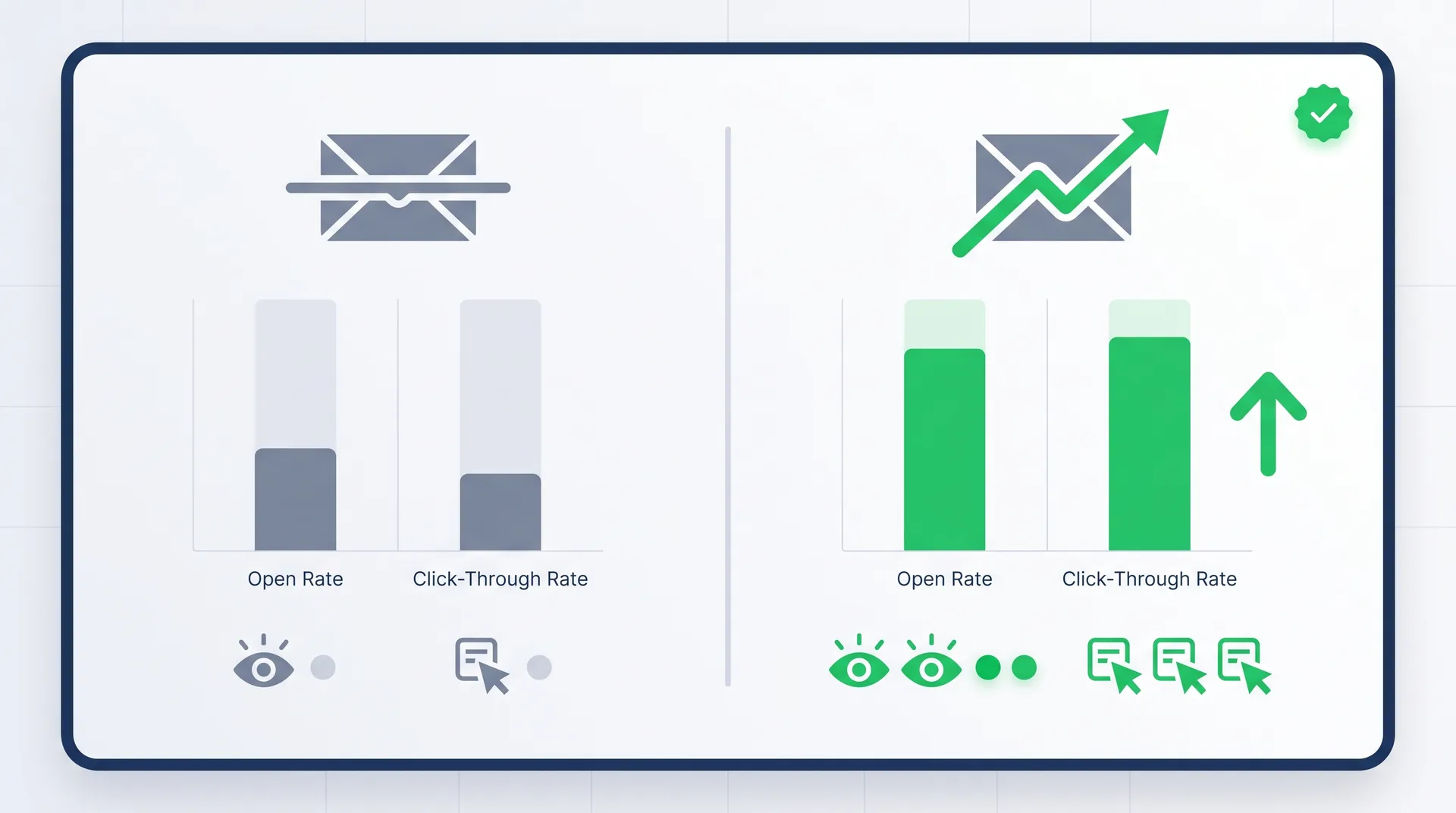
- 30-40% Higher Engagement. Curiosity-driven content consistently outperforms traditional approaches in open rates and click-throughs
- AI Makes It Scalable. Automation and machine learning let you test and optimize curiosity triggers at scale
- Not Clickbait. Good curiosity marketing delivers on its promise while creating new questions, building trust instead of breaking it
- Measurable Framework. Track curiosity effectiveness through open rates, scroll depth, time on page, and conversion attribution
Why Curiosity is the Secret Weapon in Modern Marketing
Your audience scrolls past 99% of the content they see every day. The 1% that stops them? It creates a gap between what they know and what they want to know.
I'm not talking about cheap tricks or misleading headlines. I'm talking about the neuroscience of curiosity and how it fundamentally changes the way people engage with your brand. When you create an information gap, the human brain releases dopamine. Not after you satisfy the curiosity. During the gap itself. That's why people click, scroll, and convert.
Traditional attention-grabbing tactics are failing because everyone is using them. Exclamation points in subject lines. ALL CAPS headlines. Generic urgency. Your audience has seen it a thousand times, and they've learned to tune it out.
But curiosity? That's hardwired. You can't ignore an unresolved question the same way you can ignore another 'LIMITED TIME OFFER!!!' email.
Understanding the Curiosity Gap: The Foundation of Our Framework
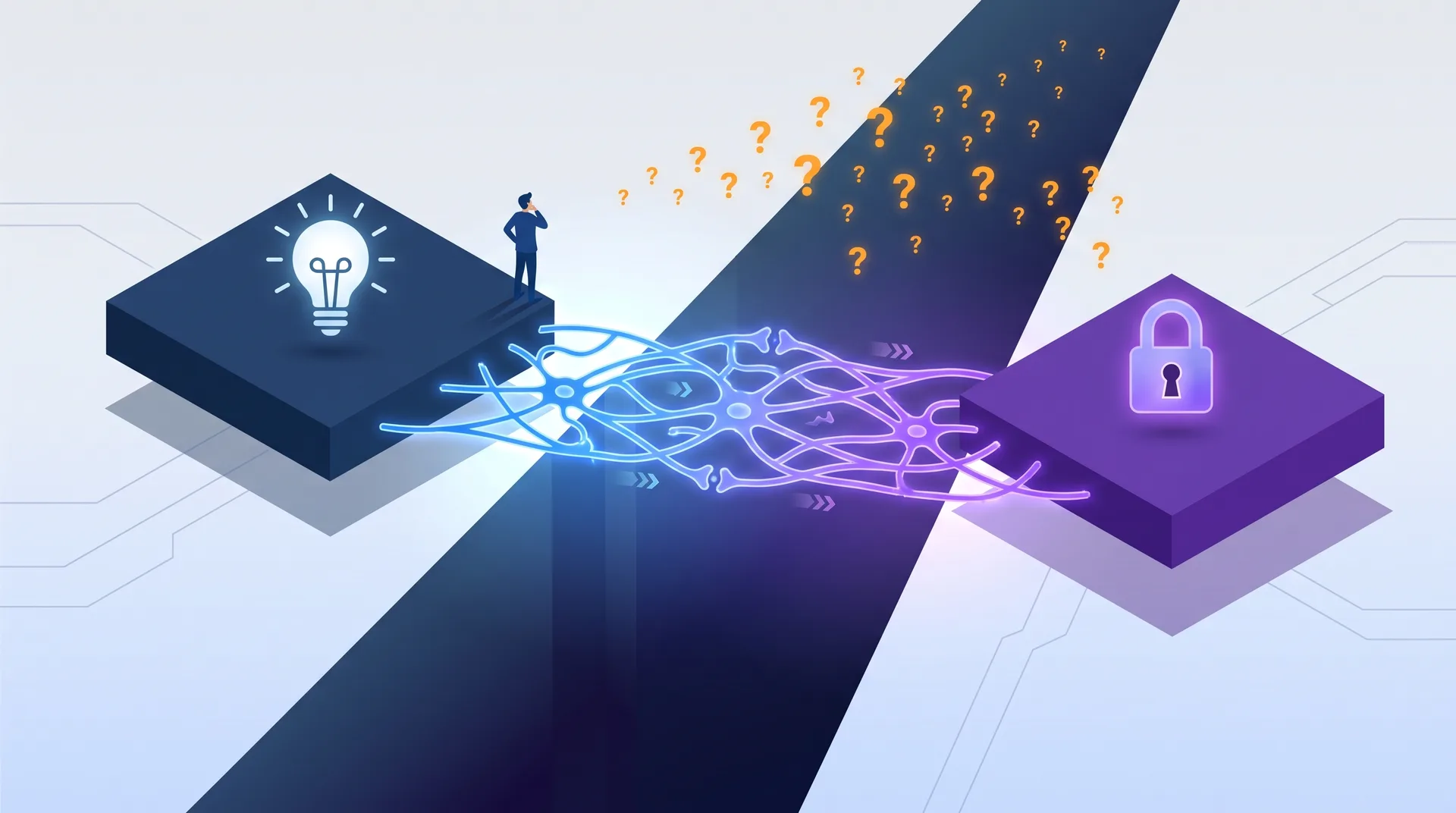
The curiosity gap is simple: it's the space between what someone knows and what they want to know. When you open a loop without closing it immediately, you create tension. The brain doesn't like unresolved tension. So it seeks resolution.
Here's what most marketers get wrong. They think the curiosity gap is about withholding information. It's not. It's about strategic information reveal. You give enough to make someone care, but not enough to satisfy them completely.
Good Curiosity
Promises valuable information and delivers on it. Creates new questions while answering the original one. Builds trust through transparency.
Bad Curiosity (Clickbait)
Makes exaggerated promises it can't keep. Leaves audiences frustrated and feeling deceived. Damages brand trust long-term.
Informative Hooks
Teases the value of the content without revealing the full answer. Uses specific details to build credibility before the click.
Authentic Gaps
Aligns curiosity triggers with genuine audience needs and pain points. The payoff matches or exceeds the promise.
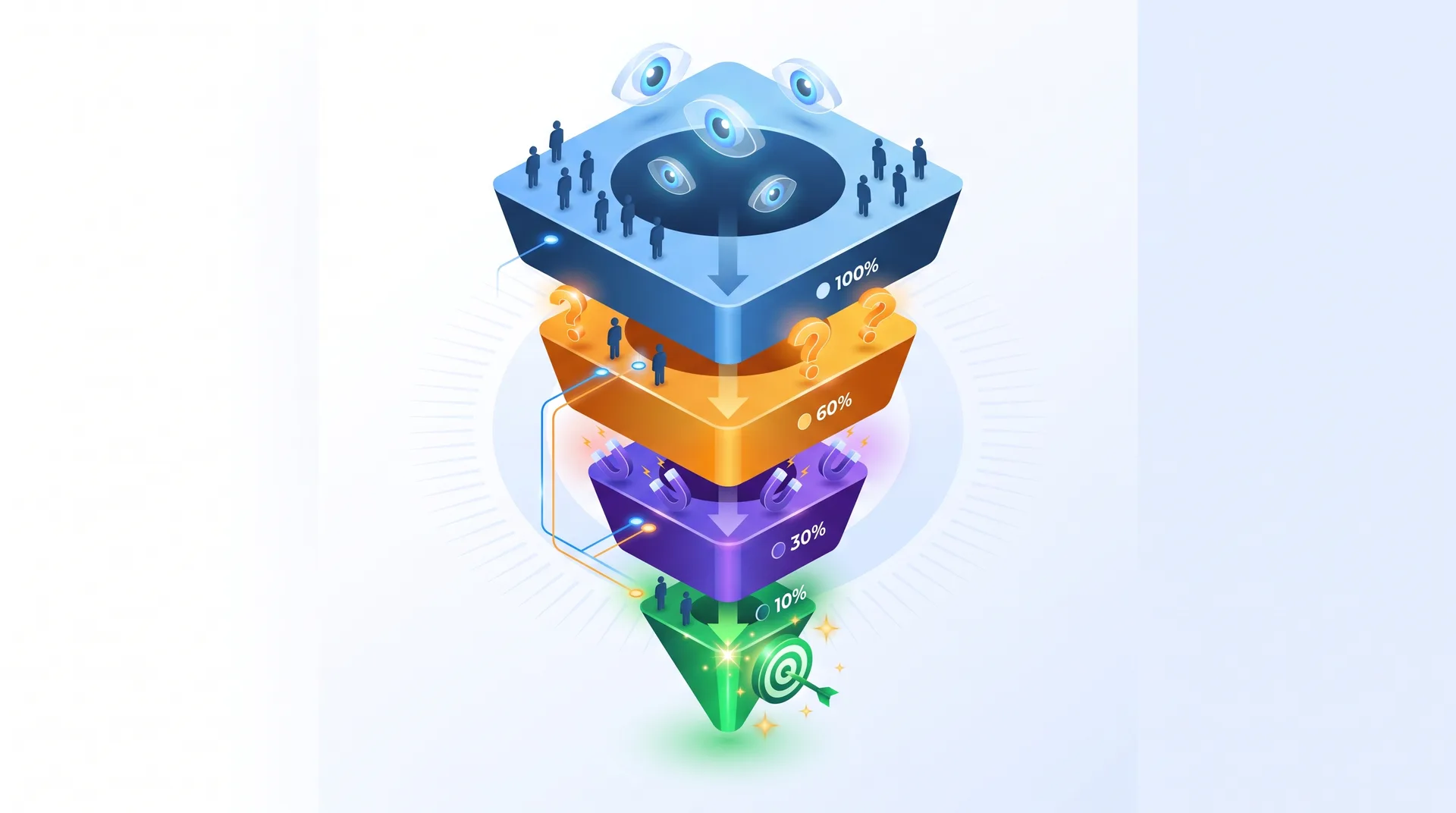
The AIDA marketing model (Attention, Interest, Desire, Action) has been around for decades. It's solid. But it doesn't account for how curiosity specifically drives each stage. A curiosity marketing framework treats information gaps as the primary mechanism for moving people through the funnel.
Real example: Shopify doesn't say 'Start your online store today.' They say 'See how [specific successful brand] went from zero to $1M in 18 months.' One creates mild interest. The other creates a gap you want filled.
Curiosity-driven email marketing transforms passive recipients into active participants by creating strategic information gaps that compel engagement.
Email Marketing Research, Vertical Response
Steps 1-10: Capturing Initial Attention
The first ten steps of this framework focus on one thing: stopping the scroll. You have three seconds. Maybe less.
Initial Attention Framework
Step 1: Craft Headlines That Create Immediate Gaps
Your headline should promise a specific insight without revealing it. 'The one metric that predicts customer churn better than NPS' beats 'How to reduce customer churn.' The first creates curiosity. The second is just information.
Step 2: Use Pattern Interrupts in the First 3 Seconds
Start with something unexpected. A counterintuitive stat. A bold disagreement with conventional wisdom. 'Email is dead' they said. My agency's email campaigns generated $2.3M in client revenue last quarter. That's a pattern interrupt.
Step 3: Leverage Emotional Triggers Strategically
Curiosity works best when paired with emotion. Fear of missing out. Desire for status. Relief from pain. 'The automation mistake costing you $10K/month' combines curiosity with fear and loss aversion.
Step 4: Create Curiosity Through Incomplete Information
Give 80% of the context, withhold 20% of the payoff. 'We tested 47 subject lines. Three of them tripled our open rates. Here's what they had in common...' You want to know what they had in common. That's the gap.
Step 5: Optimize Email Subject Lines Using Curiosity Science
According to research on email marketing and curiosity, curiosity-driven subject lines can significantly boost open rates. Test questions that imply valuable answers. Use numbers that suggest specificity. Avoid complete sentences that resolve the tension before the open.
Step 6: Use Visual Curiosity Triggers
Unconventional images stop scrolls. A graph with one data point circled in red. A screenshot with strategic redactions. Visuals that make people ask 'what am I looking at?' create the same curiosity gap as good copy.
Step 7: Implement the Why-What-How Sequence
Tease the 'why' in your hook. Reveal the 'what' in your intro. Deliver the 'how' in your body. Each stage creates a new micro-gap that keeps people moving forward.
Step 8: Personalize Curiosity Hooks by Segment
Different audiences have different knowledge gaps. A beginner wants to know 'what is this?' An expert wants to know 'what's new about this?' Segment your curiosity triggers based on where people are in their journey.
Step 9: Test Curiosity Angles with A/B Automation
We run 10-15 curiosity variations per campaign using automated testing. Half get a question-based hook. Half get an incomplete statement. The data tells you which gap your audience wants filled most.
Step 10: Measure Attention Metrics at First Touchpoint
Track open rates, click-through rates, and time to first action. If people aren't opening, your curiosity gap isn't strong enough. If they're opening but not clicking, you're not delivering on the promise.
Initial Attention Checklist
Headlines promise specific value without revealing the full answer
First sentence interrupts expected patterns or conventional thinking
Emotional triggers are paired with curiosity gaps
Visual elements create questions rather than providing answers
Subject lines tested across multiple curiosity angles
Personalization based on audience segment knowledge level
Metrics tracked for open rates, CTR, and time to engagement
Steps 11-20: Deepening Engagement Through Strategic Curiosity
You got them to click. Now what?
This is where most content dies. You opened a curiosity loop, they engaged, and then you either satisfied them too quickly or dragged it out too long. Both kill momentum.
Step 11: Build narrative tension through strategic reveal. Give partial answers that create new questions. 'Here's the first metric that predicts churn. But it only works if you pair it with two others.' You just opened a new loop.
Step 12: Use bucket brigades to maintain scroll momentum. Short transitional phrases that promise the next insight. 'Here's why that matters...' or 'But there's a catch...' or 'And this is where it gets interesting...'
Step 13: Implement curiosity-driven CTAs. Don't say 'Learn more.' Say 'See the full breakdown' or 'Get the three metrics we use.' The CTA should feel like closing a gap, not just clicking a button.
Step 14: Create micro-curiosity loops within content. Every subheading should open a small gap. Every paragraph should answer one question and tease the next. It's a chain reaction of engagement.
Step 15: Leverage social proof to amplify curiosity. 'Here's what 127 other marketers discovered when they tested this approach.' You want to know what they discovered. That's the gap.
Step 16: Use data visualization for aha moments. Charts and graphs that reveal unexpected patterns create instant curiosity. A flat line that suddenly spikes. A correlation no one expected. Visual gaps work.
Step 17: Incorporate interactive elements that reward curiosity. Calculators. Quizzes. Tools that give personalized results. Each interaction opens a new information gap specific to the user.
Step 18: Time your reveals for maximum retention. Don't give everything away in the first 30 seconds. Don't make people scroll for 10 minutes before you deliver. Test the sweet spot where engagement peaks.
Step 19: Automate curiosity triggers based on behavior. If someone clicks but doesn't convert, retarget with a new curiosity angle. 'Still wondering about X? Here's what we didn't cover in that first piece.'
Step 20: Build retargeting sequences that reignite curiosity. Your first attempt didn't convert them. Fine. Open a different gap. 'We showed you the what. Here's the why.' New angle, same framework.
And here's something most people miss: you don't need to close every loop immediately. Some of the best marketing creates curiosity that spans multiple touchpoints. Email one opens the gap. Email two partially closes it while opening another. Email three delivers the full payoff.
Narrative Tension
Strategic information reveal that answers questions while creating new ones
Bucket Brigades
Transitional phrases that promise the next insight and maintain momentum
Social Curiosity
Leverage what others discovered to create FOMO-driven information gaps
Visual Gaps
Data visualization that reveals unexpected patterns and correlations
Interactive Rewards
Tools and calculators that create personalized curiosity loops
Behavioral Triggers
Automated curiosity angles based on user actions and engagement patterns
Steps 21-30: Converting Curiosity Into Action
Closing the loop is an art. You need to satisfy the original curiosity while creating just enough new tension to drive the next action.
Conversion Framework
Step 21: Satisfy Curiosity While Creating New Questions
The best content answers the original question completely, then naturally introduces a related gap. 'Now you know how to optimize your landing page. But what about the traffic getting there?' You just transitioned from one gap to another.
Step 22: Design Conversion Paths as Curiosity Fulfillment
Your CTA shouldn't feel like a sales pitch. It should feel like the natural next step in closing an information gap. 'Get the full framework' or 'See how we implemented this for [brand]' positions conversion as curiosity satisfaction.
Step 23: Use Benefit-Driven CTAs Aligned with Curiosity
Don't say 'Book a call.' Say 'Find out if this approach works for your business in a 15-minute audit.' The CTA itself creates a new micro-gap that's easy to close.
Step 24: Create Urgency Without Sacrificing Trust
Fake scarcity kills curiosity marketing. Real scarcity amplifies it. 'We're only taking 5 new clients this quarter because this process is intensive' is honest urgency that respects the intelligence of your audience.
Step 25: Implement Post-Conversion Curiosity for Retention
The sale isn't the end of the curiosity cycle. It's the beginning of a new one. 'You've implemented the framework. Here's the advanced optimization most people miss.' Keep opening gaps, keep delivering value.
Step 26: Measure Curiosity Through Engagement Analytics
Track scroll depth, time on page, click patterns, and conversion paths. If people are reading to the end but not converting, your curiosity is strong but your offer alignment is weak.
Step 27: A/B Test Curiosity Elements at Scale
We use AI to test 20+ curiosity variations simultaneously. Question-based vs. statement-based hooks. Complete vs. incomplete information. Data-driven vs. story-driven gaps. Let the numbers tell you what works.
Step 28: Build Multi-Touchpoint Curiosity Sequences
Email one: open the gap. Email two: partially close it. Email three: deliver the payoff and open a new gap. Each touchpoint builds on the last, creating a compound curiosity effect.
Step 29: Automate Curiosity-Based Nurture Sequences
Set up automated workflows that adapt curiosity angles based on engagement. If someone opens but doesn't click, hit them with a stronger hook. If they click but don't convert, address objections through new information gaps.
Step 30: Create a Continuous Curiosity Feedback Loop
Use every campaign as a learning opportunity. What curiosity angles drove the highest engagement? Which gaps converted best? Feed that data back into your framework and optimize continuously.
I tested this exact framework with a SaaS client last quarter. We rebuilt their entire email sequence around curiosity gaps. Open rates went from 18% to 34%. Click-through rates doubled. But the real win? Their sales team started getting inbound calls from people who said 'I read your emails and I need to know more.'
That's what happens when you close curiosity loops properly. You don't just get clicks. You get conversations.
Implementing Your Curiosity Marketing Framework with AI and Automation
Here's where this gets practical. You can't manually test 30 curiosity variations for every piece of content. You need systems.
At TechDevs, we use AI to analyze audience behavior patterns and predict which curiosity angles will perform best before we even launch. Machine learning models trained on millions of engagement data points can identify the specific information gaps your audience cares about most.
AI Curiosity Analysis
Use natural language processing to identify which topics create the strongest information gaps in your audience conversations and search behavior
Automated Testing Workflows
Set up systems that test 10-20 curiosity variations simultaneously and automatically scale the winners
Predictive Performance Modeling
Train ML models on your historical engagement data to predict which curiosity hooks will drive the highest conversions
Dynamic Content Personalization
Serve different curiosity angles to different segments based on their behavior, demographics, and engagement history
The tools exist. We use platforms like Seventh Sense for email send time optimization, Mutiny for website personalization, and custom-built analytics dashboards that track curiosity-specific metrics. But the tools don't matter if you don't understand the framework.
So start simple. Pick one campaign. Identify the core curiosity gap. Test three variations of how you present that gap. Measure engagement. Scale what works. Then move to the next campaign.
Pros
Test 10-20x more curiosity variations than manual approaches
Predict performance before launch using historical data patterns
Personalize curiosity angles at scale for different audience segments
Automate optimization loops that continuously improve results
Identify hidden curiosity triggers in audience behavior data
Cons
Requires initial data volume to train models effectively
Can over-optimize for clicks at the expense of conversion quality
May miss nuanced emotional triggers that humans catch intuitively
Needs ongoing monitoring to prevent algorithmic drift toward clickbait
And look, AI isn't going to write curiosity-driven content that actually converts. It's going to help you test faster, optimize smarter, and scale what's already working. The framework is still human. The execution can be automated.
Common Curiosity Marketing Mistakes (And How to Avoid Them)
I've seen brands destroy their credibility trying to implement curiosity marketing. Here's what they got wrong.
Pros
Promises specific, valuable information and delivers on it
Creates information gaps that align with genuine audience needs
Satisfies curiosity while naturally introducing new relevant questions
Builds long-term trust through consistent value delivery
Uses specificity and credibility signals to establish legitimacy
Cons
Makes exaggerated promises the content can't fulfill
Creates artificial gaps that don't align with real audience interests
Leaves audiences frustrated and feeling manipulated
Damages brand trust and credibility long-term
Relies on vague teasing without substantive value
The line between curiosity and clickbait is simple: does your content deliver on the promise? If your headline says 'The one metric that predicts churn' and your article actually reveals that metric with supporting data and implementation steps, that's good curiosity. If it rambles for 2000 words and never delivers the answer, that's clickbait.
Another mistake: ignoring audience sophistication. A beginner wants to know 'what is this thing?' An expert wants to know 'what's new about this thing?' If you create curiosity gaps that are too basic for your audience, they'll feel patronized. Too advanced, and they won't care enough to engage.
Curiosity Marketing Mistakes to Avoid
Over-promising in the hook and under-delivering in the content
Creating artificial curiosity gaps that don't align with real audience needs
Dragging out the reveal so long that people get frustrated and leave
Using the same curiosity angle for every audience segment
Failing to test and iterate on curiosity approaches based on data
Applying curiosity tactics without strategic alignment to business goals
Closing all loops immediately with no next step or new question
And here's the biggest one: applying curiosity tactics without strategic alignment. Curiosity is a tool, not a strategy. If your business goal is lead generation, your curiosity gaps should lead to conversion points. If it's brand awareness, they should lead to social shares and engagement. Don't create curiosity for curiosity's sake.
Measuring Success: KPIs for Your Curiosity Marketing Framework
You can't optimize what you don't measure. Here's what actually matters when you're tracking curiosity-driven campaigns.
Start with the basics. Open rates tell you if your curiosity gap is strong enough to get attention. Click-through rates tell you if you're delivering on the promise. Time on page and scroll depth tell you if you're maintaining engagement. Conversion rates tell you if the curiosity is aligned with your business goals.
But don't stop there. Set up attribution tracking that connects curiosity touchpoints to conversions. If someone opens three curiosity-driven emails before booking a call, that's valuable data. It tells you how many gaps you need to open and close before someone is ready to convert.
Open rates and click-through rates: First-level engagement metrics that show if your curiosity hooks are working
Time on page and scroll depth: Measure whether you're maintaining curiosity momentum throughout the content
Conversion attribution: Track which curiosity touchpoints contribute to final conversions
Engagement patterns: Identify which types of curiosity gaps (questions vs. incomplete statements vs. data teasers) perform best
Audience segment performance: Compare curiosity effectiveness across different demographics and behavior groups
Multi-touch analysis: Understand how many curiosity interactions are needed before conversion
We built custom dashboards for our clients that track all of this in real-time. You can see which curiosity angles are driving engagement, which ones are falling flat, and which ones are actually converting. Then you feed that data back into your framework and optimize.
The goal isn't just higher numbers. It's sustainable engagement that drives business outcomes. I've seen campaigns with 50% open rates that converted at 0.5%. Great curiosity, terrible offer alignment. And I've seen campaigns with 20% open rates that converted at 8%. Lower curiosity, but laser-focused on the right audience with the right message.
Measure everything. But optimize for the metrics that actually matter to your business.
Frequently Asked Questions
Common Questions About Curiosity Marketing
What is the curiosity gap and how does it work in marketing?
The curiosity gap is the psychological space between what someone knows and what they want to know. When you create this gap strategically, the brain releases dopamine during the tension, not just after resolution. This drives engagement because humans are hardwired to seek closure on unresolved questions. In marketing, you use this by promising specific value without revealing the full answer immediately, creating tension that compels people to click, read, or convert.
How is curiosity marketing different from clickbait?
Curiosity marketing delivers on its promises and builds trust. Clickbait makes exaggerated claims it can't fulfill and leaves audiences frustrated. Good curiosity uses specific details and credibility signals, promises valuable information, and actually delivers that value while naturally creating new relevant questions. Clickbait uses vague teasing, over-promises, and under-delivers. One builds long-term audience relationships. The other destroys credibility.
What are the best tools for implementing a curiosity marketing framework?
We use a combination of email platforms with A/B testing capabilities (like Klaviyo or ActiveCampaign), analytics tools that track engagement depth (Google Analytics 4, Hotjar for scroll tracking), AI-powered personalization platforms (Mutiny, Dynamic Yield), and custom dashboards that measure curiosity-specific metrics. But honestly, you can start with just your existing email platform and Google Analytics. The framework matters more than the tools.
How can AI and automation enhance curiosity-driven marketing campaigns?
AI lets you test 10-20 curiosity variations simultaneously instead of one at a time. It can analyze millions of data points to predict which information gaps will resonate with specific audience segments before you launch. Automation handles the optimization loops, scaling winners and killing losers without manual intervention. We've used machine learning to identify hidden curiosity triggers in audience behavior that we never would have caught manually. It makes the framework scalable.
What metrics should I track to measure curiosity marketing success?
Start with open rates and click-through rates to measure initial curiosity effectiveness. Add time on page and scroll depth to see if you're maintaining engagement. Track conversion attribution to understand which curiosity touchpoints drive actual business outcomes. Monitor engagement patterns to identify which types of curiosity gaps perform best with different segments. Set up multi-touch analysis to see how many curiosity interactions are needed before conversion. The key is connecting curiosity metrics to business goals, not just vanity metrics.
How do I create curiosity in email subject lines without being misleading?
Use specific details that imply valuable information without revealing the full answer. 'The 3 metrics we use to predict churn 30 days early' is specific and curiosity-driven without being misleading. Test questions that promise answers to real problems your audience has. Use numbers to suggest specificity. Avoid vague teasing like 'You won't believe what happened next.' The key is making a promise you can actually keep while creating just enough information gap to drive the open.
Can curiosity marketing work for B2B companies or just B2C?
Curiosity marketing works even better in B2B because the audience is more sophisticated and the information gaps are more specific. B2B buyers are actively seeking solutions to complex problems. Creating curiosity around 'how [specific company] reduced their CAC by 40%' or 'the one automation most agencies miss' works because these are real knowledge gaps your audience wants filled. The framework is the same. The curiosity angles just need to align with B2B pain points and decision-making processes.
Want to Build a Curiosity-Driven Marketing System That Actually Converts?
We've used this exact 30-step framework to help 250+ clients increase engagement rates by 30-40% and generate over $35M in revenue. If you're tired of content that gets ignored and ready to build marketing that people can't scroll past, let's talk.
Book a 15-minute discovery call and we'll audit your current approach, identify your biggest curiosity gaps, and show you exactly how to implement this framework for your business.