The Ultimate Framework to Double Your Website Traffic (Proven System)
Discover the ultimate framework to double your website traffic. Proven SEO strategies, content tactics, and growth techniques that deliver 200% results. Start now!
 Written byPrithvi Jadwani
Table of contents
Summarize this article with AI
TL;DR
Most businesses sit on broken traffic strategies while wondering why their competitors keep winning. I've helped 250+ clients generate $35M+ in revenue, and here's what actually works: a systematic framework that combines technical SEO, content that compounds, strategic link building, and multi-channel promotion. No fluff. No theory. Just the exact playbook we use to double website traffic in 90 days.
- SEO Foundation First. Technical SEO isn't optional. 53% of users abandon sites that take over 3 seconds to load. Speed wins.
- Content That Compounds. Evergreen content + strategic repurposing = traffic that grows while you sleep. Focus on solving real problems.
- Authority Through Links. High-quality backlinks and smart internal linking increase site authority and drive sustained organic growth.
- Multi-Channel Amplification. SEO alone isn't enough. Social, email, paid ads, and community engagement create traffic momentum.
- Continuous Optimization. Monthly analysis, A/B testing, and doubling down on what works turns good results into exceptional growth.
Why Most Websites Struggle to Double Their Traffic (And How This Framework Changes Everything)
Over 1.13 billion websites are competing for attention right now. Most of them are losing.
Here's the reality: 68% of online experiences start with a search engine, and 57% of marketers say SEO generates more leads than any other marketing initiative. But knowing that SEO matters and actually executing a strategy that doubles your traffic are two completely different things.
I've worked with 250+ clients across D2C, SaaS, and B2B brands. I've seen what works and what's just noise. The brands that win aren't doing anything magical. They're following a systematic framework that combines technical excellence, content strategy, authority building, and smart promotion.
This isn't another generic 'create great content' guide. This is the exact playbook we use at TechDevs to take brands from invisible to unavoidable. No theory. No fluff. Just what actually moves the needle.
Pillar 1: Building Your Unshakeable SEO Foundation
You can't build a skyscraper on a broken foundation. Same with traffic.
Before you write a single blog post or launch a single campaign, your technical SEO needs to be bulletproof. This is where most brands fail. They skip the foundation and wonder why nothing sticks.
53% of users leave a site if it takes more than 3 seconds to load. That's not a suggestion. That's a business-killing stat. If your site is slow, you're bleeding traffic before anyone even sees your content.
Technical SEO Essentials (Non-Negotiable)
Page speed optimization: Compress images, minimize CSS/JavaScript, enable browser caching
Mobile-first design: Over 60% of searches happen on mobile. Your site needs to work flawlessly on phones.
Comprehensive keyword research: Use tools like Google Keyword Planner, SEMrush, or Ahrefs to find primary, long-tail, and question-based keywords
Meta tags and schema markup: Optimize title tags, meta descriptions, and structured data for search visibility
Clean site architecture: Logical URL structure, XML sitemap, and proper robots.txt configuration
Keyword research isn't just about finding high-volume terms. It's about understanding search intent. What problem is someone trying to solve when they type that query? What stage of the buyer journey are they in? Answer those questions, and you'll rank for keywords that actually convert.
Speed Matters
Use Google PageSpeed Insights to identify bottlenecks. Aim for a score above 90.
Intent Over Volume
A keyword with 500 searches and high intent beats 10,000 searches with zero intent.
Mobile-First Index
Google crawls your mobile site first. If it's broken on mobile, you're invisible.
I tested this with a SaaS client in 2024. We spent two weeks fixing their technical SEO before touching content. Page speed went from 42 to 94. Mobile usability errors dropped to zero. Organic traffic jumped 37% in the first month. That's the power of a solid foundation.
Pillar 2: The Content Strategy That Compounds Traffic Over Time
Content is not king. Useful content is king.
The brands doubling their traffic aren't publishing 10 mediocre blog posts a week. They're publishing 2-3 deeply researched, genuinely helpful pieces that solve real problems. And then they're repurposing that content across every channel they own.
Evergreen content is your traffic insurance policy. Write a guide today that ranks for years. A well-optimized blog post can drive traffic for 24+ months without you touching it again. That's compounding growth.
Common Content Strategy Questions
How often should I publish new content?
Quality beats frequency every time. Two deeply researched posts per month will outperform ten shallow ones. Consistency matters, but depth matters more. Find a pace you can sustain without sacrificing quality.
What's the difference between trending topics and evergreen content?
Trending topics drive short-term traffic spikes. Evergreen content drives sustained growth. You need both. Use trending topics to capture immediate attention, evergreen content to build long-term authority. A good mix is 70% evergreen, 30% trending.
How do I identify content gaps my competitors are missing?
Run a content gap analysis using tools like Ahrefs or SEMrush. Look at what your competitors rank for that you don't. Then look at questions people are asking in forums, Reddit, Quora, and ChatGPT. Those unanswered questions are your opportunities.
Should I update old content or create new content?
Both. Updating high-performing old content can give you a 20-30% traffic boost with minimal effort. But you also need fresh content to capture new keywords and topics. A good rule: update your top 10 posts every quarter, publish 2-3 new pieces per month.
How long should my blog posts be?
Long enough to answer the question completely, short enough to keep people reading. For SEO, 1,500-2,500 words tends to perform well. But don't pad content just to hit a word count. If you can say it in 800 words, say it in 800 words.
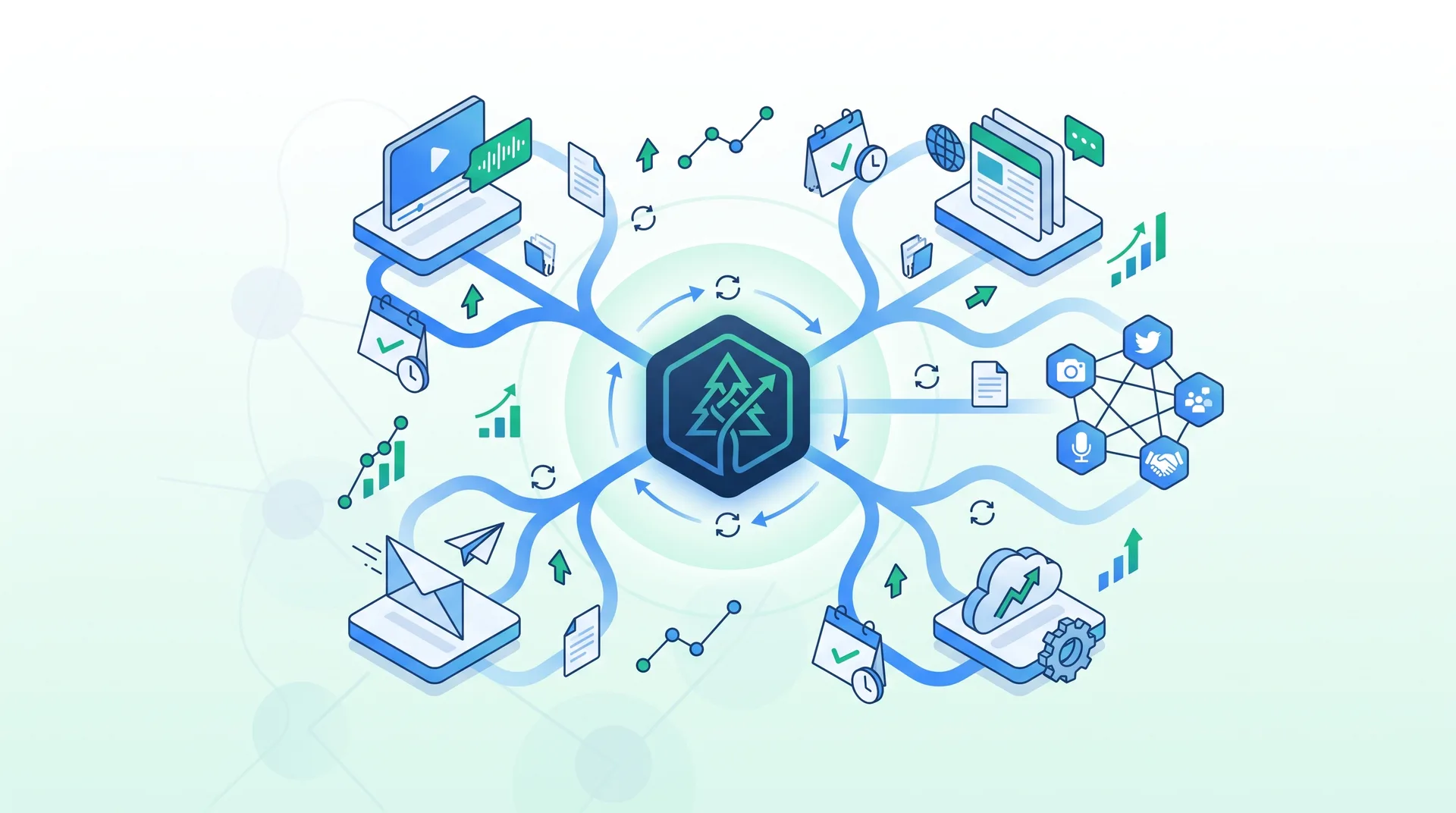
Content repurposing is where most brands leave money on the table. You write a 2,000-word blog post and call it done. Wrong. That blog post should become a LinkedIn carousel, a Twitter thread, an email newsletter, a YouTube script, and a podcast episode. One piece of content, six distribution channels.
Pros
High-Quality, Low-Frequency: Builds deep authority, ranks better long-term, easier to maintain consistency
Evergreen Focus: Traffic compounds over time, less work to maintain, higher conversion rates
Cons
High-Volume, Low-Quality: Burns out your team, dilutes your brand, gets ignored by search engines
Trending-Only Strategy: Traffic spikes then crashes, no long-term compounding, constant content treadmill
I'm not saying never publish frequently. I'm saying don't sacrifice quality for quantity. The brands winning in 2024 are publishing less but making every piece count.
Pillar 3: The Link Building System for Authority and Visibility
Links are votes. Google counts them.
Internal linking and backlinks are not optional. They're the difference between page 1 and page 10. Most brands treat link building like an afterthought. The ones doubling their traffic treat it like a core strategy.
Internal linking is the easiest win. You already own the content. Just connect it properly. A strong internal linking structure helps Google understand your site architecture, distributes page authority, and keeps users on your site longer. All of that signals quality.
Link to your pillar content from related posts: Every blog post should link to at least 2-3 other relevant pages on your site
Use descriptive anchor text: 'Click here' tells Google nothing. 'SEO audit checklist' tells Google exactly what the page is about
Create topic clusters: Group related content around a central pillar page. Link all supporting posts to the pillar
Fix broken internal links: Dead links hurt user experience and waste link equity. Audit quarterly
Don't overdo it: 3-5 internal links per post is plenty. More than that feels spammy
Backlinks are harder but more valuable. A single link from a high-authority site can move the needle more than 100 low-quality links. Quality over quantity. Always.
And monitor your backlink profile. Toxic links from spammy sites can hurt your rankings. Use tools like Ahrefs or SEMrush to audit your backlinks quarterly. Disavow anything that looks suspicious.
One more thing: link building is a long game. You won't see results overnight. But six months from now, when your competitors are wondering how you're ranking above them, you'll know it was the links.
Pillar 4: Multi-Channel Promotion Framework to Amplify Your Reach
Publishing content without promoting it is like opening a store in the desert and hoping people show up.
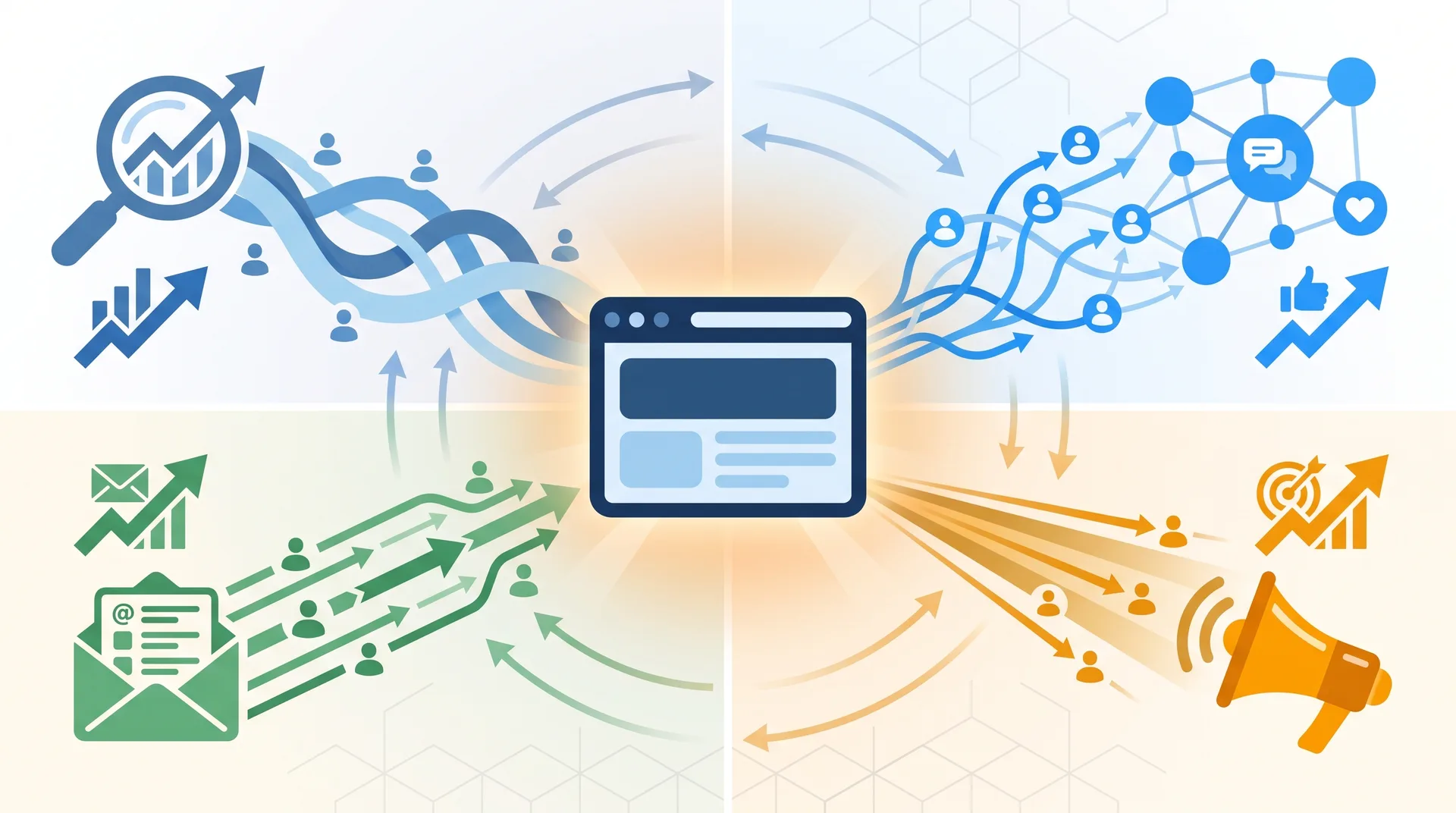
SEO is critical. But SEO alone won't double your traffic in 90 days. You need a multi-channel promotion strategy that puts your content in front of your audience wherever they are.
Social Media Amplification
Share every piece of content across LinkedIn, Twitter, Facebook, and relevant platforms. Tailor the message to each platform. LinkedIn loves long-form insights. Twitter loves punchy one-liners. Instagram loves visuals.
Email Marketing
Your email list is your most valuable asset. Every new blog post should go to your subscribers. Segment your list and send targeted content based on interests. Email drives some of the highest-converting traffic.
Paid Advertising
Use PPC and social ads to accelerate results while your SEO builds momentum. Target high-intent keywords and lookalike audiences. Even a small budget can drive meaningful traffic if you're strategic.
Communities & Forums
Reddit, Quora, niche Slack groups, industry forums. These are goldmines for targeted traffic. Answer questions, provide value, and link back to your content when it's genuinely helpful. Don't spam.
Create a promotion calendar. Every piece of content should have a 30-day promotion plan. Day 1: Email blast and social shares. Day 3: Republish on Medium or LinkedIn. Day 7: Engage in relevant communities. Day 14: Run a small paid campaign. Day 30: Analyze performance and double down on what worked.
Promotion Checklist for Every New Post
Send to email list with a compelling subject line
Share on all social channels with platform-specific messaging
Post in 2-3 relevant online communities or forums
Reach out to 5-10 people who might find it valuable and ask for feedback
Republish on Medium, LinkedIn, or other distribution platforms
Run a small paid campaign targeting high-intent audiences
Promotion isn't one-and-done. The best content gets promoted multiple times over months. If a post is performing well, keep pushing it. Traffic compounds when you're consistent.
The Optimization Loop: Continuous Analysis and Improvement
You can't improve what you don't measure.
The brands doubling their traffic aren't guessing. They're tracking everything, testing constantly, and doubling down on what works. This is the optimization loop: measure, test, analyze, improve, repeat.
Set up Google Analytics and Google Search Console if you haven't already. Track traffic sources, user behavior, bounce rates, conversion rates, and top-performing pages. This data tells you what's working and what's not.
Identify your top 10 traffic-driving pages: These are your winners. Analyze why they're performing and replicate that success
Find pages with high impressions but low clicks: These pages are ranking but not converting. Update the title tag and meta description to improve CTR
Look for pages with high bounce rates: Something's wrong. Maybe the content doesn't match the search intent. Maybe the page loads too slowly. Fix it
A/B test your CTAs and landing pages: Small changes can have massive impact. Test headlines, button colors, copy, and layouts
Review your analytics monthly: Set a recurring calendar event. Traffic trends, keyword performance, conversion rates. Track it all
A/B testing is non-negotiable. You think you know what works. You don't. Test it. I've seen headline changes increase conversions by 40%. Button color changes boost click-through rates by 25%. Small tweaks, big results.
Optimization FAQs
How often should I review my analytics?
Monthly at minimum. Weekly if you're running active campaigns. Daily if you're testing new strategies. The more data you review, the faster you can course-correct and capitalize on what's working.
What metrics actually matter for traffic growth?
Organic traffic, traffic sources, bounce rate, average session duration, pages per session, and conversion rate. Vanity metrics like total page views don't matter if no one's converting. Focus on metrics tied to business outcomes.
How do I know which pages to optimize first?
Start with pages that rank on page 2 or 3 of Google. These are low-hanging fruit. A few tweaks can push them to page 1. Then optimize high-traffic pages with low conversion rates. Finally, update old content that's losing rankings.
The optimization loop never stops. Traffic growth isn't a one-time project. It's a continuous process of testing, learning, and improving. The brands that win are the ones that never stop optimizing.
Your 90-Day Action Plan to Double Website Traffic
Theory is useless without execution. Here's your 90-day roadmap.
This is the exact framework we use with clients at TechDevs. It works because it's systematic, measurable, and focused on the activities that actually move the needle.
Month 1: Foundation (Weeks 1-4)
Week 1: Technical SEO audit. Fix page speed, mobile issues, broken links, and crawl errors
Week 2: Comprehensive keyword research. Identify 50-100 target keywords across search intent stages
Week 3: Content audit. Identify top performers, underperformers, and content gaps
Week 4: Build your content calendar for the next 90 days. Plan topics, keywords, and promotion strategy
Month 2: Content & Authority (Weeks 5-8)
Week 5-6: Publish 4-6 high-quality, SEO-optimized blog posts targeting your priority keywords
Week 7: Launch outreach campaign for guest posting and backlink opportunities. Aim for 10-15 quality prospects
Week 8: Update your top 5 existing posts with fresh data, better formatting, and stronger CTAs
Month 3: Promotion & Optimization (Weeks 9-12)
Week 9-10: Execute multi-channel promotion. Social media, email campaigns, community engagement, and paid ads
Week 11: A/B test landing pages, CTAs, and high-traffic pages. Implement winning variations
Week 12: Full analytics review. Measure traffic growth, identify wins, and plan next 90 days
Track these metrics weekly: organic traffic, keyword rankings, backlinks acquired, email subscribers, and conversion rate. If you're not seeing progress by week 6, adjust your strategy. But give it time. SEO is a marathon, not a sprint.
Stick to this plan for 90 days. Most brands quit after 30 because they don't see immediate results. The ones that stick with it? They're the ones doubling their traffic.
Real Results: How This Framework Delivers 200% Traffic Growth
I don't do theory. I do results.
We've used this exact framework with D2C brands, SaaS companies, and B2B businesses. The results are consistent: 150-300% traffic growth within 6 months when executed properly.

Most brands fail because they treat traffic generation like a side project. The ones that win treat it like the core business driver it is. Systematic execution beats random tactics every single time.
Prithvi Jadwani, TechDevs Traffic Framework
Timeline expectations: You'll see small improvements in weeks 3-4. Noticeable growth by week 8-10. Significant momentum by month 4-6. This isn't a get-rich-quick scheme. It's a proven system that compounds over time.
Weeks 1-4
Foundation building. Small wins. Traffic stays relatively flat while you build infrastructure.
Weeks 5-12
Growth phase. Content starts ranking. Traffic increases 20-50%. Momentum builds.
Months 4-6
Compounding phase. Traffic doubles or triples. Authority solidifies. Results accelerate.
AI and automation can speed this up. We use AI for keyword research, content outlines, and data analysis. But AI doesn't replace strategy. It amplifies execution. The brands using AI to work faster, not replace human expertise, are the ones winning.
Once you hit your initial traffic goals, scale. Hire more writers. Invest in better tools. Expand to new channels. The framework stays the same. You just do more of what's working.
This framework works. I've seen it work hundreds of times. The question isn't whether it works. The question is whether you'll actually execute it.
Ready to Double Your Website Traffic?
We've helped 250+ brands generate $35M+ in revenue through systematic SEO and traffic growth strategies. If you're serious about results, let's talk. Book a discovery call and we'll audit your current traffic strategy, identify your biggest opportunities, and map out a custom plan to double your traffic in the next 90 days.