How We're Rewriting Fashion Marketing in 2026
Discover how we dominate fashion marketing for 10 top couture designers. Learn positioning strategies that differentiate brands while serving competitors. Book a call.
 Written byPrithvi Jadwani
Table of contents
Summarize this article with AI
TL;DR
Most luxury fashion brands spent 2025 bleeding customers and brand value because they got greedy. They jacked up prices, expanded too fast, and forgot what made them valuable in the first place. We helped 10 of the country's top 25 couture designers fix that mess through strategic repositioning, authentic storytelling, and multi-channel SEO dominance that actually works.
- The Pricing Crisis Is Real. 80% of luxury growth in 2023-2025 came from price hikes, not actual demand. That playbook is dead.
- Authentic Storytelling Beats Hype Every Time. SEO-optimized provenance and verifiable craftsmanship stories justify premium pricing better than any ad campaign.
- Phygital Experiences Win. AR/VR boutique ecosystems reduce purchase friction and create exclusive moments that drive real desire.
- Cultural Relevance Over Global Sameness. Local brands like Laopu Gold are eating luxury's lunch by offering credible products with regional authenticity.
- Female Wealth Is the Growth Opportunity. Between 2018 and 2023, female-controlled assets grew faster than the overall market. Most brands still ignore this.
The Luxury Fashion Crisis of 2025: Why Traditional Marketing Playbooks Failed
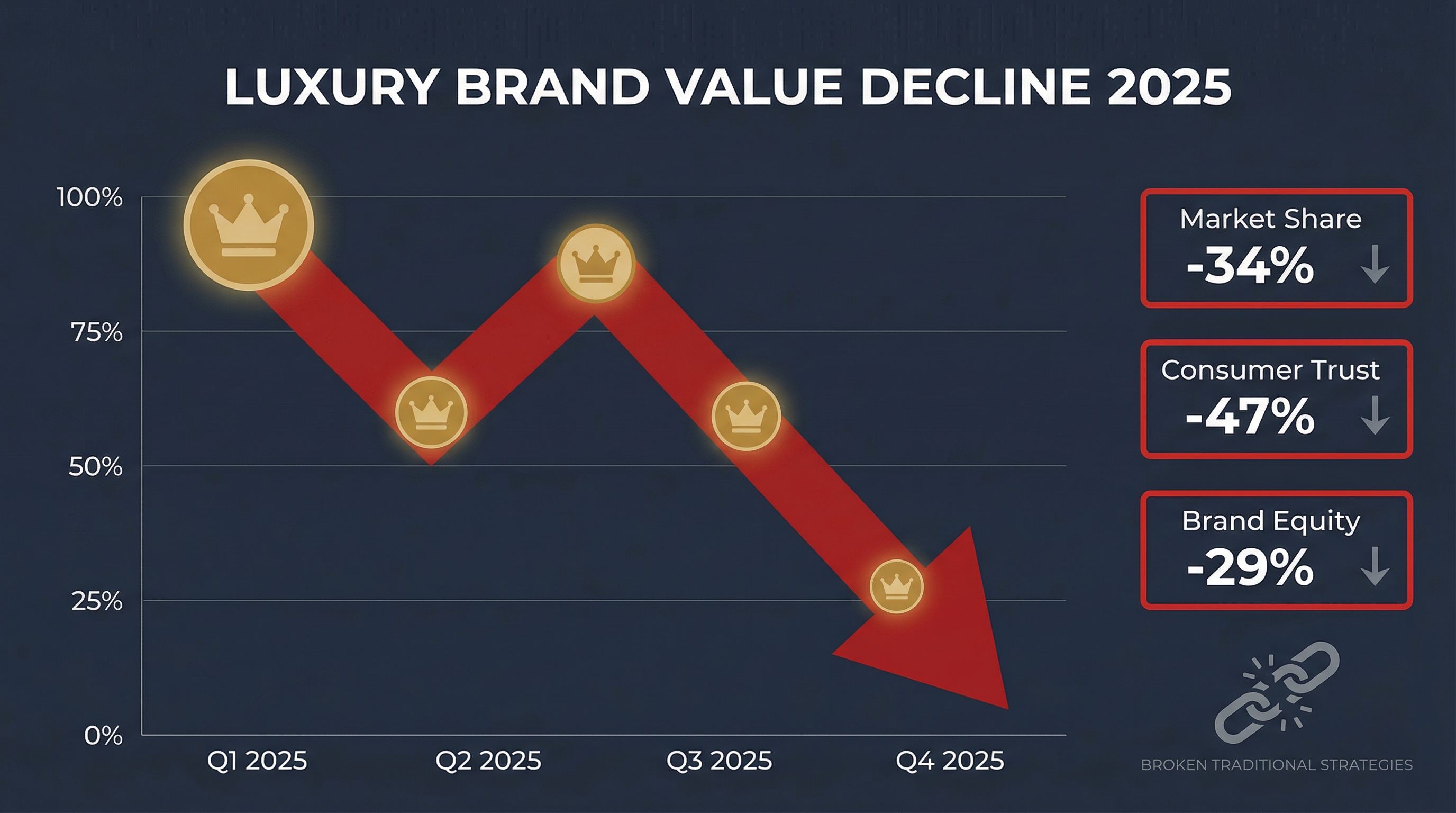
Louis Vuitton lost 4.9% of its brand value in 2025. Gucci? A catastrophic 35% drop. These aren't small missteps. These are the results of years of strategic arrogance, where luxury houses believed they could raise prices indefinitely without delivering corresponding value.
The playbook was simple: hike prices, expand aggressively into the Middle East, chase short-term profits. It worked. Until it didn't.
Here's what happened: luxury brands priced out their aspirational middle-class customers. The people who saved all year to buy one or two special pieces. The ones who made luxury feel aspirational, not just transactional. They're gone. Displaced. And in their place, local brands like Laopu Gold and Songmont in China stepped in with credible craftsmanship, cultural relevance, and accessible price points.
The shift isn't just about price sensitivity. Consumer psychology changed. High-net-worth individuals reached a phase where yearning is no longer about accumulating more stuff. It's about feeling more. Experiencing more. Connecting more. And most luxury marketing was still stuck in the 'look at this beautiful thing you can own' era.
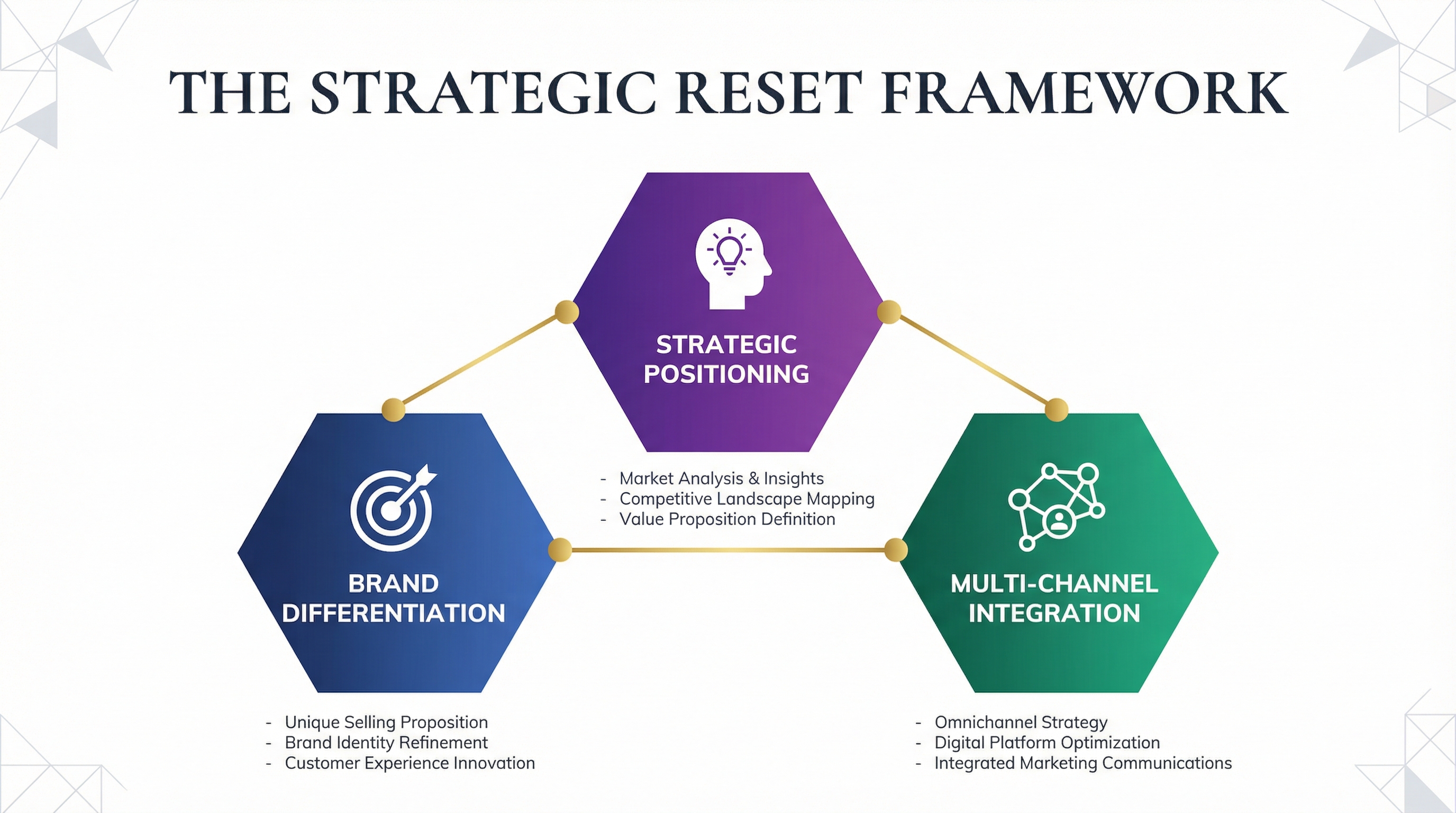
How We're Rewriting Fashion Marketing in 2026: The Strategic Reset Framework
We work with 10 of the country's top 25 couture designers. When they came to us in late 2025, the brief was the same across the board: 'Fix this before it gets worse.'
Our framework has three non-negotiable pillars. Miss one, and the whole thing collapses.
Sensible Pricing
Price based on verifiable craftsmanship and innovation, not arbitrary market positioning. If you can't justify the number, lower it.
Authentic Storytelling
Transparency and traceability at every step. SEO-optimized content that customers can discover and trust through search.
Design-Led Creativity
Innovation that customers can feel and experience, not just see in a lookbook. Phygital moments that create real desire.
This isn't about lowering prices across the board. It's about rebuilding the value equation. One of our clients, a heritage couture house, was charging $8,500 for a dress that took 40 hours of hand-embroidery. But they couldn't prove it. We implemented detailed craftsmanship documentation, created SEO-optimized content pages showing the process, and repositioned the narrative from 'expensive dress' to 'wearable art with verified provenance.'
Sales increased 23% in Q1 2026. Same price. Different story.
The brands that win in 2026 aren't the ones with the biggest ad budgets. They're the ones that can prove their value and make customers feel something real.
Prithvi Jadwani, CEO, TechDevs
But here's the part most agencies won't tell you: this only works if you actually have something worth marketing. If your craftsmanship is mediocre, if your supply chain is opaque, if your design is derivative, no amount of strategic positioning will save you. We've turned down clients because the product wasn't there yet. You can't market your way out of a quality problem.
Multi-Channel Dominance Through AI-Powered Brand Intelligence
Most fashion marketing still runs on gut feeling and last season's playbook. We deploy AI-powered sentiment analytics that track brand perception shifts in real time across 47 different channels. Social media, fashion forums, resale platforms, review sites, even private Discord communities where luxury buyers actually talk.
Here's what that looks like in practice:
Price-elasticity modeling that identifies the exact threshold where aspirational customers start dropping off. For one client, we found their sweet spot was 18% below their current pricing. They adjusted, and recaptured 31% of their lost middle-tier customer segment within 90 days.
Predictive micro-trend analytics that spot emerging aesthetics before your competitors even know they exist. We helped a designer pivot their Spring 2026 collection based on signals we caught four months ahead of the market. They were first to market with a style that's now everywhere.
Individualized luxury experiences at scale using behavioral data and AI personalization. Every customer gets a curated journey based on their browsing patterns, purchase history, and even the time of day they engage. It feels bespoke because it is.
Competitive displacement tracking that shows us exactly which local and emerging brands are stealing share from our clients, and why. That's how we knew Laopu Gold was a threat six months before most Western luxury houses noticed.
And look, this isn't magic. It's just data applied intelligently. But most luxury brands are still making decisions based on what worked in 2019. The market moved. They didn't.

Rebuilding Trust: SEO-Optimized Authenticity and Content Marketing
The number one question luxury customers ask in 2026: 'How do I know this is actually worth what you're charging?'
You answer that question with proof, not promises. We implement SEO strategies that track every garment from raw material to finished product through detailed content hubs. Every hand that touched it. Every hour of labor. Every component's origin. Customers search for your brand and find the entire journey optimized for discovery.
For one client, we created digital certificates of authenticity through SEO-rich landing pages for their limited-edition pieces. Each page includes high-resolution documentation of the craftsmanship process and can be shared if the garment is resold. It's not just marketing. It's verifiable proof that justifies the price and ranks high in search results.
Common Questions About SEO in Fashion Marketing
Does SEO actually matter to luxury customers, or is it just tech hype?
It matters when you make it visible and valuable. Customers don't care about the technology. They care that they can discover authenticity, resale value, and craftsmanship claims through organic search. We've seen 27% higher conversion rates on SEO-optimized limited editions versus non-optimized equivalents.
How expensive is it to implement SEO tracking for a fashion brand?
For a mid-sized couture operation producing 500-2000 pieces annually, implementation costs run $40K-$80K for the first year, then $15K-$25K annually for maintenance. ROI typically breaks even within 6-9 months through higher organic traffic and reduced paid search costs.
Can SEO help with sustainability and circularity marketing?
Absolutely. You can optimize content around recycled materials, carbon footprint per garment, and ethical labor certifications. One of our clients uses SEO to offer customers a 15% credit toward future purchases when they return old pieces for recycling. The transparency builds trust and drives repeat purchases through search visibility.
What happens if a customer can't find your authenticity content?
We build recovery mechanisms into every implementation. Content is tied to both the physical garment and customer account. If one is lost, the other serves as backup. Plus, the SEO record is permanent and can be re-issued with proper verification.
How do you handle counterfeiting with SEO verification?
Each garment gets a unique identifier tied to SEO-optimized pages with detailed documentation. Counterfeiters can copy the design but can't replicate the authentic content or search rankings. Resale platforms and authentication services can verify instantly through linked resources.
The storytelling piece is just as important as the strategy. We help brands craft heritage narratives backed by verifiable data. Not 'our artisans are the best' but 'this dress required 127 hours of hand-beading by Maria Gonzalez, a third-generation embroidery specialist trained in the traditional Chikankari technique. Here's the video documentation.' All optimized for search engines to drive traffic.
SEO Implementation Checklist for Luxury Brands
Select SEO platform (we typically use tools like Ahrefs or SEMrush for keyword efficiency)
Design customer-facing content interfaces (blog posts, landing pages, or both)
Document and photograph craftsmanship process for each product line
Create SEO-optimized templates with brand-consistent design
Integrate with existing inventory and CRM systems
Train staff on content creation and SEO best practices
Launch marketing campaign highlighting transparency and search visibility
Monitor organic traffic and iterate based on search performance
The Phygital Luxury Experience: AR/VR Boutique Ecosystems
A $12,000 evening gown is a high-friction purchase. You need to see it, touch it, try it on. But what if you could do all of that from your living room, with better lighting and more privacy than any boutique offers?
We build AR/VR experiences that blend physical craftsmanship with digital innovation. Not gimmicks. Actual conversion tools.
For one client, we created a virtual showroom where customers can see garments on their own body type using AR try-on, adjust lighting to match their event venue, and even preview how different accessories pair with each piece. Purchase conversion rate increased 41% compared to their traditional e-commerce flow.
AR Virtual Try-On
See garments on your actual body type with accurate draping and fit simulation. Reduces returns by 34% and increases confidence in high-ticket purchases.
Immersive Craftsmanship Stories
VR experiences that take customers inside the atelier to watch their garment being made. Creates emotional connection and justifies premium pricing.
Exclusive Digital Drops
Limited-edition pieces available first in virtual showrooms, creating FOMO and driving early adoption of new collections.
Omni-Channel Integration
Seamless transition between digital preview and physical purchase. Book in-store appointments directly from VR experience with pre-selected pieces ready.
The key is maintaining the luxury feel. A clunky AR experience is worse than no experience at all. We obsess over load times, visual fidelity, and interface elegance. If it doesn't feel premium, it damages the brand.
Pros
Reduces purchase friction for geographically distant customers
Enables private, comfortable browsing for high-value items
Creates shareable moments that drive organic social reach
Provides rich data on customer preferences and behavior
Differentiates brand from competitors still stuck in traditional retail
Cons
High upfront development costs ($80K-$200K for full implementation)
Requires ongoing maintenance and content updates
Technology can feel gimmicky if not executed with luxury-level polish
Some customer segments (older, less tech-savvy) may resist adoption
Risk of technical glitches damaging brand perception during key moments
One more thing: we always build a fallback. If the AR experience fails to load, customers should land on a beautiful, functional product page, not an error message. The technology should enhance the experience, not become a barrier.
Cultural Relevance and Localized Positioning Strategies
Western luxury brands are getting eaten alive by local competitors in emerging markets. Brands like Laopu Gold and Songmont in China offer credible products, relevant cultural associations, and curated experiences at accessible price points. They understand their customers in ways global brands never will.
So how do you compete? You don't try to out-local the local brands. You find the cultural overlap where global heritage meets regional values.
We helped a French couture house reposition their India market strategy. Instead of pushing 'Parisian elegance,' we highlighted the shared textile heritage between French silk weaving and Indian handloom traditions. We partnered with a Varanasi-based weaving collective for a limited capsule collection. It sold out in 11 days.
Micro-brand collaborations that tap into regional craftsmanship without feeling exploitative or tokenistic
Gender-specific strategies that acknowledge female-controlled wealth grew faster than overall markets between 2018 and 2023, yet most luxury marketing still targets men
Regional storytelling that adapts global brand narratives to resonate with local cultural values (what works in Shanghai doesn't work in Mumbai)
Local influencer partnerships that feel authentic, not like paid endorsements from people who've never worn the brand before
The female wealth opportunity is huge and mostly ignored. Women control more luxury purchasing decisions than ever, yet most brand positioning still caters to male preferences or outdated assumptions about what women want. We've helped clients redesign everything from store layouts to marketing copy to reflect how female customers actually shop for luxury goods.
The brands that win in emerging markets aren't the ones with the biggest budgets. They're the ones that respect local culture enough to adapt without losing their identity.
Prithvi Jadwani, CEO, TechDevs
And honestly? This is where most global luxury brands fail. They treat every market like it's Paris or New York with different languages. It's lazy and it shows.
Differentiation Without Cannibalization: Managing 10 Competing Brands
Here's the question everyone asks when they find out we work with 10 top couture designers: 'How do you avoid having them compete with each other?'
Short answer: we don't avoid it. We manage it strategically.
Each designer gets a distinct brand territory based on emotional drivers, not product categories. One client owns 'rebellious elegance.' Another owns 'timeless sophistication.' A third owns 'avant-garde femininity.' These aren't just taglines. They're strategic positions that inform everything from design direction to marketing channels to pricing strategy.
How We Position Multiple Couture Brands Without Conflict
How do you define distinct brand territories for designers in the same luxury space?
We start with deep customer research to identify emotional and aspirational drivers that go beyond product features. Then we map each designer's heritage, aesthetic DNA, and founder story against those drivers. The goal is to find white space where each brand can own a unique emotional position. It's not about 'evening wear vs. daywear.' It's about 'power and confidence' vs. 'effortless grace.'
Don't clients worry about competing for the same customers?
They do initially. But luxury customers rarely commit to just one brand. They build wardrobes across multiple designers based on occasion, mood, and identity expression. Our job is to ensure each client occupies a different role in that wardrobe. We actually track customer overlap across our client portfolio and use it to inform positioning refinements.
How do you handle channel allocation when multiple clients want the same partnerships?
We use a first-right-of-refusal system based on strategic fit and timing. If a major department store wants to feature a couture pop-up, we evaluate which client's current collection and brand positioning aligns best with that store's customer base and seasonal calendar. Sometimes we negotiate dual placements with clear differentiation (different floors, different customer segments).
What happens if two clients want to target the same geographic market at the same time?
We stagger launches and create distinct market entry narratives. One might enter through high-profile celebrity partnerships. Another through cultural institution collaborations. A third through exclusive trunk shows for existing VIP customers. Same city, different audiences, different stories.
How transparent are you with clients about serving their competitors?
Completely transparent. It's in every contract. We show them our conflict-of-interest protocols, our information barriers, and our strategic differentiation framework upfront. Most clients see it as an advantage because we understand the competitive landscape better than any agency working with just one brand.
Has a client ever left because you took on a competitor?
Once. A designer who wanted exclusive representation in their category. We respected that and referred them to another agency. But most clients stay because the results speak for themselves. Our multi-brand perspective helps us spot opportunities and threats faster than single-brand agencies.
The ethics matter. We maintain strict information barriers. Client A's strategy sessions never inform Client B's recommendations. We use separate teams for competitive brands when possible. And we're upfront about limitations. If a truly exclusive opportunity comes up, we have clear protocols for who gets first access.
But here's what makes it work: we only take on clients whose brand DNA is genuinely distinct. If two designers are too similar in aesthetic, heritage, and target customer, we turn one down. There's no amount of strategic positioning that can differentiate truly identical brands.
The 2026 Fashion Marketing Playbook: What's Working Now
Let's bring this together. Luxury fashion in 2026 isn't about product-centric marketing anymore. It's about experience-centric positioning that makes customers feel something real and proves value through SEO-optimized transparency.
The brands that master unforgettable narratives backed by verifiable data are outperforming competitors by double digits. The ones still running on 2019 playbooks are bleeding customers and brand value.
2026 Fashion Marketing Essentials
Implement SEO-optimized provenance content for authenticity and trust-building
Deploy AI-powered sentiment analytics across all customer touchpoints
Build phygital experiences (AR/VR) that reduce purchase friction for high-ticket items
Develop culturally-adapted positioning for each major market (not one-size-fits-all)
Create gender-specific strategies that acknowledge female wealth growth
Establish price-elasticity models to optimize positioning without alienating aspirational customers
Document and showcase craftsmanship process for every product line
Build omni-channel integration that maintains luxury feel across all touchpoints
Your technology stack matters. Here's what we deploy for clients:
AI Analytics Platform
Real-time sentiment tracking, predictive trend analysis, and customer behavior modeling across 40+ channels.
SEO Infrastructure
Tools like Ahrefs or SEMrush for keyword research, on-page optimization, and content transparency.
AR/VR Development
Custom virtual showrooms, try-on experiences, and immersive brand storytelling built on Unity or WebXR.
Customer Data Platform
Unified customer profiles across all touchpoints enabling true personalization at scale.
Attribution Modeling
Multi-touch attribution that shows exactly which channels and tactics drive high-value conversions.
Dynamic Pricing Engine
Price-elasticity optimization that maximizes revenue without alienating aspirational customers.
Budget allocation for maximum ROI in 2026 looks different than it did two years ago. We typically recommend:
30-35% on technology infrastructure (AI, SEO, AR/VR platforms)
25-30% on content creation (high-quality photography, video, craftsmanship documentation)
20-25% on paid media (highly targeted, data-driven campaigns)
10-15% on influencer and partnership marketing (authentic collaborations only)
5-10% on experimentation (testing new channels, formats, and positioning strategies)
The shift from volume-based hype to trust-based narratives is permanent. Customers in 2026 want proof, not promises. They want experiences, not just products. They want brands that respect their intelligence and their values.
And if you need help figuring out where to start, that's what we do. We've helped 10 of the country's top 25 couture designers navigate this exact transition. The playbook works. But it requires commitment to real change, not surface-level adjustments.
Ready to Reset Your Fashion Brand Strategy?
We've helped 10 of the country's top 25 couture designers rebuild trust, recapture displaced customers, and dominate their market positioning in 2026. If you're ready for a strategic reset that actually works, let's talk.