How Brands Are Gaming AI SEO and Manipulating LLMs for Visibility
Discover how brands manipulate AI search through bought reviews, parasite SEO, and social platform gaming. Learn the tactics shaping AI-powered search results.
 Written byPrithvi Jadwani
Table of contents
Summarize this article with AI
TL;DR
AI-powered search engines like ChatGPT and Perplexity are becoming the new gatekeepers of brand discovery. And some brands are gaming the system through parasite SEO, review manipulation, and citation farming to control what AI recommends. Here's how they're doing it, why it works, and what it means for everyone else.
- AI Search Is the New Battleground. Generative AI tools are replacing Google as the starting point for consumer research, and brands are fighting for visibility in AI-generated answers
- Parasite SEO Hijacks Authority. Brands leverage high-authority platforms like Medium and Reddit to rank content quickly because LLMs trust established domains
- Review Manipulation Feeds AI Training. Coordinated review campaigns across platforms create social proof signals that AI models struggle to distinguish from authentic feedback
- Citation Farming Floods the Zone. Brands create massive content volumes optimized for how LLMs parse information, increasing their probability of being cited
- The Ethical Line Is Blurry. Distinguishing legitimate optimization from manipulation is getting harder, and the impact on consumer trust is real
The New Frontier: How AI Search Is Changing the Game
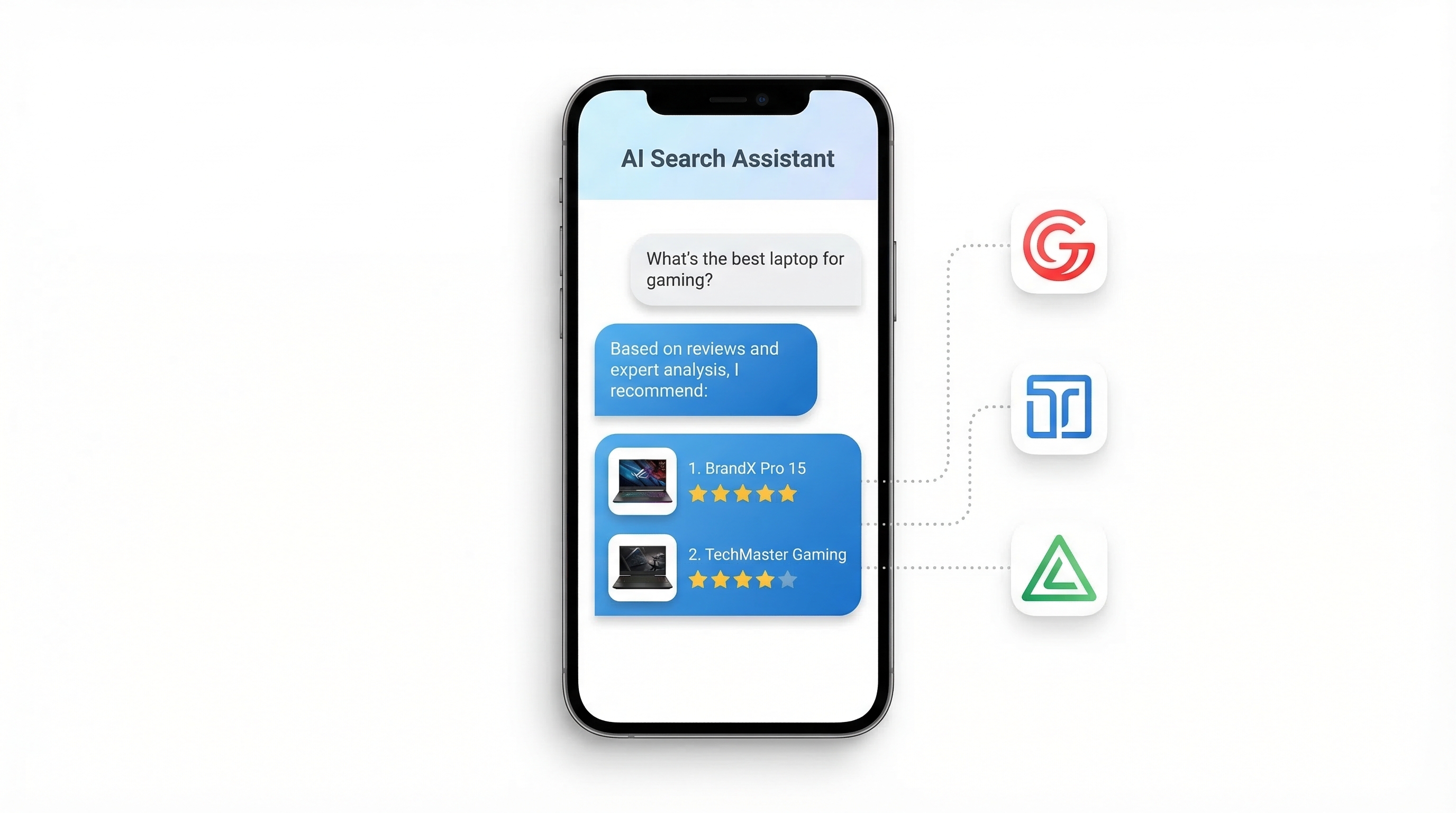
Consumer discovery just hit a turning point bigger than the rise of Google itself. Generative AI tools like ChatGPT, Perplexity, Gemini, and Amazon Rufus are rapidly becoming the starting point for consumer research. Instead of clicking through ten blue links, users now get direct, conversational answers that summarize the internet for them.
And here's the thing: if your brand isn't part of that AI-generated answer, you basically don't exist.
What Is AI SEO Manipulation and Why Brands Are Doing It
AI SEO manipulation is the practice of gaming how Large Language Models cite, recommend, and talk about brands. It's not about keywords anymore. It's about controlling the training data and signals that AI models use to form opinions.
Why are brands doing this? Because the stakes are massive. As Matt Haley from Profound puts it: "Answer engine optimization isn't some future trend to keep an eye on, it's already reshaping how brands get discovered." And for luxury brands especially, if AI assistants don't know your brand in depth, they risk flattening your voice or straight-up hallucinating details about your products.
Traditional SEO tactics are being adapted for AI-powered answer engines, but with a twist
Generative Engine Optimization (GEO) focuses on being cited, trusted, and chosen inside AI conversations
The speed of change is catching most marketing teams off guard
Visibility = existence in an AI-first search world
But here's where it gets murky. Some brands are using legitimate optimization techniques. Others are crossing into manipulation territory. The line? It's getting blurrier by the day.
Tactic #1: Parasite SEO - Hijacking High-Authority Platforms
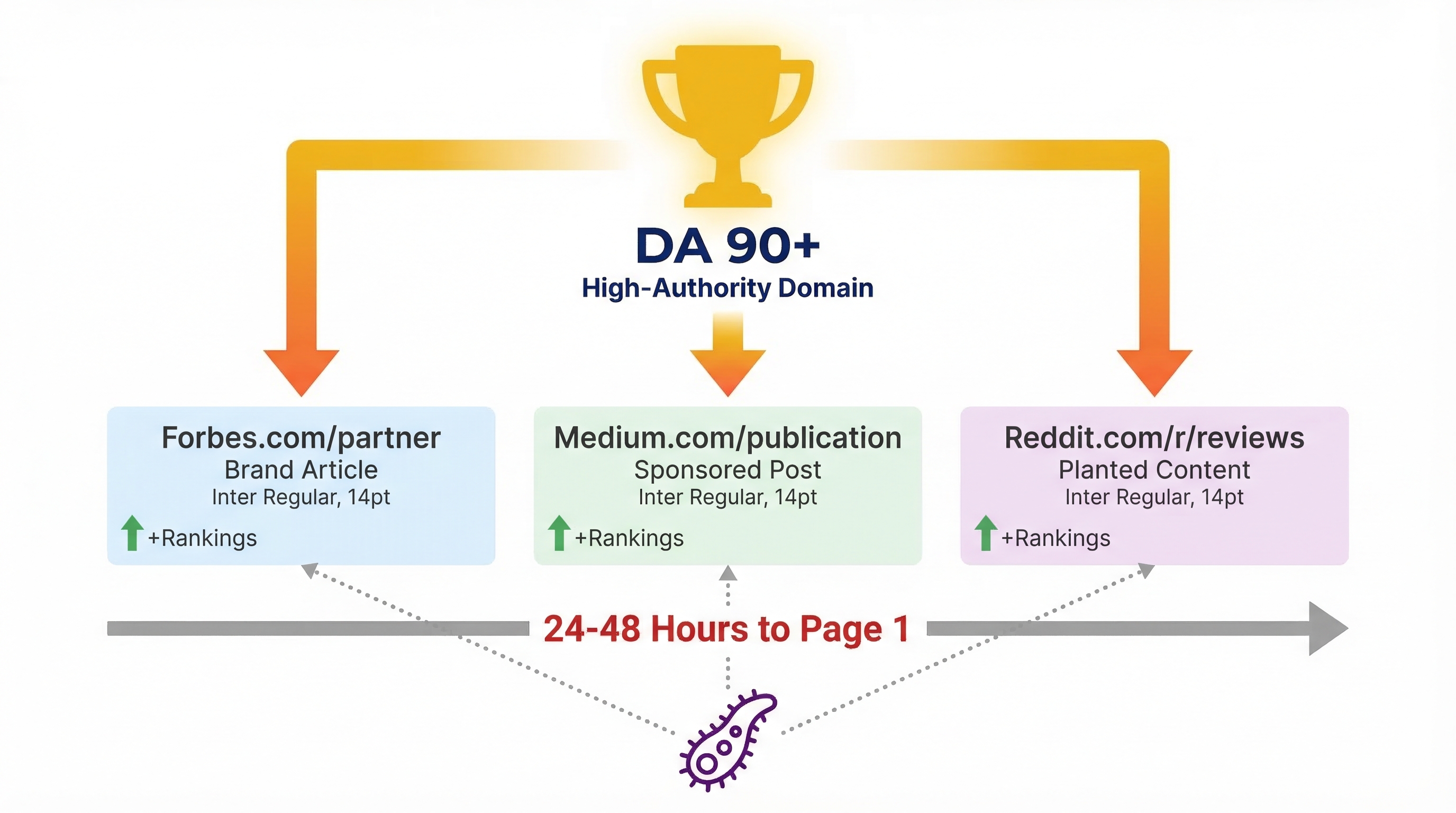
Parasite SEO is exactly what it sounds like. You find a high-authority website, publish content on it, and watch it rank immediately because the host domain has massive trust. LLMs eat this up because they heavily weight content from established domains.
There are three main flavors of this tactic:
Guest Posting on Authority Sites
Publishing branded content on Forbes, Medium, or industry publications that AI models trust
User-Generated Platforms
Flooding Reddit, Quora, and niche forums with helpful content that subtly promotes your brand
Subdomain Exploitation
Creating microsites on high-authority subdomains to inherit domain trust
The most popular platforms? Medium, LinkedIn Pulse, Reddit, Quora, and industry-specific forums. These sites have built trust over years, and LLMs treat their content as authoritative. So brands piggyback on that trust.
Tactic #2: Review Manipulation and Social Proof Gaming
Reviews aren't just for humans anymore. They're training data for AI models. And brands know it.
Here's how it works: brands coordinate review campaigns across Reddit, Trustpilot, G2, Capterra, and industry forums. They incentivize customers (or pay for fake reviews) to flood these platforms with positive feedback. The goal isn't just to look good to potential buyers. It's to feed the AI.
Pros
AI models struggle to distinguish authentic reviews from coordinated campaigns
Social proof signals heavily influence LLM product recommendations
Reviews appear across multiple platforms, reinforcing the signal
The practice creates a feedback loop where manipulated data trains future AI responses
Cons
Erodes consumer trust when discovered
Platforms are developing better detection systems
Can backfire if reviews seem suspiciously uniform
Legal and ethical risks are increasing
The really insidious part? Once this manipulated data gets into an LLM's training set, it influences every future recommendation that model makes. It's not just gaming one search result. It's poisoning the well.
Common Questions About Review Manipulation
How do LLMs like ChatGPT decide which brands to recommend?
LLMs analyze patterns across their training data, which includes reviews, articles, social media, and forums. Brands with consistent positive mentions across multiple trusted sources are more likely to be recommended. The models look for frequency, sentiment, and context, but they can't easily detect coordinated manipulation campaigns.
Is parasite SEO illegal or just unethical?
Parasite SEO itself isn't illegal. Publishing content on third-party platforms is legitimate. But it crosses into unethical territory when brands use deceptive tactics like hiding affiliate relationships, creating fake user accounts, or violating platform terms of service. Google considers manipulative parasite SEO a violation of its guidelines.
Can small businesses compete with large brands in AI search results?
It's tough but not impossible. Small businesses can't match the content volume of large brands, but they can focus on niche expertise, authentic customer relationships, and building genuine authority in specific areas. The key is quality over quantity and being the definitive expert in a narrow domain.
Tactic #3: Content Saturation and Citation Farming
If you want an LLM to cite your brand, you need to be everywhere. That's the thinking behind content saturation.
Brands create massive amounts of content across platforms, all optimized for how LLMs parse and summarize information. They're not writing for humans anymore. They're writing for the AI that will read it and regurgitate it to humans.
Answer-engine optimization (AEO) targets specific query patterns that trigger AI responses
Content is structured using schema markup, clear hierarchies, and definitive statements
Repetition across sources increases citation probability through pattern reinforcement
Monitoring tools track how often brands appear in LLM outputs
The math is simple: if your brand appears in 100 articles about a topic and your competitor appears in 10, the AI is more likely to cite you. It's a numbers game, and brands with resources are flooding the zone.
What Citation Farming Looks Like
Publishing 50+ articles per month across owned and third-party platforms
Creating definitive guides that AI models pull from for summaries
Optimizing content structure for AI parsing (clear headings, concise paragraphs)
Building topic clusters that establish topical authority
Using schema markup to help AI understand content context
The Ethical Gray Zone: Where Optimization Becomes Manipulation
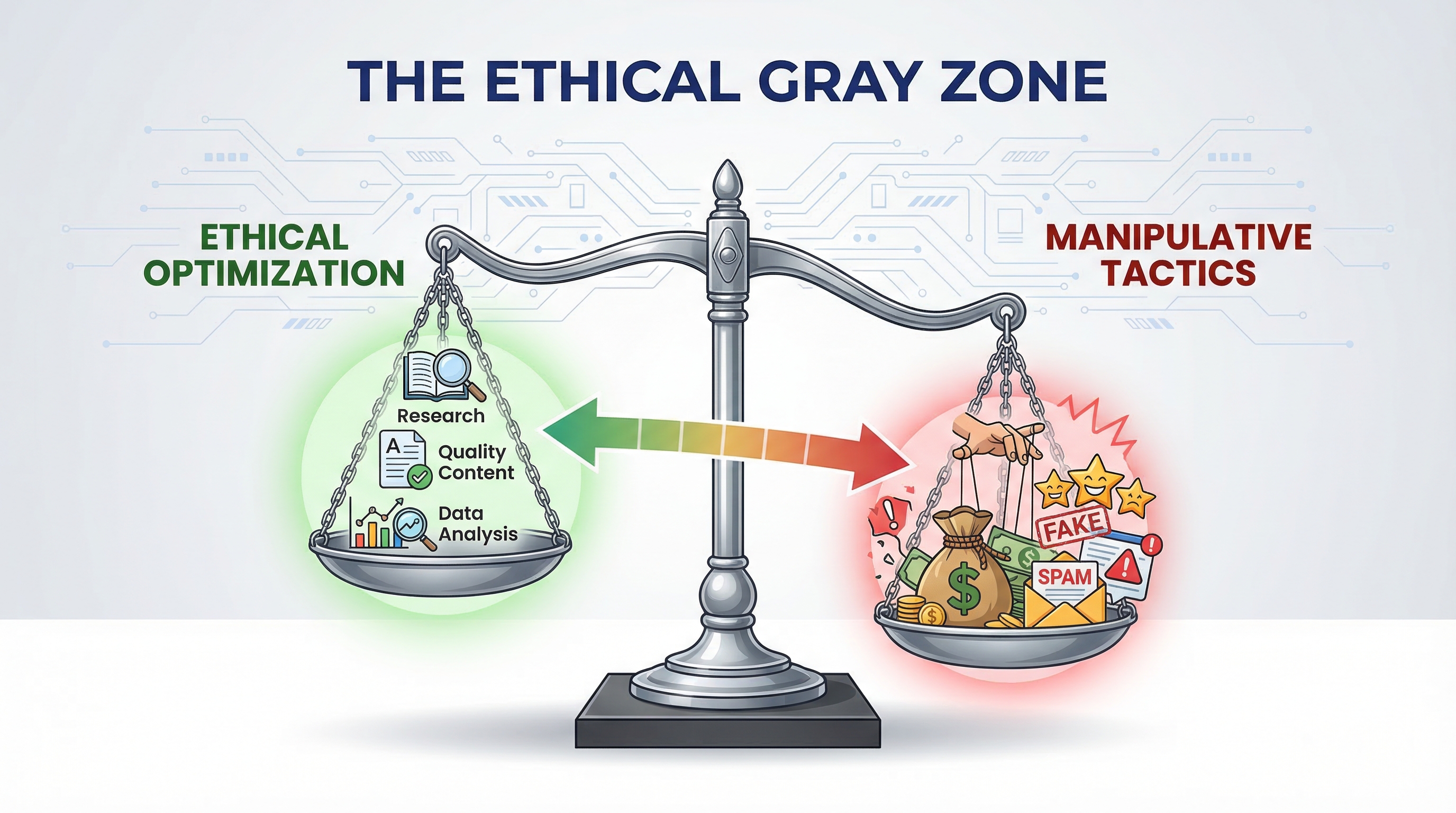
Here's the uncomfortable truth: the line between smart optimization and unethical manipulation is subjective, situational, and constantly moving.
Creating great content that AI models cite? That's optimization. Buying fake reviews to game social proof? That's manipulation. But what about coordinating with customers to leave honest reviews at the same time? Or publishing the same article on Medium, LinkedIn, and your blog to increase visibility?
For luxury or high-touch brands, if AI assistants do not know the brand in depth, they risk flattening the brand voice or hallucinating details. GEO ensures that discovery reflects brand-specific nuances and preserves the authenticity of the guest experience.
Sjoerd Brouwer, Mandarin Oriental Group
Pros
Brands that invest in quality content get rewarded
Competition drives innovation in content strategy
Consumers get more comprehensive information
Cons
Smaller brands without resources can't compete
Manipulated data erodes trust in AI recommendations
The cost of visibility keeps increasing
Authentic expertise gets drowned out by volume
The real victims? Small businesses and authentic experts who can't afford to play this game. When brand visibility becomes a function of content volume and citation farming, quality loses to quantity.
What This Means for Marketers and Businesses
So what do you do with this information? Ignore AI search and hope it goes away? That ship has sailed. Adopt every manipulative tactic? That's a recipe for getting burned.
The smart move is understanding the landscape and making informed choices about where you draw your ethical lines. Brand recognition has become critical because LLMs prioritize entities with high top-of-mind awareness and frequent mentions across reputable sites.
Monitor Your AI Visibility
Track how often your brand appears in AI-generated answers using specialized tools. You can't improve what you don't measure.
Build Authentic Authority
Focus on creating genuinely valuable content that establishes expertise. Quality still matters, even if volume gets attention.
Encourage Real Reviews
Make it easy for satisfied customers to leave authentic feedback. Don't manipulate, but don't be passive either.
Optimize for AI Parsing
Structure content with clear hierarchies, definitive statements, and schema markup to help AI understand your expertise.
At TechDevs, we help clients navigate this landscape ethically through our Generative Engine Optimization services. We focus on sustainable strategies that build real authority rather than gaming the system. Because short-term manipulation tactics have a way of blowing up in your face.
What is the difference between AI SEO and traditional SEO?
Traditional SEO optimizes for ranking in search engine results pages (SERPs). AI SEO optimizes for being cited and recommended by LLMs in conversational answers. Traditional SEO focuses on keywords, backlinks, and technical factors. AI SEO focuses on content structure, citation patterns, and entity recognition. The goal shifts from ranking #1 to being the answer the AI chooses.
What tools can track my brand's visibility in AI-powered search engines?
Several emerging tools help monitor AI visibility. These include platforms that query multiple LLMs with relevant prompts and track citation frequency, sentiment, and context. Some tools analyze how often your brand appears in AI-generated answers compared to competitors. The market is still developing, but monitoring capabilities are improving rapidly.
How is Google responding to AI SEO manipulation tactics?
Google has started penalizing manipulative parasite SEO practices, particularly those that violate webmaster guidelines. But Google's response only affects its own search results. LLMs train on data from across the web, not just Google's index. So tactics that get penalized by Google might still influence AI recommendations from ChatGPT, Perplexity, or other platforms.
What is generative engine optimization (GEO) and how does it work?
GEO is the practice of optimizing your brand's visibility in AI-generated search results and conversational answers. It involves structuring content for AI parsing, building entity recognition, creating citation-worthy resources, and establishing topical authority across multiple platforms. The goal is to be cited, trusted, and recommended inside AI-driven conversations rather than just ranking in traditional search results.
Preparing for an AI-First Search Future
Answer engine optimization is already reshaping brand discovery. Not in five years. Right now. And the brands that figure this out early will have a massive advantage.
But the key word is sustainable. You can game the system short-term, but AI companies are investing billions in detecting manipulation. The brands that win long-term will be those that build genuine authority, create authentic value, and preserve their unique voice in an AI-mediated world.
Action Steps for Building Legitimate AI Visibility
Audit your current AI visibility across major LLMs and answer engines
Create comprehensive, definitive content on your core expertise areas
Structure content with clear hierarchies and schema markup for AI parsing
Build entity recognition by consistently associating your brand with specific topics
Encourage authentic customer reviews and testimonials across platforms
Monitor citation patterns and adjust strategy based on what's working
Focus on quality and expertise over volume and manipulation
The future of search isn't about ranking #1 on Google. It's about being the answer that AI chooses to give. And the brands that understand this distinction will be the ones that survive the transition.
Ready to Build Sustainable AI Visibility?
Stop guessing and start optimizing. At TechDevs, we help brands improve their visibility in AI-powered search engines through ethical, sustainable strategies that build real authority. No manipulation. No gaming. Just results that last.