The Ultimate Guide to NAP Consistency: How to Dominate Local Search Results
Master NAP consistency to dominate local search. Learn proven strategies to maintain accurate Name, Address & Phone data across all platforms. Boost your rankings now!
 Written byPrithvi Jadwani
Table of contents
Summarize this article with AI
TL;DR
NAP consistency (Name, Address, Phone) is the foundation of local SEO that most businesses get wrong. When your business information is scattered across the internet with slight variations, Google can't verify your legitimacy, and customers can't find you. Fix it once, maintain it properly, and watch your local rankings climb.
- 86% of Searches Are Local. Most people searching online are looking for a business near them, and NAP accuracy determines whether they find you or your competitor
- Google Cross-References Everything. Every directory, review site, and social platform is checked. Inconsistencies create doubt, and doubt kills rankings
- Small Errors Have Big Consequences. A missing comma, an old address, or a different phone format can push you out of the Local 3-Pack entirely
- Fix It in 20 Minutes. A systematic audit and cleanup process takes less time than you think, and the ROI is immediate
What is NAP Consistency and Why It's Critical for Local SEO Success
Here is what kills most local businesses online: they exist in 47 different versions across the internet, and Google has no idea which one is real.
NAP stands for Name, Address, Phone number. It's the most basic identifying information about your business, and it needs to be identical everywhere it appears. Not similar. Not close enough. Identical.
You might also see NAPU (Name, Address, Phone, URL) or NAPW (Name, Address, Phone, Website) thrown around. Same concept. The more consistent your business information is across every platform, the more Google trusts you.
And 86% of searches are for local businesses. That means if you are not showing up in local search results because your NAP is a mess, you are invisible to the majority of people who could become customers.
Here is the part most people miss: NAP consistency is not just about rankings. It's about customer experience. Someone finds your business on Yelp with one phone number, clicks through to your website and sees a different number, then checks Google Maps and finds a third number. What do they do? They leave. They go to a competitor whose information is clear and trustworthy.
Google Verification
Consistent NAP tells Google your business is legitimate and should be shown to users searching in your area
Customer Confidence
Clear, accurate information builds trust. Conflicting details send customers to competitors
Local 3-Pack Visibility
NAP accuracy is one of the foundational factors that determine whether you appear in the top 3 local results
Ranking Momentum
Fix NAP consistency once, and every other local SEO effort you make becomes more effective
How Google Uses NAP Data to Verify Your Business Legitimacy
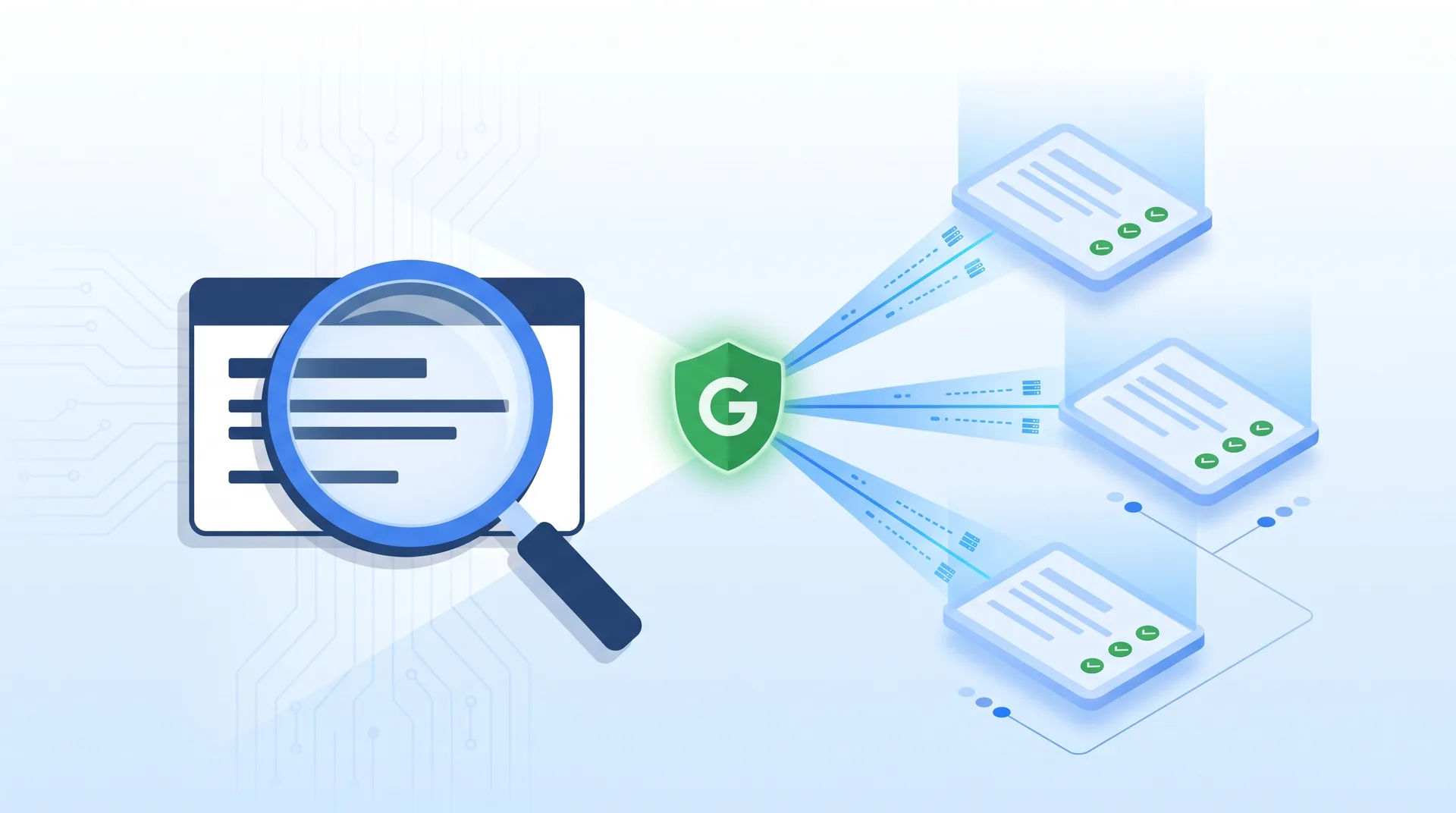
Google does not take your word for it. When you say your business is located at 123 Main Street, Google goes out and checks. It crawls directories, review sites, social platforms, and every other place your business is mentioned online. Then it cross-references everything.
If the details match up consistently, that's a trust signal. Google thinks: this business is real, it's located where it says it is, and people can contact them. If the details don't match, Google has to make a judgment call about which version is correct. That uncertainty can push you down in local results, or worse, keep you out of them entirely.
Google crawls directories like Yelp, Yellow Pages, and industry-specific sites to find mentions of your business
It checks social platforms including Facebook, Instagram, LinkedIn, and Twitter for business profile information
It cross-references review sites like Trustpilot, Google Reviews, and niche platforms specific to your industry
It compares everything to your Google Business Profile, which acts as the master reference point
It looks for patterns - if 15 sites say one thing and 2 say another, Google assumes the majority is correct
But here is the problem: if your business is mentioned on spammy or low-quality citations, Google might think your business is not legit and refuse to feature it. Quality matters. A citation from a trusted directory carries weight. A mention on a sketchy link farm does the opposite.
Citations help Google's algorithm verify your business's trustworthiness. That's why it's so important to make sure that your business information such as NAP is correct on every part of the internet. Otherwise, Google may not show your business to its users.
The HOTH
Google My Business (now called Google Business Profile) is the foundation. If your NAP is wrong there, nothing else matters. But even if it's perfect on your profile, inconsistencies elsewhere create friction. Google sees conflicting information and has to decide what to trust. Every inconsistency is a vote against your credibility.
Common NAP Inconsistencies That Are Killing Your Local Rankings
Most NAP inconsistencies are not dramatic. They are small, quiet errors that chip away at your rankings without you knowing. A missing period. An abbreviation. A phone number formatted differently. Individually, they look harmless. Collectively, they give Google a muddled picture of your business.
Most Common NAP Errors
Business Name Variations
Design by Nadja vs Design By Nadja vs Nadja Design. Capitalization, punctuation, and legal suffixes (Ltd, LLC, Inc) need to be identical everywhere. Pick one format and stick to it.
Address Formatting Differences
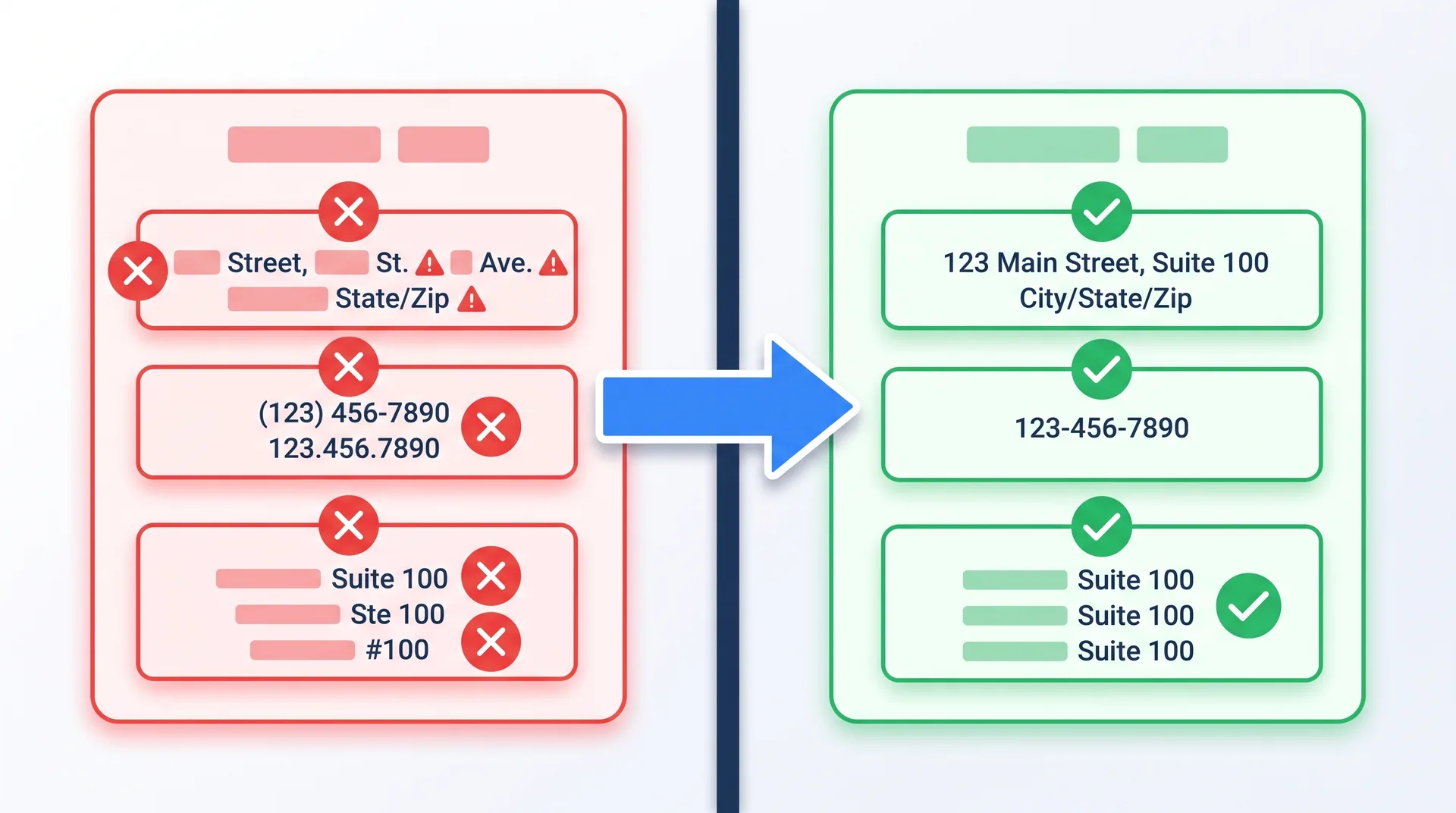
15 High Street vs 15 High St vs 15 High St. - Google sees these as three different addresses. Suite numbers, floor numbers, and abbreviations must be consistent across every listing.
Phone Number Format Variations
020 1234 5678 vs 02012345678 vs +44 20 1234 5678. Choose one format (with or without country code, with or without spaces) and use it everywhere.
Outdated Information After Moves
You moved offices six months ago. Half your listings still show the old address. Google does not know which one is current, so it shows neither in local results.
Duplicate Listings with Conflicting Details
Two entries for the same business on the same directory, often with different phone numbers or addresses. This is worse than having no listing at all.
And these are not hypothetical problems. Inconsistencies like these push businesses out of the Local 3-Pack every single day. The businesses that rank are not necessarily better. They just have their NAP sorted out.
Quick NAP Consistency Self-Check
Google your business name and check the top 10 listings for matching NAP
Compare your Google Business Profile NAP to your website footer
Check Facebook, Yelp, and LinkedIn for identical formatting
Search for duplicate listings on major directories
Verify your phone number format is identical across all platforms
Step-by-Step: Creating Your Master NAP Format
Before you fix anything, you need to decide on the exact format you want to use everywhere. This is your master NAP. Write it down. Save it as a text document you can copy and paste from. That single habit eliminates most inconsistencies before they happen.
Be specific. If your business name has Ltd at the end, include it everywhere or exclude it everywhere. If you write Road on your website, do not use Rd in directories. Choose a single phone number format and stick to it.
Master NAP Creation Checklist
Business Name: Decide if you include legal entities (LLC, Ltd, Inc) or not. Pick one.
Address Line 1: Full street name or abbreviation? Suite number included or separate line?
Address Line 2: City, State/Province, Postal Code format. Spell out or abbreviate state?
Phone Number: Country code included? Spaces, dashes, or parentheses? Pick one format.
Website URL: Include https:// or not? www or non-www version?
Save it: Create a Google Doc, Notion page, or text file with your master NAP for easy reference.
Once you have your master NAP documented, share it with your team. Anyone who creates a listing, updates a profile, or mentions the business online should copy from this document. No exceptions. No variations. No "close enough."
How to Audit Your Current NAP Consistency in 20 Minutes
Most businesses have no idea how many places they are listed online. The audit process is simple: find every listing, compare it to your master NAP, and document the differences.
Start with the platforms that matter most. Google Business Profile, Yelp, Facebook, and industry-specific directories carry the most weight. These are the citations Google checks first.
Google your business name in quotes ("Your Business Name") and check the top 20 results for listings
Check Google Business Profile directly and compare NAP to your master format
Search major directories: Yelp, Yellow Pages, Bing Places, Apple Maps
Check social platforms: Facebook, Instagram, LinkedIn, Twitter business profiles
Industry-specific sites: If you are a restaurant, check TripAdvisor. If you are a contractor, check Angie's List.
Create a spreadsheet: List every platform, the NAP as it appears, and whether it matches your master NAP
The spreadsheet is critical. You need a single source of truth that shows where your NAP is correct and where it needs fixing. Without it, you will miss listings and the inconsistencies will creep back in.
Manual Audit
Free, thorough, and gives you complete control. Takes 20-30 minutes for most businesses.
Automated Tools
Services like Moz Local, BrightLocal, or Yext can scan hundreds of directories in minutes. Costs $20-$50/month.
I tested this. A manual audit for a single-location business takes about 20 minutes if you know where to look. Multi-location businesses need automation or they will spend days on it.
Where to Build and Maintain NAP Citations for Maximum Impact
Not all citations are created equal. A mention on a high-authority directory like Yelp or the Better Business Bureau carries weight. A listing on a sketchy link farm does the opposite.
Focus on quality over quantity. Ten citations on trusted platforms beat 100 citations on low-quality directories. Google knows the difference.
Google Business Profile
The foundation. If this is wrong, nothing else matters. Claim it, verify it, and keep it updated.
Major Directories
Yelp, Bing Places, Apple Maps, Yellow Pages, Better Business Bureau. These are trusted by Google.
Social Platforms
Facebook, Instagram, LinkedIn, Twitter. Your business profiles here need matching NAP.
Industry-Specific Sites
TripAdvisor for restaurants, Houzz for contractors, Healthgrades for doctors. Find your niche directories.
Local Chambers
Chamber of Commerce, local business associations, community directories. These signal local legitimacy.
Review Sites
Trustpilot, G2, Capterra (for B2B). Reviews carry NAP data, so keep it consistent.
For businesses serious about local SEO, building citations on the right platforms is non-negotiable. But you do not need to be on 500 directories. You need to be on the 20-30 that matter for your industry and location.
Pros
Services like Moz Local or Yext submit to hundreds of directories automatically
They monitor for changes and alert you to inconsistencies
Great for multi-location businesses or those with limited time
Cons
Monthly cost ($50-$200 depending on scale)
Less control over which directories you appear on
Some services submit to low-quality directories to inflate numbers

Fixing and Updating Your NAP Across All Platforms
Once you have audited your NAP and identified the inconsistencies, the next step is fixing them. Prioritize by platform authority and traffic. Google Business Profile first. Then major directories. Then social platforms. Then niche sites.
Claim your listings: Most directories let you claim your business and edit the information directly. If you do not have access, request it.
Update directly: Log in to each platform, find your business listing, and update the NAP to match your master format exactly.
Request removal of duplicates: If you find duplicate listings, contact the directory and ask them to merge or remove the duplicate. Keep one accurate listing.
Submit corrections: Some directories (like Yellow Pages) require you to submit a correction request. Do it. Follow up if they do not respond.
Monitor for changes: Set a calendar reminder to check your top 10 citations every quarter. Directories sometimes revert changes or pull old data.
If you are dealing with dozens of listings, automation helps. Citation management services like Moz Local or Yext can push updates to multiple directories at once. It costs money, but it saves time. For single-location businesses, manual updates are fine.
And here is the part most people miss: fixing NAP is not a one-time task. Directories change. Platforms update. Data gets overwritten. You need a system to maintain accuracy over time.
Maintaining NAP Consistency: Ongoing Monitoring and Best Practices
NAP consistency is not a project. It's a process. You fix it once, and then you maintain it. Most businesses fix their NAP, see a ranking boost, and then forget about it. Six months later, the inconsistencies are back.
Ongoing NAP Maintenance Protocol
Quarterly audits: Set a recurring calendar event to check your top 20 citations every 3 months
Team training: Make sure everyone who touches your marketing knows the master NAP format and where to find it
Update protocol: If your business moves, changes phone numbers, or rebrands, update all citations within 48 hours
Automation: Use tools like Google Alerts or Mention.com to get notified when your business is mentioned online
Track rankings: Monitor your local search rankings monthly to see if NAP issues are affecting performance
If your business changes locations, rebrands, or updates phone numbers, treat it like an emergency. Update Google Business Profile immediately. Then update your top 10 directories. Then update everything else. The faster you move, the less damage inconsistencies cause.
For businesses trying to show up in the Google Local 3-Pack, NAP consistency is one of the foundational things to get right before worrying about reviews or backlinks.
Design by Nadja
NAP consistency is part of a bigger local SEO strategy. It works best when combined with review management, Google My Business optimization, and local content. But if your NAP is wrong, none of those other tactics matter. Fix the foundation first.
Frequently Asked Questions About NAP Consistency
How long does it take for NAP consistency fixes to improve my local rankings?
Expect 2-4 weeks for Google to re-crawl the directories and update its index. Some changes show up faster (Google Business Profile updates can reflect within days), but most take a few weeks. If you are not seeing movement after a month, check for remaining inconsistencies or other local SEO issues.
Do I need to have identical NAP formatting on every single website?
Yes. Identical means identical. Not similar. Not close. The exact same characters, punctuation, spacing, and abbreviations. Google's algorithm looks for exact matches. Even small differences (like St. vs Street) can create confusion.
What should I do if my business has multiple locations?
Each location needs its own NAP. Create a master NAP format for each location and keep them separate. Do not mix addresses or phone numbers. On your website, create separate location pages with unique NAP for each. On Google Business Profile, create separate profiles for each location.
Can NAP inconsistencies cause my Google Business Profile to be suspended?
Not directly, but they can trigger a manual review. If Google sees wildly conflicting information across the web, it might flag your profile for verification. In rare cases, this can lead to suspension until you prove your business is legitimate. Keep your NAP consistent to avoid this.
How often should I audit my NAP consistency?
Every quarter (every 3 months) for most businesses. If you are in a competitive local market or running active marketing campaigns, check monthly. After any business change (move, rebrand, new phone number), audit immediately.
What's the difference between citations and backlinks for local SEO?
Citations are mentions of your NAP on other websites, even if they do not link to you. Backlinks are clickable links from other websites to yours. Both matter for SEO, but citations specifically help local rankings by verifying your business information. Backlinks help overall domain authority.
Should I hire a citation management service or do it myself?
DIY works for single-location businesses with limited listings (under 30). It takes 20-30 minutes to audit and a few hours to fix. Citation management services make sense for multi-location businesses, franchises, or anyone with 50+ listings. They cost $50-$200/month but save significant time.
Ready to Fix Your Local SEO and Start Ranking?
NAP consistency is just the foundation. We help businesses dominate local search with technical SEO, Google My Business optimization, and strategies that actually move the needle. Book a discovery call and let's talk about what's holding your rankings back.