The Ultimate Guide to SEO Newsjacking in 2026: Ride the Wave of Breaking News
Master SEO newsjacking in 2026. Learn proven strategies, tools, and tactics to leverage trending news for explosive traffic growth. Get started today!
 Written byPrithvi Jadwani
Table of contents
Summarize this article with AI
TL;DR
SEO newsjacking is the practice of creating search-optimized content around breaking news and trending topics to capture massive traffic spikes and earn media coverage. In 2026, brands that master this strategy can generate thousands of backlinks, dominate search results for hours or days, and build long-term authority. The window is closing faster than most brands realize.
- Speed Wins. You have 2 hours max to publish before the news cycle moves on and competitors flood the space
- Relevance Over Volume. One well-executed newsjack beats 100 forced attempts. Brand alignment matters more than trending hashtags
- Real-Time SEO Impact. Properly optimized newsjacking content can rank in Google News within minutes and drive thousands of visitors in hours
- Long-Term Authority. A single newsjacking win can earn hundreds of backlinks and media mentions that boost your domain authority for months
- Know When to Sit Out. Never newsjack tragedies or sensitive topics. The backlash will destroy more value than you could ever gain
What is SEO Newsjacking? (And Why It's Your Secret Weapon in 2026)
Most brands spend months chasing rankings. Smart brands hijack the news cycle and get thousands of visitors in hours.
SEO newsjacking is the practice of creating timely, search-optimized content around breaking news and trending topics to capture the surge in search volume that comes with major events. It's not traditional SEO. Traditional SEO is a marathon. Newsjacking is a sprint where you leverage existing momentum instead of building it from scratch.
Here is why it works: when a major story breaks, search volume for related keywords can spike 10,000% in minutes. Google scrambles to surface fresh, relevant content. If your piece is ready, optimized, and published fast, you own that traffic. For hours or even days, you become the answer.
But 2026 is different. AI-powered news aggregators, real-time indexing, and voice search have made newsjacking more powerful and more competitive. ChatGPT processes 50 million shopping queries a day. Google AI Overviews pull from fresh content. If you are not showing up in AI search results and news feeds, you are invisible.
The dual benefit is what makes this strategy unbeatable. You get immediate traffic spikes from people searching the trending topic right now. And you earn long-term SEO authority through backlinks, media mentions, and brand visibility that compound for months. One piece of newsjacking content can generate more backlinks in 24 hours than six months of traditional link building.
Immediate Traffic
Capture search volume spikes while the topic is hot and competitors are still planning
Earned Backlinks
Media outlets and blogs link to your content as a source, boosting domain authority
Brand Visibility
Position your brand as a thought leader who moves fast and adds value to conversations
Long-Term SEO Gains
The authority and links you earn continue driving organic traffic long after the news cycle ends
The SEO Newsjacking Framework: How to Spot and Capitalize on Opportunities
You can't newsjack if you don't know what's happening. Most brands miss opportunities because they are not set up to notice them in the first place.
I use a three-phase framework: Monitor, Evaluate, Execute. Simple, repeatable, and fast enough to beat the 2-hour window that separates winners from everyone else.
Phase 1: Monitor. Set up systems that alert you the moment something relevant happens. Google Alerts for industry keywords. Twitter/X lists for journalists and influencers in your space. Reddit feeds for niche communities. RSS readers tracking competitor blogs and news sites. You need real-time awareness, not daily email digests.
Phase 2: Evaluate. Not every trending topic is worth your time. Run it through the relevance test: Does this align with your brand? Can you add unique value that no one else can? Is the timing right, or is this a sensitive topic you should avoid? If you can't answer yes to all three, sit it out.
Phase 3: Execute. Write fast. Optimize faster. Publish immediately. Your headline needs the trending keyword plus your unique angle. Your opening paragraph needs to answer the searcher's question in the first 50 words. Your content needs to be good enough to earn links, not just clicks.
Pre-Launch Newsjacking Checklist
Set up Google Alerts for 10-15 industry-specific keywords
Create Twitter/X lists of key journalists and influencers in your niche
Subscribe to Reddit threads and subreddits where your audience hangs out
Build a content template for speed (headline structure, image placeholders, CTA ready)
Have a decision-making framework documented so you can evaluate opportunities in under 5 minutes
There are two types of newsjacking. Reactive is what most people think of: a story breaks, you respond. Proactive is what separates good from great. You predict what's coming. Elections, product launches, industry conferences, earnings reports. You know the date. You prepare content in advance. The moment it's official, you publish.
AI tools in 2026 can help you spot emerging trends before they peak. Tools like Exploding Topics and Google Trends show you what's gaining momentum before it hits mainstream news. If you catch a trend at 20% of its peak, you have time to create something better than the rushed content that comes later.
Common Newsjacking Questions
How quickly do I need to publish newsjacking content for it to be effective?
You have roughly 2 hours from when a major story breaks to when the space becomes saturated. After that, you are competing with hundreds of other pieces. Speed matters more than perfection. Publish a solid 800-word piece in 2 hours instead of a perfect 2,000-word piece in 6 hours.
What's the difference between newsjacking and trend hijacking?
Newsjacking responds to specific news events with timely, relevant content. Trend hijacking jumps on broader, longer-lasting trends (like 'AI tools' or 'remote work'). Newsjacking is a sprint. Trend hijacking is more strategic and sustained. Both work, but the tactics and timing are different.
Can newsjacking hurt my SEO if done incorrectly?
Yes. If you force irrelevant connections, stuff keywords, or publish low-quality content just to be fast, you damage your brand and confuse search engines about your topical authority. Bad backlinks and wrong anchor text can hurt your rankings. Only newsjack when you can add real value.
What types of businesses benefit most from SEO newsjacking?
B2B SaaS, agencies, consultants, media companies, and D2C brands in fast-moving industries. Anyone who can tie their expertise to current events. If your product or service solves a problem that's suddenly in the news, newsjacking is perfect for you.
Should I use press releases or blog posts for newsjacking?
Both, depending on the story. Press releases work when you have a legitimate company announcement tied to the news (like offering a free tool related to a trending issue). Blog posts work when you are providing analysis, commentary, or how-to content. Press releases get indexed faster by Google News. Blog posts give you more creative freedom.
Keyword Research for Newsjacking: Finding the Sweet Spot Between Trending and Relevant
Trending keywords are worthless if they don't connect to your business. Relevant keywords are worthless if nobody is searching them.
The sweet spot is where a trending topic intersects with your core expertise. That's where you win.
Start with Google Trends. Type in the trending topic. Look at the related queries section. You will see dozens of variations people are actually searching. Some will be informational ('what is X'), some will be transactional ('X alternatives'), some will be brand-specific ('how does Y handle X'). Pick the ones that align with what you can deliver.
Twitter/X trending topics and Reddit discussions show you the language people actually use. Not the sanitized, SEO-optimized keywords. Real questions, real concerns, real confusion. That's where you find long-tail opportunities with less competition. Someone searching 'how will the new AI law affect small businesses' is further down the funnel than someone searching 'AI law'.
Google Trends for search volume spikes and related queries
Twitter/X Trending for real-time language and hashtags people are using
Reddit for deeper questions and concerns your audience has
Answer The Public for question-based keywords around the trending topic
Ahrefs or SEMrush for keyword difficulty and search volume estimates
Search intent matters more in 2026 than ever. Google's algorithms understand context. If someone searches 'new iPhone', Google knows whether they want specs, reviews, or where to buy. Match your content to the dominant intent. Informational content for 'what is' queries. Comparison content for 'vs' queries. Solution content for 'how to' queries.
Semantic SEO is how search engines connect related concepts. You don't need to repeat the exact keyword 47 times. Use synonyms, related terms, and natural language. If you are writing about 'SEO newsjacking', also mention 'real-time marketing', 'trending topic optimization', and 'news-driven content strategy'. Google understands they are connected.
Apply the same principles from press release SEO: research your keywords early, place them strategically in your headline and opening paragraph, and use them naturally throughout the piece. Your first 100 words are the most important for both readers and crawlers.
Creating High-Impact Newsjacking Content That Ranks Fast
Your headline is 80% of the battle. If it doesn't include the trending keyword and a clear value proposition, you lose.
Structure your headline like this: [Trending Topic] + [Your Unique Angle] + [Benefit]. Example: 'New AI Regulation: What SaaS Companies Need to Know Before March 2026'. The trending keyword is there. The angle is specific. The benefit is clear.
Use the inverted pyramid approach. Most important information first. Answer the searcher's question in your opening paragraph. Then provide context, analysis, and supporting details. Journalists write this way because it works. Readers get value immediately. Search engines see relevance fast.
High-Impact Content Checklist
Headline includes trending keyword + unique angle + clear benefit
Opening paragraph answers the main question in under 50 words
Content is structured with clear H2 and H3 headings for scannability
At least one original image with descriptive alt text
Internal links to 1-2 relevant service pages or blog posts
External links to authoritative sources (news outlets, official statements)
Clear CTA at the end directing readers to next step
Optimize for featured snippets and 'People Also Ask' boxes. These are the shortcuts to page one. Write concise, direct answers to common questions. Use numbered lists, bullet points, and short paragraphs. Google loves pulling these into featured snippets.
Multimedia matters more in 2026. Include original images with descriptive alt text. Embed relevant social media posts from people talking about the news. Add video if you can produce it fast. Search engines prioritize rich content. Journalists are more likely to link to pieces with good visuals.
Internal linking strategy: connect your newsjacking content to your evergreen pillar pages. If you write about a trending AI tool, link to your main SEO services page or your guide on AI search optimization. This passes authority and keeps readers on your site longer.
Write for both search engines and journalists. Search engines want clear structure, relevant keywords, and authoritative links. Journalists want unique insights, quotable stats, and original analysis. Give them both. Use clean backlinks, proper anchor text, and link to a relevant landing page on your site. Avoid keyword stuffing and forced connections.
Pros
Publishing in under 2 hours captures the traffic surge before competitors
Fast content gets indexed quickly by Google News and real-time search
Being first means journalists cite you as the source
Cons
Rushing leads to factual errors that damage credibility
Poor writing and formatting hurt engagement metrics and rankings
Thin content gets outranked by better pieces published hours later
Distribution and Amplification: Getting Your Newsjacking Content Discovered
Publishing is not enough. You need to push your content into the places where journalists, influencers, and your target audience are already looking.
Press release distribution platforms get your content indexed by Google News and news aggregators fast. Services like PR Newswire, Business Wire, and PRWeb have relationships with thousands of media outlets. Your release gets picked up, syndicated, and linked to. One news release can rank in search, earn media coverage, and get cited by AI platforms long after the announcement goes live.
Press Release Distribution - Submit to platforms that syndicate to Google News and industry publications
Social Media Amplification - Post on Twitter/X, LinkedIn, and relevant Facebook groups with trending hashtags
Direct Journalist Outreach - Email reporters covering the story with your unique angle and why it adds value
Paid Promotion - Boost high-performing posts on social media to extend reach beyond organic
Email Marketing - Send to your subscriber list as a timely update they can share
Community Engagement - Share in Reddit threads, LinkedIn groups, Slack communities, and industry forums
Social media amplification tactics: use the hashtags people are already following. Tag relevant accounts (journalists, influencers, brands mentioned in your piece). Time your posts for maximum visibility. Twitter/X peaks at 9 AM and 5 PM ET. LinkedIn peaks Tuesday through Thursday mornings. Reddit depends on the subreddit.
Paid promotion works when you are strategic. Boost your post on LinkedIn or Twitter/X to target journalists, industry professionals, and decision-makers. Spend $50-$200 to extend the reach of a high-performing newsjacking piece. The ROI comes from earned media and backlinks, not just clicks.
Email marketing is underrated for newsjacking. Your subscribers already trust you. Send them a timely update with your take on the trending topic. Make it easy to share. Include social sharing buttons and a 'forward to a friend' option. Your audience becomes your distribution network.
Community engagement: share your content in relevant Reddit threads, LinkedIn groups, and Slack communities. But don't spam. Add value to the conversation first. Answer questions. Provide insights. Then share your piece as a resource. People link to helpful content, not promotional garbage.
Distribution Strategy FAQ
How do I find journalists covering the story?
Use Twitter/X Advanced Search to find journalists tweeting about the topic. Check bylines on major news articles about the story. Use tools like Muck Rack or Cision to find journalist contact info. Most journalists list their email in their Twitter bio or LinkedIn profile.
Should I post the full article on LinkedIn or just a snippet?
Post a compelling snippet (2-3 paragraphs) with a strong hook, then link to the full article on your site. LinkedIn native posts get more visibility, but you want the traffic and SEO value on your domain. Balance both.
How long does traffic from newsjacking typically last?
The initial spike lasts 24-72 hours. But if you earn quality backlinks and media mentions, you will see residual traffic for weeks or months. The long-term SEO value comes from the authority and links you earned, not the trending topic itself.
Essential Tools and Technology for SEO Newsjacking in 2026
You can't move fast without the right tools. Here is the stack I use to monitor, create, and distribute newsjacking content.
Google Alerts
Free real-time notifications for keywords and topics you care about
Google Trends
Track search volume spikes and identify related queries
BuzzSumo
Monitor trending content and influencer activity in your niche
Feedly
RSS reader to track competitor blogs and news sites
Twitter/X Advanced Search
Find real-time conversations and journalist coverage
Track niche communities and emerging discussions
SEO and keyword tools: Google Trends for trending keyword analysis. Ahrefs or SEMrush for keyword difficulty, search volume estimates, and competitor analysis. These tools show you what's gaining traction before it peaks, giving you time to prepare better content.
Content creation and optimization: AI writing assistants like Claude or ChatGPT for speed (but always edit and add your voice). Grammarly for quality and clarity. Hemingway Editor for readability. You need to move fast, but not at the expense of quality.
Monitoring: Google Alerts, Feedly, BuzzSumo, Twitter/X lists, Reddit feeds
Keyword Research: Google Trends, Ahrefs, SEMrush, Answer The Public
Content Creation: AI writing tools (with human editing), Grammarly, Hemingway Editor
Press Release Distribution: PR Newswire, Business Wire, PRWeb
Analytics: Google Search Console for impressions and rankings, Google Analytics for traffic sources
Social Listening: Brandwatch, Mention, Hootsuite for brand mentions and sentiment
Press release distribution platforms deliver SEO value and media pickup. PR distribution platforms syndicate your content to news aggregators, industry publications, and Google News. One well-optimized release can generate dozens of backlinks and media mentions.
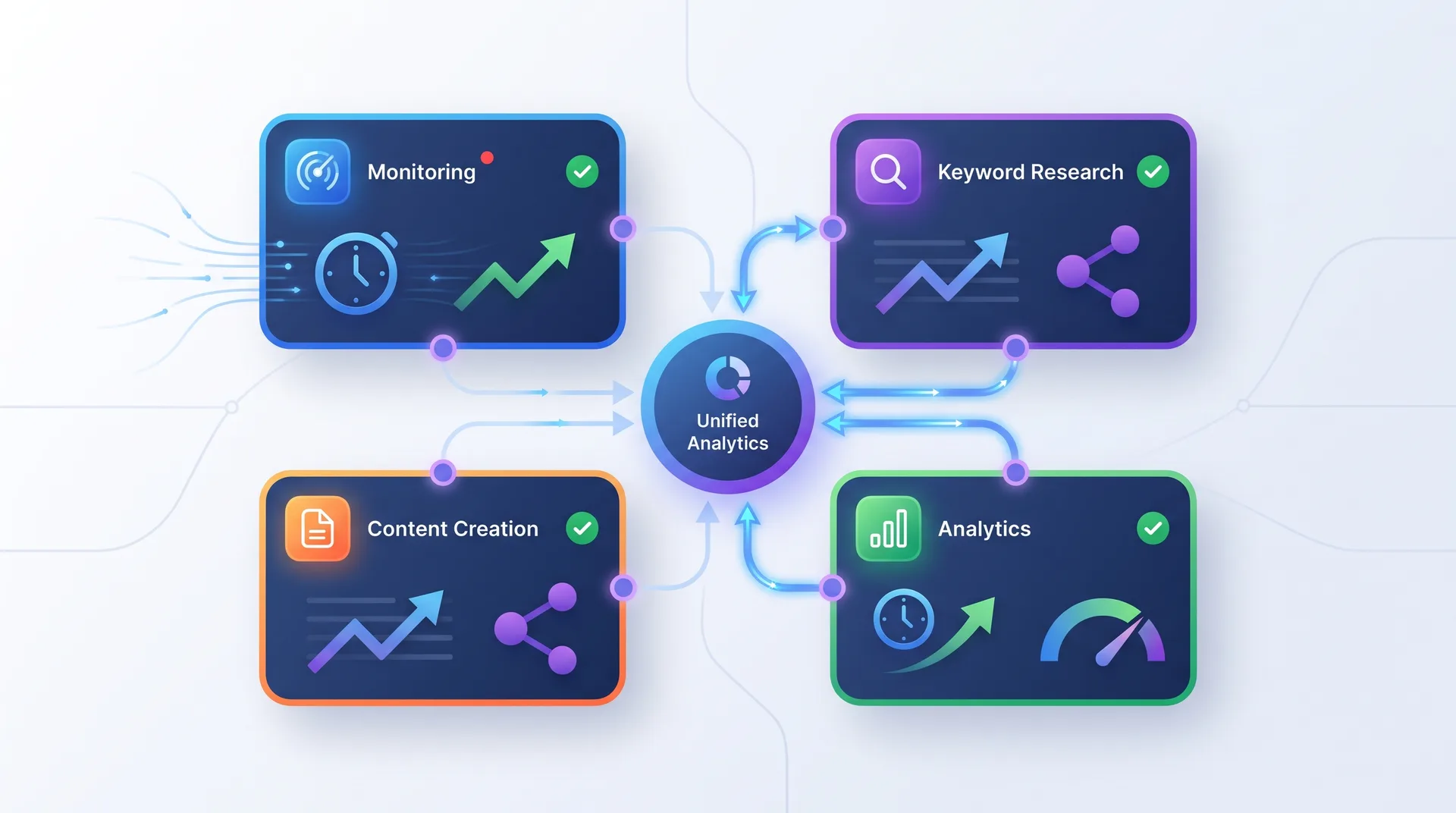
Analytics tools: Google Search Console tracks impressions, clicks, and average position for your newsjacking content. Google Analytics shows you traffic sources, time on page, and conversion data. Set up custom dashboards to monitor newsjacking campaigns separately from your regular content.
Avoiding Newsjacking Pitfalls: What Not to Do
I have seen brands destroy years of goodwill with one bad newsjacking attempt. Here is what not to do.
Keyword stuffing and forced connections damage your credibility. If you have to twist your brand's relevance to fit the trending topic, you are doing it wrong. Readers see through it. Search engines penalize it. Only newsjack when you have a genuine, valuable perspective to add.
Don't sacrifice quality for speed. A poorly written piece with factual errors will get called out, shared for the wrong reasons, and hurt your brand. Fast doesn't mean sloppy. Proofread. Check your facts. Make sure your links work. One error can tank your credibility.
Pros
Topic aligns naturally with your brand expertise
You have unique data, insights, or perspective to add
The timing is right and you can publish within 2 hours
The topic is not sensitive or controversial in a way that could backfire
Cons
You have to force a connection between your brand and the topic
The topic is a tragedy, disaster, or deeply sensitive issue
You don't have time to create quality content and will rush something mediocre
Your perspective adds no new value beyond what's already out there
Bad backlinks and wrong anchor text hurt your SEO. Link to authoritative sources (news outlets, official statements, research). Don't link to spammy sites or use manipulative anchor text. Search engines in 2026 are smart enough to penalize unnatural link patterns.
Never newsjack tragedies - Natural disasters, deaths, violence, or sensitive political events
Avoid keyword stuffing - Use keywords naturally, not 47 times in 500 words
Don't force connections - If your brand isn't relevant to the topic, don't pretend it is
No plagiarism - Add unique value and original analysis, don't just rewrite someone else's piece
Check brand alignment - Every newsjacking attempt should fit your brand voice and values
Don't jump on every trend - Be selective and strategic, not desperate
Brand alignment matters more than trending volume. If a topic is getting millions of searches but doesn't fit your brand values or expertise, skip it. Your reputation is worth more than a few days of traffic.
And honestly? Most brands jump on too many trends. Be selective. One well-executed newsjack per quarter beats ten forced attempts per month. Quality over quantity wins in the long run.
Measuring Success: KPIs and Metrics That Matter for SEO Newsjacking
If you are not tracking results, you are just guessing. Here is what actually matters.
Traffic metrics: organic search traffic spikes from Google, referral traffic from media mentions and backlinks, social traffic from shares and engagement. Track these in Google Analytics with UTM parameters so you know exactly where visitors came from.
Search visibility: keyword rankings for the trending topic and related terms. Featured snippet captures. Google News appearances. Track these in Google Search Console. You want to see your content ranking on page one within hours of publication.
Engagement metrics: time on page, bounce rate, scroll depth, social shares, comments. High engagement signals to search engines that your content is valuable. Low engagement means you captured the click but didn't deliver value.
Newsjacking Measurement Checklist
Set up Google Analytics goals for conversions from newsjacking traffic
Track keyword rankings in Google Search Console for trending terms
Monitor backlinks using Ahrefs or SEMrush to count new referring domains
Use Google Alerts to track brand mentions and media coverage
Create a custom dashboard in Google Analytics for newsjacking campaigns
Document results in a scorecard template for consistent measurement
SEO authority indicators: backlinks earned from high-authority domains. Domain authority improvements over time. Brand mention increases across the web. These are the long-term wins that compound. One successful newsjacking campaign can boost your domain authority for months.
Business outcomes: lead generation, email sign-ups, demo requests, sales. Track conversions from newsjacking traffic separately from your regular traffic. Use UTM parameters and landing pages specific to the campaign. The goal is not just traffic. It's qualified traffic that converts.
Traffic Metrics
Organic search spikes, referral traffic from media mentions, social traffic from shares
Search Visibility
Keyword rankings, featured snippets, Google News appearances
Engagement Signals
Time on page, bounce rate, social shares, comments
Business Outcomes
Leads generated, conversion rates, revenue attributed to campaigns
Create a newsjacking scorecard template. Track every campaign the same way. Date published, trending topic, keywords targeted, traffic generated, backlinks earned, media mentions, conversions. Over time, you will see patterns. You will learn which types of topics work best for your brand. You will get faster and better at execution.
The brands winning at newsjacking in 2026 are not the ones with the biggest budgets. They are the ones who move fast, add real value, and measure what matters. See you at the top.
Ready to Dominate Your Industry with Strategic SEO?
We don't just deliver traffic. We deliver outcomes. TechDevs has helped 250+ clients rank, convert, and print money through SEO strategies that actually work. If you are serious about owning your search real estate and capturing AI visibility before your competitors do, let's talk.