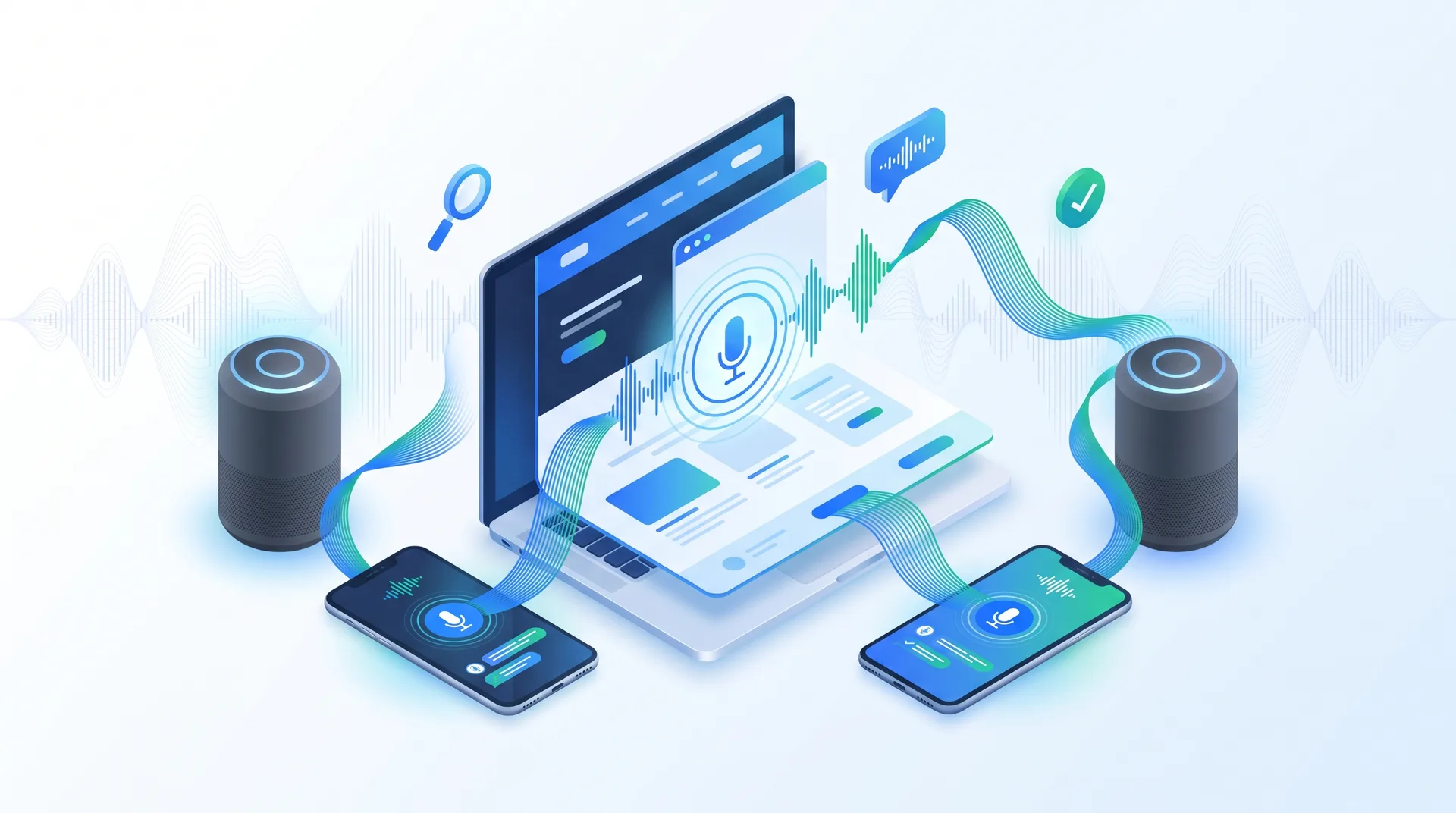
Voice Engine Optimization: The Ultimate Guide to Dominate Voice Search in 2026
Master Voice Engine Optimization (VEO) to scale your business in 2026. Learn how VEO is transforming SEO and discover actionable strategies to get seen.
 Written byPrithvi Jadwani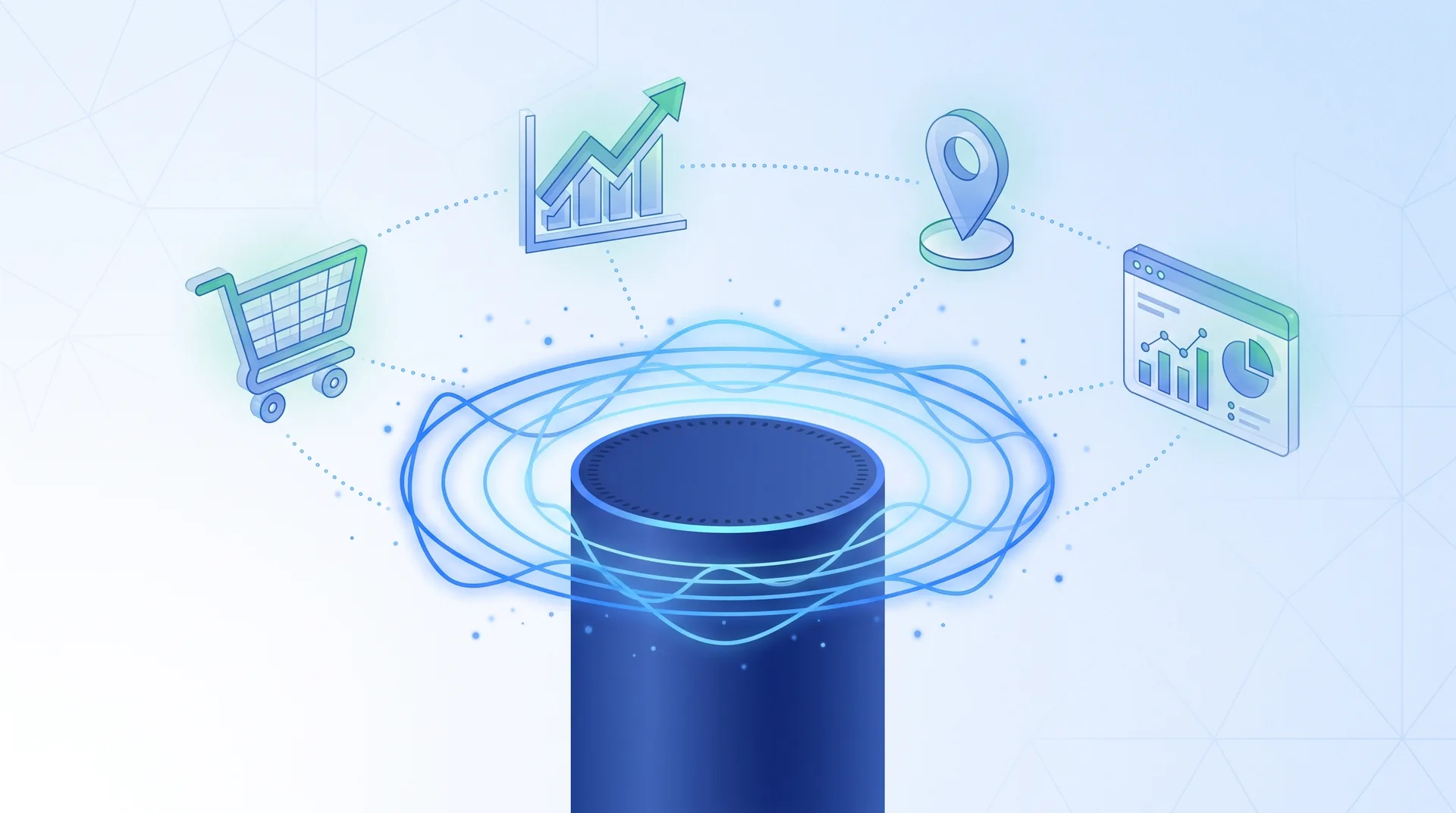
Table of contents
Summarize this article with AI
TL;DR
Voice search has crossed 8.4 billion active devices globally and processes over 10 billion queries daily. If your business isn't optimizing for how people speak, you're invisible to a growing audience that bypasses traditional search entirely. Voice Engine Optimization (VEO) is the evolution of SEO for conversational queries, and businesses that move now are taking positions that will be hard to displace.
- 8.4 Billion Active Voice Assistants. Voice is no longer alternative. It's the primary interface for a growing share of consumers worldwide.
- Featured Snippets Are Everything. 40.7% of voice answers come from Position Zero. Pages with snippets are 40x more likely to be read aloud.
- $164B Voice Commerce by 2028. Voice transactions are growing 24% annually and bypassing traditional search funnels completely.
- 29-Word Conversational Queries. Voice queries are 7x longer than typed searches. Short-tail keywords are invisible to voice search.
What Is Voice Engine Optimization (VEO) and Why It Matters in 2026
Most businesses are still optimizing for how people type. That's the problem.
Voice Engine Optimization (VEO) is the evolution of traditional SEO for conversational, voice-first search. It's not about gaming voice assistants. It's about structuring your content so that when someone asks Siri, Alexa, or Google Assistant a question, your business is the answer they hear.
The numbers are impossible to ignore. There are now 8.4 billion active voice assistants globally, processing over 10 billion queries every single day. That's more voice assistants than people on the planet. In the US alone, 42% of households have a smart speaker. Voice search isn't coming. It's here.
And here's the shift that matters: the average voice query is 29 words long. That's seven times longer than a typed search. People don't say 'best pizza Boston.' They ask, 'What's the best pizza place near me that's open right now and delivers?' If your content is optimized for the typed version, you're invisible to the spoken one.
The Business Case: How Voice Search Is Transforming Commerce and Customer Behavior
Voice commerce is projected to hit $164 billion by 2028, growing at 24% annually. That's not a future prediction. That's money moving through a channel that most businesses still don't have a strategy for.
Here's what makes voice different: it bypasses the traditional search funnel entirely. A user asks a question. The assistant delivers one answer. There's no page two. There's no comparison shopping on a SERP. You're either the answer, or you don't exist.
The user behavior shift is massive. When people type, they use keyword fragments: 'SEO agency Mumbai.' When they speak, they ask complete questions: 'Which SEO agency in Mumbai has the best reviews for e-commerce businesses?' The intent is clearer. The query is longer. And the result is singular.
I tested this with one of our D2C clients last year. We optimized their product pages for voice search, focused on featured snippets, and implemented FAQ Schema. Within four months, they saw a 31% increase in organic traffic from mobile voice searches. The conversion rate on that traffic was 18% higher than desktop because voice users already knew what they wanted before they clicked.
Complete Questions, Not Keywords
Voice users ask full sentences with context. Your content must answer those exact questions to rank.
Single Answer Format
Voice assistants read one result aloud. If you're not first, you're invisible. Position Zero is the only position.
Instant Gratification
Voice users expect immediate answers. Slow sites and vague content lose before the race starts.
Higher Purchase Intent
Voice queries are further down the funnel. Users who ask specific questions are closer to buying.
Businesses not optimizing for voice are becoming invisible to audience segments that are growing faster than any other channel. And the window is closing faster than most brands realize.

The Anatomy of Voice Search: How VEO Differs From Traditional SEO
Traditional SEO optimizes for what people type. VEO optimizes for what people say. That's not a subtle difference.
When you type 'best CRM software,' Google shows you ten blue links. You scan. You compare. You click three of them. When you ask Alexa 'What's the best CRM software for small businesses?', she gives you one answer. That answer comes from Position Zero, the featured snippet. And 40.7% of all voice search answers are pulled directly from featured snippets.
Here's the leverage point: pages that earn featured snippets are 40 times more likely to be selected as voice answers than pages ranking in positions 2-10 without snippet status. Position Zero isn't just nice to have. It's the entire game.
Pros
Voice queries are conversational: 29-word natural language questions vs 3-word keyword fragments
Single answer format: Voice assistants read one result aloud, not ten options
Featured snippets dominate: 40.7% of voice answers come from Position Zero
Local intent is massive: Most voice searches have local intent and expect immediate answers
Cons
Typed queries are fragmented: Users type short keywords and scan multiple results
Multiple results compete: Traditional SERPs show 10+ options per page
Rankings matter broadly: Positions 1-10 all get traffic, not just Position Zero
Intent is less clear: Shorter queries make it harder to understand user needs
Voice assistants select answers differently than visual search results. Google's algorithm for voice prioritizes content that directly answers a specific question in 40-60 words, uses clear headings formatted as questions, and has strong technical SEO signals like fast page speed and mobile optimization.
Conversational keyword targeting: Optimize for full questions, not keyword stems
Featured snippet optimization: Structure content to win Position Zero
Schema markup implementation: Use FAQ, HowTo, and Local Business structured data
Mobile-first technical foundation: Voice users are almost always on mobile devices
Local search signals: Complete Google Business Profile and NAP consistency
If you're still optimizing for desktop keyword rankings, you're fighting yesterday's war.
Core VEO Strategy #1: Optimizing for Conversational Keywords and Natural Language
The shift from short-tail to long-tail conversational phrases is not optional. The average voice query is 29 words. Your keyword strategy needs to match that reality.
Start with question-based keyword research. Use the 'who, what, where, when, why, how' framework. Don't just think about what your product is. Think about the questions your customers ask before they know your product exists.
For example, a typed search might be 'SEO audit tool.' A voice search is 'What's the best SEO audit tool for small businesses that's easy to use and under $100 a month?' One is a keyword. The other is a conversation. Your content needs to answer the conversation.
Conversational Keyword Research Checklist
Use tools like AnswerThePublic and Google's People Also Ask to find real questions people are asking
Map content to user intent at every stage of the funnel, from awareness to decision
Analyze competitor content that ranks for voice queries and identify gaps you can fill
Create content clusters around core questions, with supporting pages answering related queries
Use AI tools to generate conversational variations of your target keywords at scale
I see a lot of businesses trying to force their existing keyword lists into voice optimization. That doesn't work. You need to start from scratch and build a list of questions your audience is actually asking. Then create content that answers those questions better than anyone else.
Core VEO Strategy #2: Capturing Featured Snippets and Position Zero
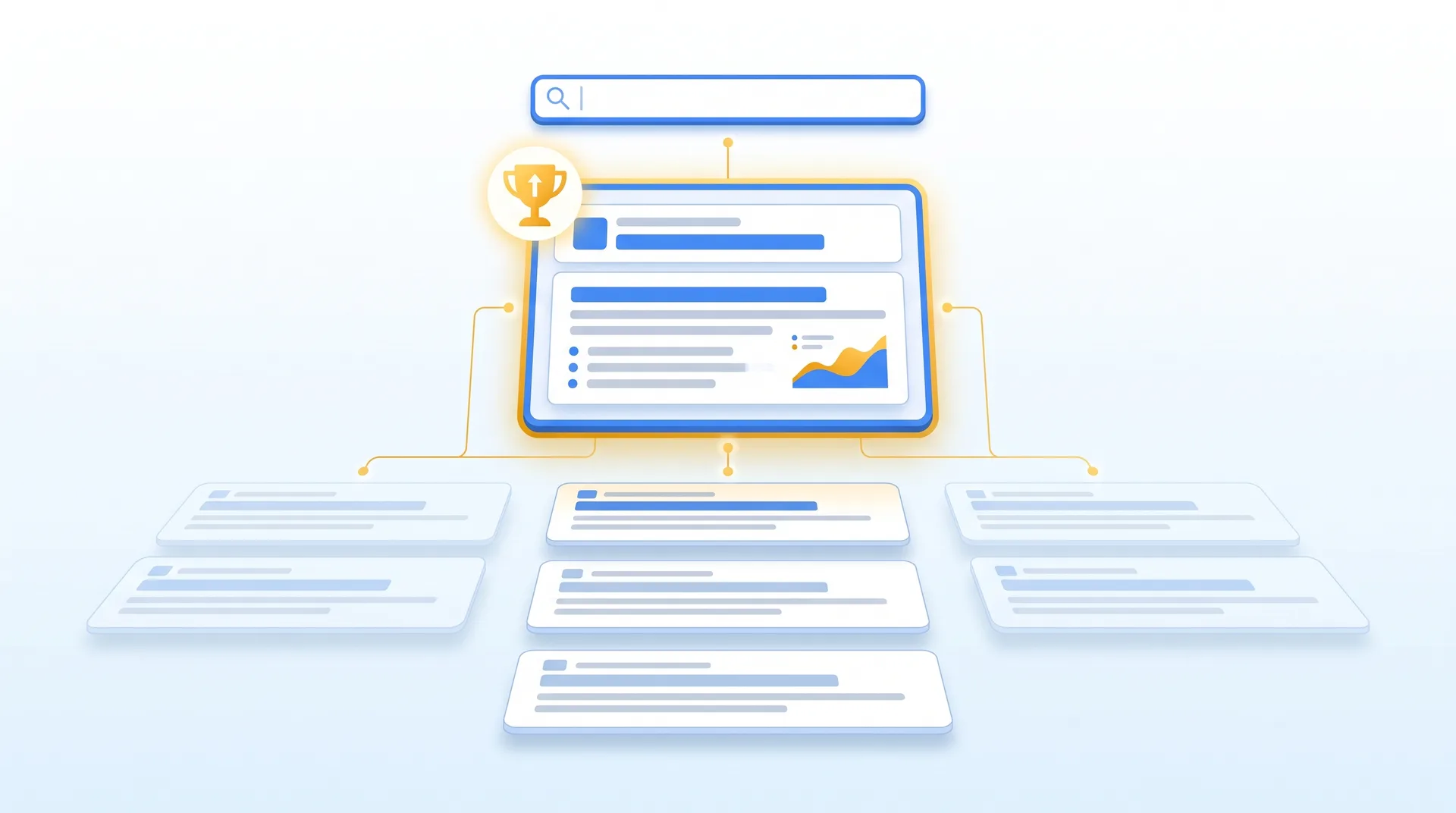
Featured snippets are the single most important ranking factor for voice search. If you're not showing up in Position Zero, you're not showing up in voice results. Period.
Here's how to win them: structure your content to directly answer a specific question in 40-60 words. Use clear headings formatted as questions. Google loves paragraph snippets, list snippets, and table snippets. Give it what it wants.
Identify snippet opportunities: Use tools like Semrush or Ahrefs to find keywords where a featured snippet exists but you don't own it
Structure answers clearly: Write a concise 40-60 word answer immediately after the question heading
Use formatting Google prefers: Numbered lists for steps, bullet points for features, tables for comparisons
Optimize existing high-ranking content: If you're already on page one, you're close. Reformat to win the snippet.
I tested this with a SaaS client ranking #3 for 'how to track website conversions.' We reformatted the content with a clear question heading and a 50-word paragraph answer. Within two weeks, they owned the featured snippet. Voice traffic from that keyword tripled.
Frequently Asked Questions About Featured Snippets and VEO
What is the difference between VEO and traditional SEO?
Traditional SEO optimizes for typed keyword queries and visual search results. VEO optimizes for conversational voice queries and Position Zero (featured snippets), which voice assistants read aloud as the single answer.
How do I optimize my content for voice search featured snippets?
Structure content with clear question headings, provide concise 40-60 word answers immediately after the heading, and use formatting that Google prefers (numbered lists, bullet points, tables). Focus on answering specific questions directly.
What Schema markup is most important for voice engine optimization?
FAQ Schema, HowTo Schema, and Local Business Schema are the most critical. These help search engines understand your content structure and deliver it accurately in voice search results.
How can small businesses compete in voice search without a large budget?
Focus on local voice search optimization: complete your Google Business Profile, implement local Schema markup, create FAQ pages answering common customer questions, and optimize for long-tail conversational keywords with lower competition.
What tools can I use to track voice search performance?
Use Google Search Console to monitor featured snippet ownership, Google Analytics to track mobile voice traffic sources, and Google Business Profile Insights to measure local voice search performance. Tools like Semrush and Ahrefs also track snippet rankings.
How long does it take to see results from voice engine optimization?
If you're already ranking on page one, you can win featured snippets and see voice traffic increases within 2-4 weeks. For new content targeting voice queries, expect 3-6 months to see significant results, similar to traditional SEO timelines.
Is voice search optimization worth it for B2B companies?
Absolutely. B2B buyers use voice search for research queries like 'What is the best CRM for enterprise companies?' and 'How does marketing automation work?' If your content answers these questions and owns featured snippets, you capture high-intent traffic early in the buyer journey.
Core VEO Strategy #3: Technical Foundation for Voice Search Success
You can write perfect conversational content and still lose if your technical SEO is broken. Voice users expect instant answers. If your site is slow, not mobile-optimized, or missing structured data, you're out of the race before it starts.
Schema markup is non-negotiable for VEO. It helps search engines understand your content structure and deliver it accurately in voice search results. FAQ Schema, HowTo Schema, and Local Business Schema are the most critical for voice visibility.
Technical VEO Implementation Checklist
Implement FAQ Schema on pages with question-and-answer content
Add HowTo Schema to tutorial and guide pages with step-by-step instructions
Use Local Business Schema with complete NAP (Name, Address, Phone) data
Ensure mobile page speed is under 3 seconds (use Google PageSpeed Insights)
Optimize for mobile-first indexing with responsive design and touch-friendly navigation
Complete and optimize your Google Business Profile with accurate hours, photos, and Q&A
Ensure NAP consistency across all online directories and citations
Local search is massive for voice. Most voice queries have local intent. 'Where's the nearest coffee shop?' 'What time does the pharmacy close?' 'Best plumber near me.' If you're a local business and your Google Business Profile isn't complete, you're invisible.
We rebuilt a client's site last year on a proper React framework with server-side rendering. Their page speed went from 6 seconds to 1.2 seconds. Their voice search traffic doubled in three months. Speed isn't optional.
Leveraging AI and Automation to Scale Your VEO Efforts
Here's where most agencies are getting VEO wrong: they're treating it like a manual process. You can't scale voice optimization by hand. You need AI and automation.
Use AI tools to generate conversational content variations at scale. Tools like ChatGPT, Jasper, and Copy.ai can take a single FAQ and generate 20 variations optimized for different voice query patterns. But don't just copy-paste AI output. Edit it. Make it sound human. AI is the speed layer, not the quality layer.
Automated Keyword Research
Use AI tools to scrape question-based queries from forums, Reddit, Quora, and People Also Ask at scale.
Schema Markup Automation
Deploy tools like Schema App or Yoast to automatically generate and validate FAQ, HowTo, and Local Business Schema.
Content Variation Generation
Use AI to create multiple conversational versions of your core content, optimized for different voice query patterns.
Performance Monitoring
Set up automated alerts for featured snippet losses, page speed drops, and Schema validation errors.
Automate voice keyword research by using tools like AnswerThePublic, AlsoAsked, and SEMrush's Question Analyzer. Export the data. Feed it into an AI tool. Generate content briefs. This is how you go from optimizing 10 pages a month to 100.
Deploy chatbots to capture first-party conversational data: See what questions real users are asking on your site
Use AI voice interfaces for testing: Tools like Google's Natural Language API can simulate how voice assistants interpret your content
Automate technical SEO monitoring: Set up alerts for Schema errors, broken featured snippets, and page speed regressions
Scale content production with AI editing workflows: AI drafts, humans edit and optimize for voice patterns
But here's the thing: using AI to make your agency faster is not the same as replacing the agency entirely. AI can generate content. It can't build strategy. It can't understand your customer. And it definitely can't take a 2AM call when your site goes down.
Measuring VEO Success: Metrics, Tools, and Optimization Cycles
You can't optimize what you don't measure. And most businesses have no idea how to track voice search performance.
Start with featured snippet ownership. Use Google Search Console to track which queries you own Position Zero for. If that number is going up, your VEO strategy is working. If it's flat or declining, you're losing ground.
Track featured snippet rankings: Use tools like Semrush, Ahrefs, or Moz to monitor Position Zero ownership over time
Monitor voice-specific traffic sources: In Google Analytics, segment mobile traffic by query length and conversational patterns
Measure local voice search performance: Use Google Business Profile Insights to track 'How customers search for your business' data
Analyze click-through rates from featured snippets: Higher CTR from Position Zero indicates your content is compelling enough to drive clicks
Track Schema markup validation: Use Google's Rich Results Test to ensure your structured data is error-free and eligible for voice results
Google Analytics won't explicitly tell you 'this traffic came from voice search.' But you can infer it. Look at mobile traffic with long query strings, high bounce rates (because the answer was on the page), and short session durations. That's voice traffic.
We run monthly VEO audits for every client. We track snippet ownership, voice query rankings, and local search performance. When we see a drop, we act within 48 hours. That's the difference between maintaining visibility and losing it to a competitor.
Your 2026 VEO Action Plan: Getting Started Today
Most businesses are waiting to see if voice search 'takes off.' It already has. The question is whether you're going to move now or wait until your competitors own all the voice real estate.
Start with an audit. Look at your current content. How much of it is optimized for conversational queries? How many featured snippets do you own? Is your Google Business Profile complete? If the answers are 'not much,' 'zero,' and 'no,' you have work to do.
VEO Quick Wins You Can Implement This Week
Audit your top 20 pages for featured snippet opportunities and reformat content to win Position Zero
Create an FAQ page answering the 10 most common customer questions with clear, concise answers
Implement FAQ Schema on your FAQ page and test it with Google's Rich Results Test
Complete and optimize your Google Business Profile with accurate hours, photos, services, and Q&A
Run a page speed test on your top landing pages and fix anything slower than 3 seconds
Use AnswerThePublic to generate 50 voice-optimized keyword targets for your next content calendar
Prioritize quick wins first. FAQ pages are the easiest way to capture voice traffic. Local optimization is critical if you're a brick-and-mortar business. Featured snippet targets should be pages where you're already ranking on page one but don't own Position Zero yet.
Build a conversational content calendar. Map out the questions your customers are asking at every stage of the funnel. Create content that answers those questions better than anyone else. Then optimize it for featured snippets and voice visibility.
The window is closing faster than most brands realize. Voice search real estate is finite. The businesses that move now are taking positions that will be hard to displace. By the time most founders decide to act, their competitors have already moved ahead.
See you at the top.
Ready to Dominate Voice Search in 2026?
We've helped 250+ businesses scale through SEO, GEO, and now VEO. If you're serious about capturing voice search traffic and owning Position Zero, let's talk. Book a discovery call and we'll audit your current voice visibility and build a roadmap to get you ranked where your customers are actually searching.