YouTube Just Overtook Reddit as the Go-To Source for AI Answers
YouTube has surpassed Reddit as the top source for AI-generated answers. Discover what this shift means for your content strategy and SEO in 2024.
 Written byPrithvi Jadwani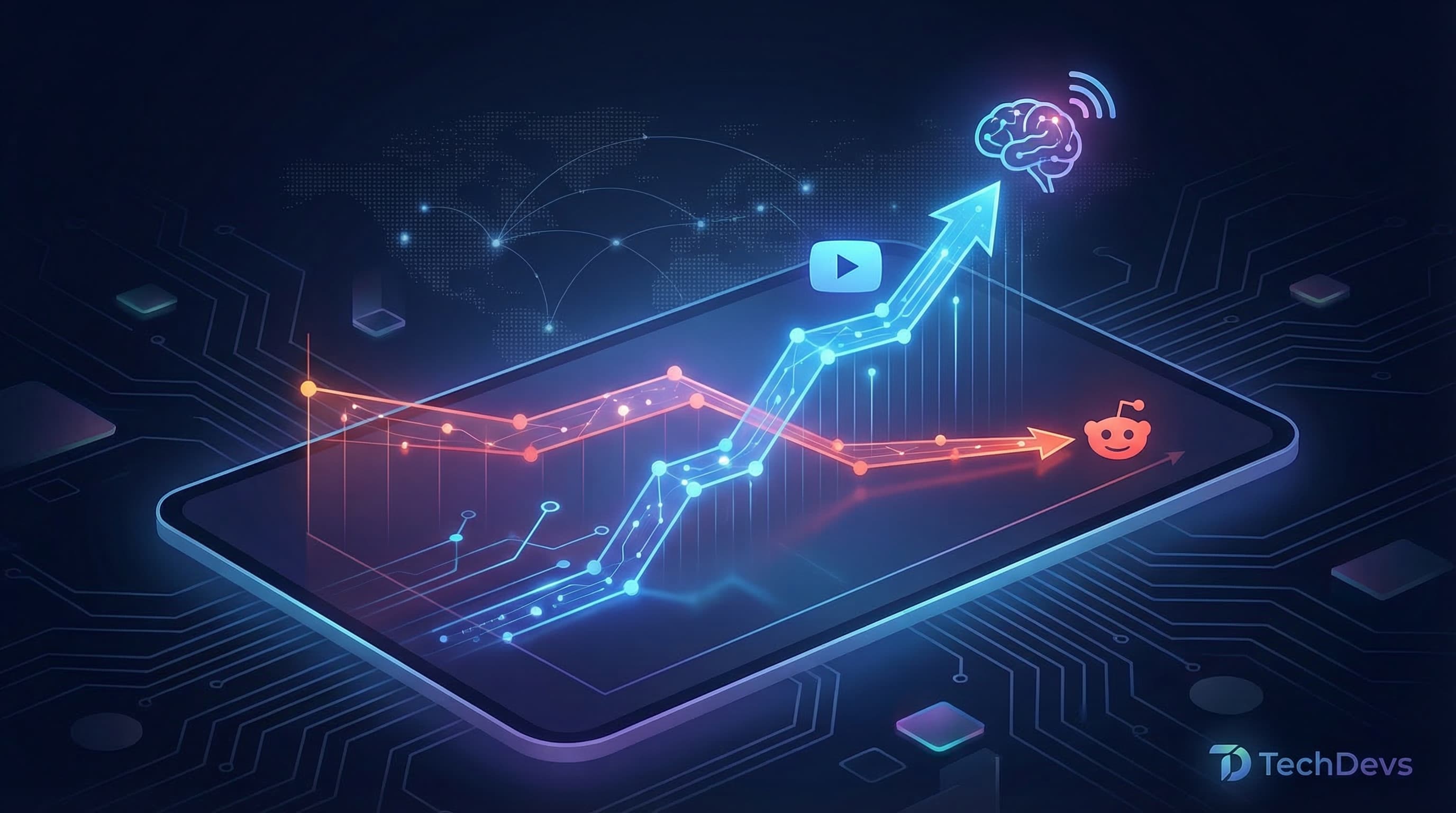
Table of contents
Summarize this article with AI
TL;DR
YouTube has crushed the competition in AI-generated answers, getting cited 200x more than any other video platform across ChatGPT, Perplexity, and Google's AI search results. While Reddit had its moment and then vanished, YouTube now owns 29.5% of all Google AI Overview citations, beating established authorities like Mayo Clinic. If you're not optimizing video content for AI citations, you're leaving visibility on the table.
- YouTube Dominates AI Citations. 200x more citations than any competitor, with 20% share across all AI platforms
- Specific Query Types Win. Tutorials, demonstrations, and pricing queries get cited. Abstract concepts don't.
- ChatGPT Growth Exploding. 100% week-over-week growth in YouTube citations, though from a small base
- Reddit Virtually Disappeared. After initial gains, Reddit citations dropped to near zero in AI results
- Early Mover Advantage. Brands optimizing now establish authority signals that compound over time
The Seismic Shift: YouTube Now Dominates AI-Generated Answers
Here's a stat that should make every content marketer sit up: YouTube gets cited in AI search results 200x more than any other video platform. Not 2x. Not 20x. Two hundred times.
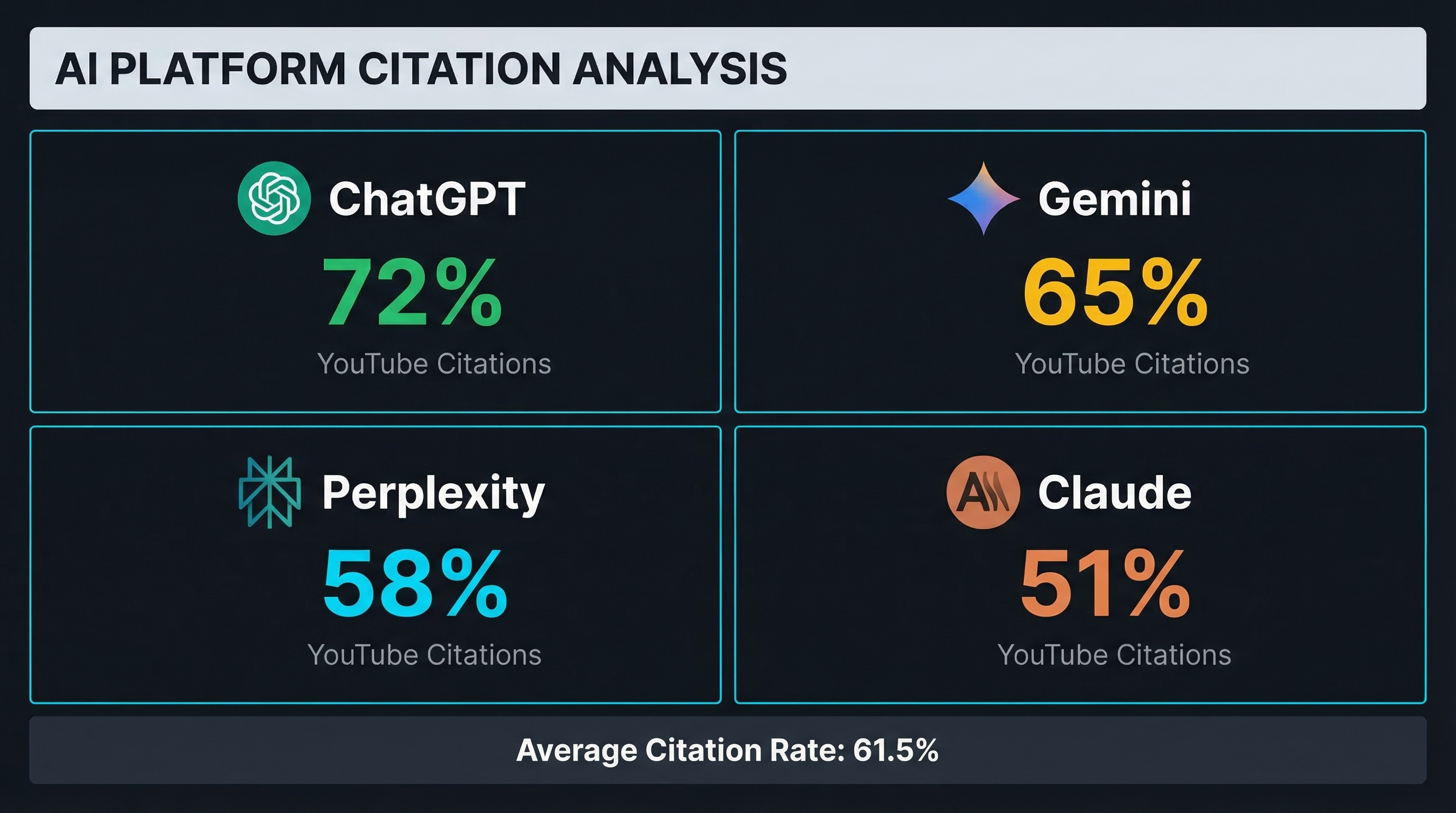
And it's not just beating random competitors. YouTube now averages a 20% citation share across all major AI platforms. In Google AI Overviews specifically, that number jumps to 29.5%. To put that in perspective, YouTube outranks Mayo Clinic (12.5%) as the most-cited domain in AI-generated health answers.
But here's where it gets interesting. Remember when Reddit was supposedly the golden child of AI citations? That's over. After some initial gains, Reddit has virtually disappeared from AI results. Meanwhile, YouTube citations grew 100% week-over-week in ChatGPT alone (admittedly from a small base), and the platform saw a 25% overall increase since January 2024.
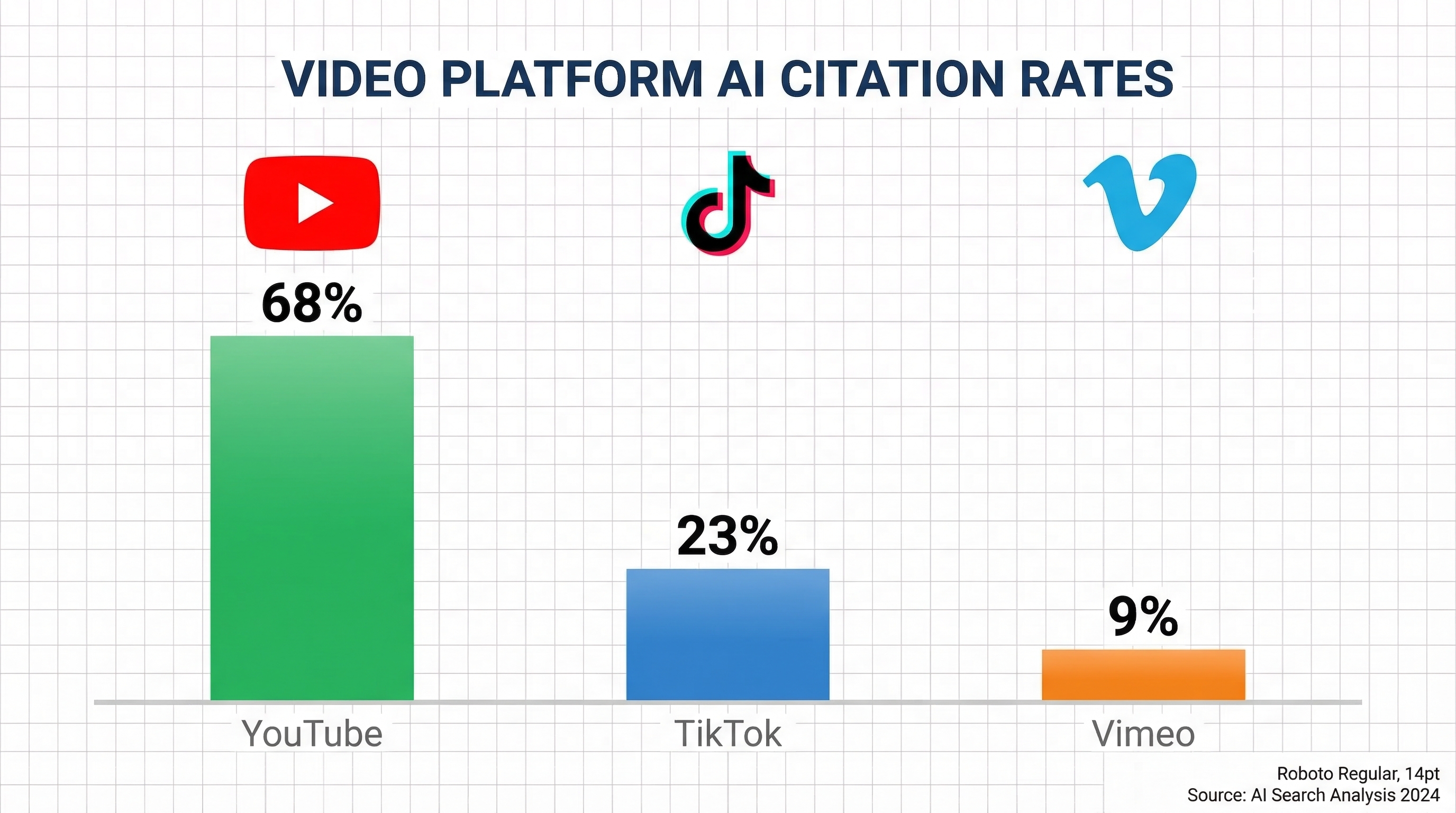
The competition? Vimeo registered 0.1% of searches. TikTok hit 0.1%. Dailymotion and Twitch didn't appear in any searches at all. This isn't a race. It's a massacre.
Breaking Down the Numbers: Where YouTube AI Answers Appear Most
Not all AI platforms treat YouTube equally. The citation rates vary wildly depending on which AI engine you're looking at, and understanding these differences matters if you want to optimize strategically.
Google AI Overviews
29.5% YouTube citation share. Ranks #1, beating Mayo Clinic. Average position: 6.3. Recent decline: -32.8% week-over-week.
Google AI Mode
16.6% citation share. Still #1 cited domain. Slight decline of -3.2% week-over-week. Average position: 9.7.
Perplexity
9.7% citation share. Ranks #5 among cited domains. Growing at +4.8% week-over-week. Average position: 9.7.
ChatGPT
0.2% citation share currently. Explosive 100% week-over-week growth. Average position: 5.2. Watch this space.
ChatGPT's trajectory is particularly interesting. Yes, it's starting from a tiny base. But 100% week-over-week growth suggests OpenAI is actively expanding video citations. If that pattern continues, we're looking at a major shift in how ChatGPT sources answers.
Google AI Overviews remains the heavyweight. With nearly 30% citation share and an average rank position of 6.3, YouTube content that gets cited here gains dual visibility: it appears in the AI summary and ranks well organically. That's compound leverage most marketers are sleeping on.
What Types of Queries Trigger YouTube AI Answers (And Which Don't)
AI platforms don't cite YouTube randomly. There's a clear pattern to which queries pull video content and which don't. Understanding this pattern is the difference between creating content that gets cited and content that gets ignored.
Pros
Platform-specific tutorials like 'TD Ameritrade post-merger' workflows
Medical education with action components (how to perform a procedure, not theory)
Current pricing and deals such as 'Is Home Depot having a sale?'
Financial tool demonstrations showing software interfaces and processes
Product reviews and comparisons with visual proof points
Cons
Strategic planning questions that require abstract thinking
Career advice and academic selection without actionable steps
Abstract financial concepts like portfolio theory
Technical architecture decisions that are text-heavy
Pure informational queries without visual or demonstration components
See the pattern? AI platforms prefer actionable, demonstrable content. If you can show someone how to do something, you're in. If you're explaining why something matters in abstract terms, you're out.
This is a major departure from September 2023, when BrightEdge observed a 121% spike in YouTube citations that was uniform across all industries. That was Google testing the system. What we're seeing now is strategic implementation. Citations are concentrated in sectors where video actually adds value.
Tutorial content beats educational content every time
'How to' queries with visual components dominate citations
Time-sensitive information like pricing gets cited more than evergreen theory
Tool demonstrations outperform tool explanations
Specific examples beat general concepts
And here's something most guides won't tell you: the average rank position for cited YouTube content is 6.3 in Google AI Overviews. That means you don't need to rank #1 organically to get cited. You need to create the right type of content that AI engines trust for answers.
Why This Matters: The Impact on Organic Rankings and Brand Authority
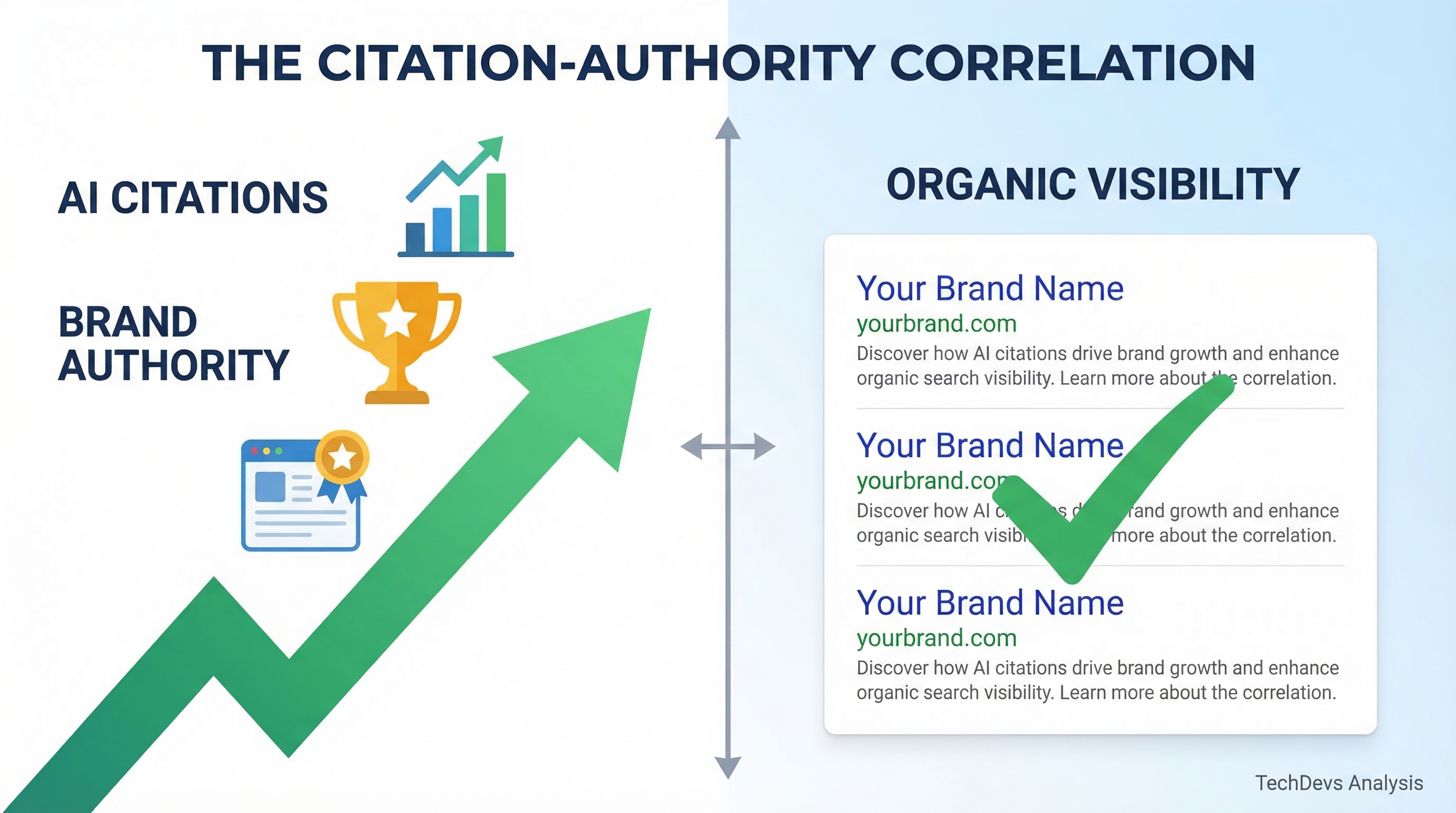
Let's talk about what this actually means for your business. Because getting cited in AI answers isn't just a vanity metric. It's a fundamental shift in how users discover information and how they decide who to trust.
First, AI citations create a new layer of visibility that's separate from traditional organic rankings. Your video can rank #7 organically but still get featured in the AI Overview that appears above position #1. That's prime real estate.
But the bigger play is authority. When AI platforms consistently cite your content, you're not just getting traffic. You're establishing yourself as a trusted source in the eyes of the algorithm. And unlike backlinks (which can be gamed), AI citations are merit-based. The AI either finds your content useful for answering queries or it doesn't.
The early movers here gain disproportionate advantages. Once your content starts getting cited, it creates a feedback loop. More citations lead to more authority signals. More authority signals lead to more citations. This compounds over time in ways that traditional SEO doesn't.
Think of it like this: traditional SEO is about ranking for keywords. Generative Engine Optimization is about becoming the answer the AI trusts. One is transactional. The other is positional.
The AI Citation Optimization Framework: Your 4-Step Strategy
Most companies approach video SEO the same way they approach regular SEO: keyword stuffing in titles and hoping for the best. That doesn't work for AI citations. You need a systematic framework.
Step 1: Audit for Citation-Worthy Topics
Identify queries in your niche that have visual or demonstration components
Map existing content to high-citation query types (tutorials, demos, reviews)
Find gaps where competitors are getting cited and you're not
Prioritize topics where 'how to' beats 'what is'
Step 2 is where most people screw up. Optimizing video metadata isn't just about titles and descriptions. AI engines parse structured data, timestamp markers, and transcripts. If you're not using schema markup for video content, you're invisible to half the ranking signals that matter.
Step 2: Optimize Video Metadata
Add VideoObject schema markup to all YouTube embeds on your site
Write detailed descriptions with timestamp markers for key sections
Include chapter markers so AI can cite specific segments
Optimize transcripts for natural language queries (how people actually search)
Use closed captions to make content parseable by AI engines
Step 3 is about creating ecosystems. A YouTube video alone is good. A YouTube video embedded in a detailed blog post with supporting text, linked from relevant forum discussions, and referenced in social media? That's citation gold.
And Step 4 is measurement. You can't optimize what you don't track. Use AI search tracking tools to monitor which of your videos are getting cited, in which AI platforms, and for which queries. Then double down on what works.
Common Optimization Mistakes to Avoid
Creating videos without clear structure or chapters
AI engines cite specific segments, not entire videos. If your content is one long ramble without clear sections, it won't get cited. Use chapter markers and timestamps religiously.
Ignoring transcript optimization
Auto-generated captions are terrible. AI engines parse transcripts to understand content. If your transcript is full of errors, the AI can't accurately determine what you're covering. Clean transcripts = better citations.
Focusing only on YouTube and ignoring your website
Embed your YouTube videos in blog posts on your own domain. This creates multiple entry points for AI engines to discover and cite your content. Plus, it gives you control over the surrounding context.
Cross-Platform Synergy: Leveraging YouTube, Reddit, and Community Forums
So Reddit citations have tanked. Does that mean you should ignore Reddit entirely? Not quite. The game has changed, but there's still a play here.
Reddit and other community forums are no longer direct citation sources. But they're excellent for amplification and discovery. Here's how smart marketers are using them: create YouTube content that answers trending questions from Reddit, then strategically reference that content in relevant Reddit threads.
Monitor Reddit for trending questions in your niche, then create YouTube answers
Participate authentically in forum discussions and link to your YouTube content when genuinely helpful
Create content clusters: YouTube for demonstrations, Reddit/forums for discussions that drive traffic
Embed YouTube videos in high-authority forum responses to increase citation probability
Reverse-engineer competitors: see where they're getting cited and identify their cross-platform strategy
The key word is authentic. If you're just spamming YouTube links in Reddit threads, you'll get banned and accomplish nothing. But if you're genuinely participating in communities and your video happens to be the best answer to someone's question? That's fair game.
Think of YouTube as your hub and community forums as your spokes. The hub is where the authoritative content lives. The spokes drive awareness and traffic. AI engines cite the hub. Humans discover it through the spokes.
Predicting the Future: Citation Spikes and Content Themes That Win
Here's what keeps me up at night: will YouTube citations saturate? BrightEdge data shows a 32.8% recent decline in overall AI Overviews, even though YouTube maintained its #1 position. So what's happening?
My read: Google is getting more selective, not less interested in video. The decline isn't in YouTube citations specifically. It's in overall AI Overview triggers. Google is tightening the criteria for when to show an AI Overview at all. But when they do show one, YouTube still dominates.
Emerging high-citation themes I'm watching: AI tool tutorials, automation workflows, and integration demonstrations. Basically, anything that shows people how to use new technology. As AI tools proliferate, demand for 'how to use X' content explodes. And that's YouTube's sweet spot.
Seasonal patterns matter too. Pricing queries spike during shopping seasons (Black Friday, Prime Day, back-to-school). Educational content peaks in Q1 and Q3 when people are setting goals or starting new semesters. If you're creating content in these categories, timing your publish dates matters.
Frequently Asked Questions
How do I optimize my YouTube videos to appear in AI-generated answers?
Focus on three things: create tutorial or demonstration content that answers specific queries, use detailed video descriptions with timestamp markers and chapter breaks, and optimize your transcripts for natural language queries. Add VideoObject schema markup if you embed videos on your site. Most importantly, make content that actually demonstrates something visual. Abstract explanations don't get cited.
Why did Reddit lose its position as a top source for AI citations?
Reddit had an initial spike in citations during testing phases, but AI platforms quickly realized that Reddit content is inconsistent in quality and often opinion-based rather than authoritative. YouTube content, especially tutorials and demonstrations, provides more reliable, verifiable information. Plus, video content is harder to game than text posts.
What types of video content get cited most frequently by AI platforms?
Platform-specific tutorials, product demonstrations, pricing and deal information, medical procedures with action components, and financial tool walkthroughs. The pattern is clear: if it's actionable and visual, it gets cited. If it's abstract or theoretical, it doesn't.
How can I track if my YouTube content is being cited in AI answers?
Use AI search tracking tools that monitor citations across platforms like Google AI Overviews, Perplexity, and ChatGPT. BrightEdge offers this capability. You can also manually search for your target queries in these platforms and see if your content appears. Track which videos get cited for which queries, then create more content in those successful formats.
Does getting cited in AI Overviews improve my organic search rankings?
Indirectly, yes. Citations establish authority signals that compound over time. Plus, cited content averages rank position 6.3 organically, which means you get dual visibility: in the AI Overview and in traditional results. The authority you build from consistent citations likely influences your broader ranking profile.
What's the difference between YouTube citations in ChatGPT vs Google AI Overviews?
Google AI Overviews currently cite YouTube at 29.5%, making it the #1 source. ChatGPT is at 0.2% but growing 100% week-over-week. Google has integrated YouTube deeply into its ecosystem, while ChatGPT is just starting to expand video citations. The opportunity in ChatGPT is early-stage but growing fast.
How long does it take for optimized YouTube content to start appearing in AI answers?
There's no fixed timeline, but well-optimized content targeting high-citation query types can start appearing within weeks. The key is creating content that matches what AI engines are already citing: tutorials, demonstrations, and actionable guides. Content that requires the AI to 'discover' a new citation pattern takes longer.
Action Plan: What TechDevs Clients Should Do This Quarter
You've read the data. You understand the opportunity. Now here's what you actually need to do in the next 90 days.
Immediate Actions (This Week)
Audit your existing YouTube content and identify your top 10 videos by views
Add chapter markers and detailed timestamps to those 10 videos
Clean up auto-generated transcripts and optimize for natural language queries
Identify 5 high-citation query types in your industry that you're not covering
30-Day Plan
Launch a video content series targeting high-citation query types (tutorials, demos, reviews)
Embed all YouTube videos in supporting blog posts on your domain with schema markup
Set up AI citation tracking to monitor which content gets cited and where
Create a content calendar focusing on seasonal citation spikes (pricing queries, educational content)
60-Day Plan
Implement cross-platform content ecosystem with YouTube as hub
Participate in relevant Reddit and forum discussions, linking to your YouTube content when appropriate
Reverse-engineer competitor citations: identify where they're winning and create better content
Test different video formats and track which ones get cited most frequently
90-Day Plan
Establish AI citation tracking dashboard with week-over-week performance metrics
Iterate based on citation data: double down on formats and topics that work
Scale video production using automation tools without sacrificing quality
Build authority in 2-3 specific citation-heavy topics rather than spreading thin
For TechDevs specifically, there's a double-leverage opportunity here. We're in the AI and automation space. That means creating content about AI tools and automation workflows isn't just SEO. It's also demonstrating our expertise to potential clients. Tutorial content that gets cited in AI answers is essentially free advertising to our exact target audience.
Ready to Dominate AI Search Results?
YouTube citations aren't going away. They're accelerating. If you want to capture this opportunity before your competitors do, let's talk strategy. We'll audit your current content, identify high-citation opportunities, and build a systematic framework to get your videos cited across AI platforms.