Boost Brand Visibility With SEO in 2026: 9 Proven Moves
A practical 2026 playbook for founders and marketing leads who want SEO to earn qualified leads, get cited in AI answers, and turn branded search into pipeline.
 Written byPrithvi Jadwani
Table of contents
Summarize this article with AI
TL;DR
To boost brand visibility with SEO in 2026, treat branded search and AI answers as your main surface, not just blue-link rankings. Publish pages AI can quote, keep brand facts identical everywhere, and measure citations and branded demand alongside pipeline.
- AI answers own brand queries. AI Overviews showed on 82.5% of US brand searches in Se Ranking's three-check study.
- Deeper pages get cited. 2.57 brand pages per AI Overview vs 1.72 in the organic top 10, and homepage share falls from 71.1% to 36.8%.
- Owned content has a 5x effect. Owned citations lift AI visibility 5x, yet 82% of bottom-of-funnel citations go to third parties.
- Manage the surfaces you can. 90.6% of AI citations point to surfaces a brand can manage or influence.
- Measure beyond rankings. Track branded queries, citation share, brand mentions, assisted conversions and pipeline.
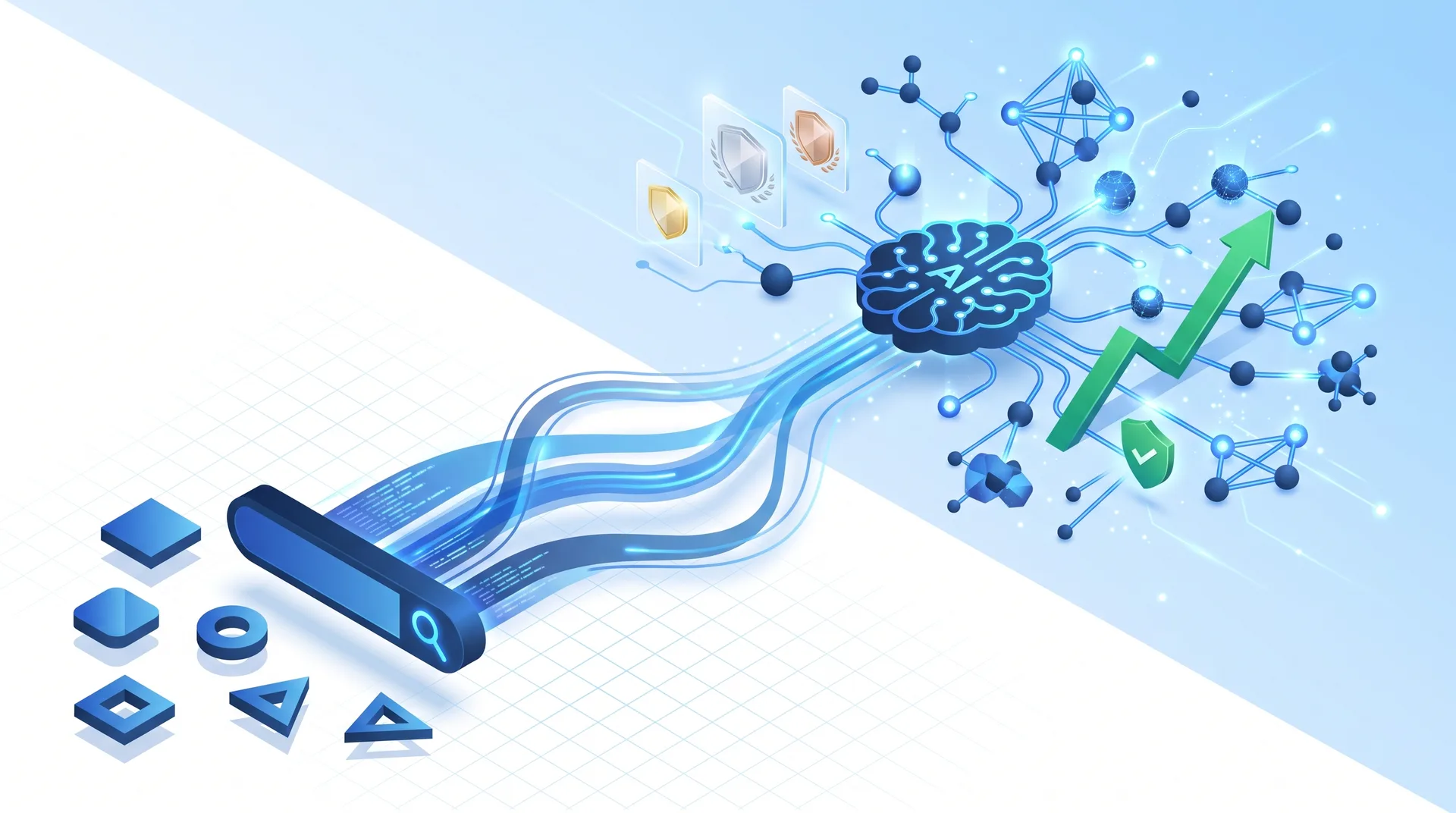
Boost brand visibility with SEO in 2026 by owning branded search and AI citations
To boost brand visibility with SEO in 2026, treat branded search and AI answers as your main surface. Publish pages AI can quote, keep your brand facts consistent across the profiles you own and manage, and measure citations and branded demand, not just rankings. The nine moves below fit into one pipeline, and you'll find them as a checklist in section four.
Here's why I'm so firm on this. Se Ranking checked 1,000 US brand keywords three times and got an AI Overview on 827, 827 and 820 of them. That's an average of 82.5%. Ahrefs, working from 232.8 million US desktop crawls, found AI Overviews in 82.91% of branded keyword results as of September 29, 2026. Two studies, two methods, one story.
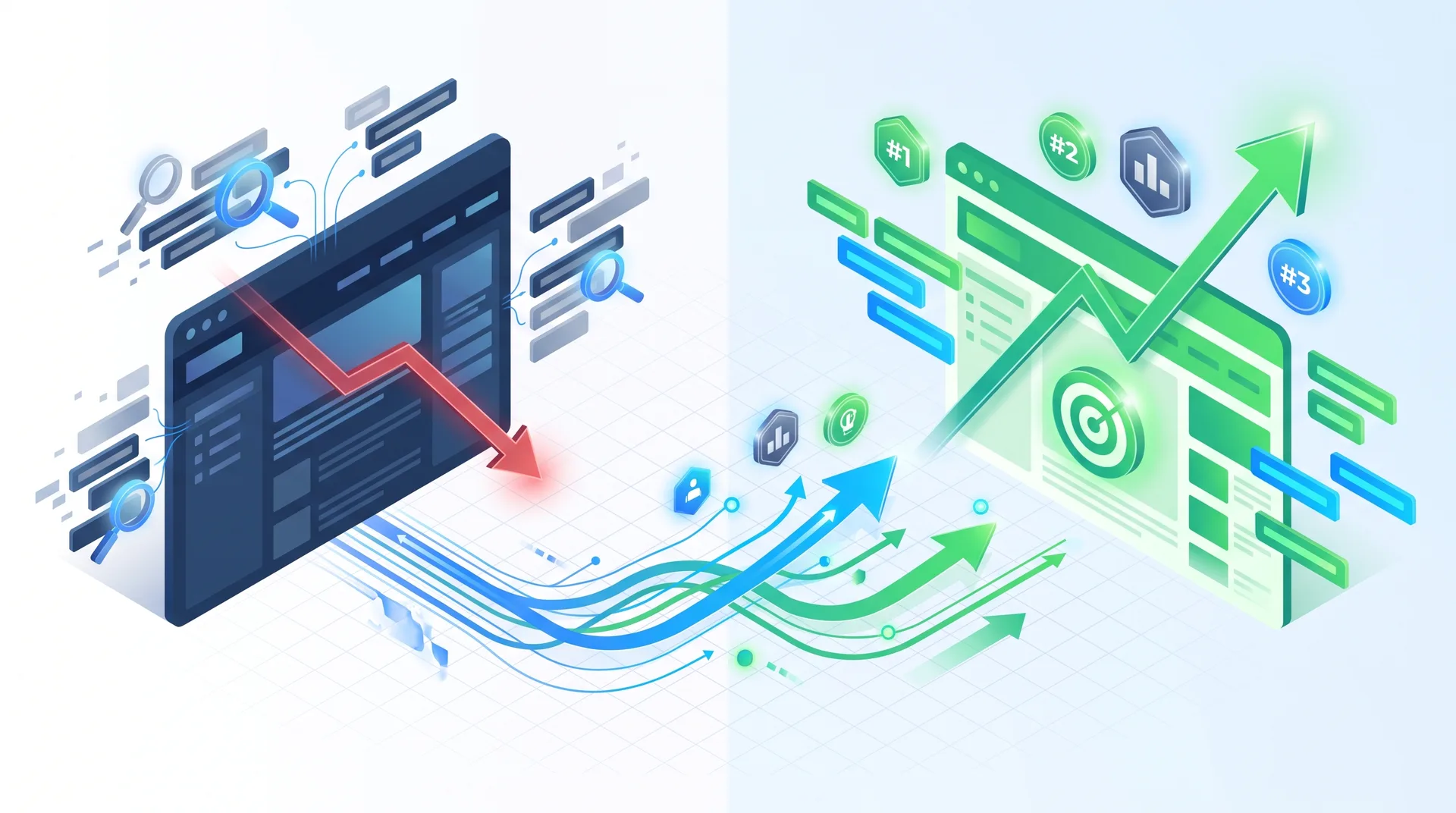
The CTR figure comes from an Ahrefs analysis reported by Search Engine Journal. It compared December 2023 to December 2025 using Google Search Console data. When an AI Overview was present, the top result's CTR was 58% lower than expected without it.
So position one still matters. It's just a smaller prize than it was, and a rankings-only report won't show you what you lost.
Branded search is now an AI answer surface, not a blue-link safety net
Branded search used to be the safe bit. Someone types your name, you show up, they click. That assumption is breaking, and fast.
Branded keywords with AI Overviews are catching up to non-branded
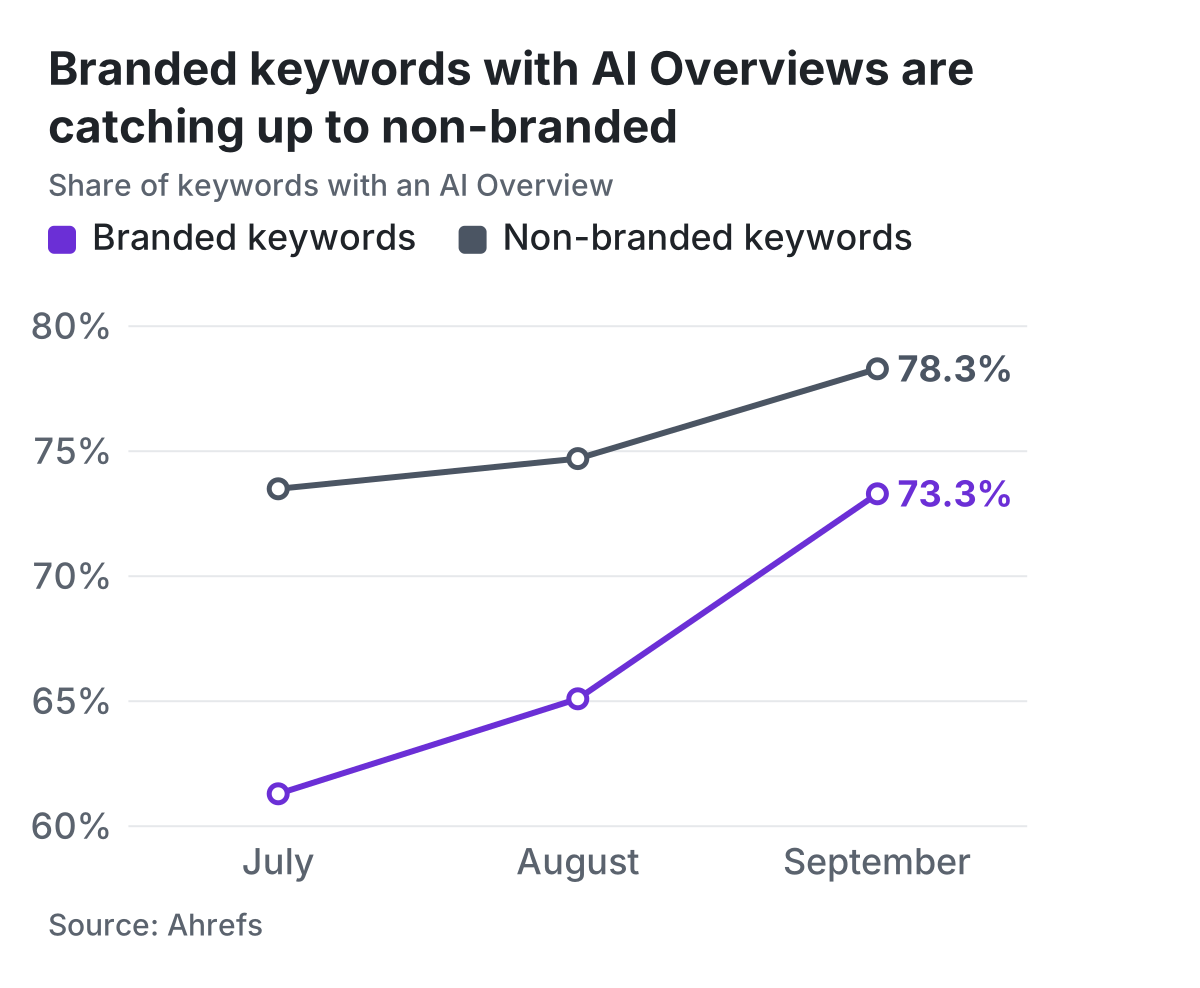
See the data
| Category | Branded keywords | Non-branded keywords |
|---|---|---|
| July | 61.3% | 73.5% |
| August | 65.1% | 74.7% |
| September | 73.3% | 78.3% |
That's the trend line. The brand-name sample is even starker. By September 30, 63 of 100 brand-name queries had an AI Overview, against just five among 98 usable results on July 1. It's a small sample, so treat it as direction, not gospel.
Small brands should pay attention here. Se Ranking found AI Overviews in all three checks for 85.2% of brand keywords with fewer than 50,000 US searches, but only 63.3% above 1 million searches. That's a 21.9 percentage point gap. By brand size, mid-market hit 78.7%, SMB 77.5% and enterprise 70.7%.
AI cites deeper pages, so your homepage cannot carry brand visibility alone
Your homepage is not your brand's front door anymore. Se Ranking found an average AI Overview cites 2.57 pages from the brand's website, against 1.72 brand pages in the organic top 10. That's about 50% more.
Read the last two numbers together. Your domain is probably already in the pool (98.3% overlap), but the specific page the AI quotes is usually one that didn't rank. So ranking your homepage for your own name won't decide what gets said about you.
Build pages that answer one question cleanly. I covered the answer-formatting side in our AEO strategies post. The pages worth building first:
Pricing: the page buyers and AI both go to for a specific number.
Comparisons and named alternatives: your honest take on you vs the obvious rivals.
Integrations and docs: short, factual, one tool or feature per page.
FAQs: real questions from sales calls, answered in two or three sentences.
Case studies: named client, named problem, named result.
Owned pages win trust, but third parties own commercial prompts
Here's the tension nobody should skip. Search Engine Land analysed 9 million AI answers and found 82% of citations on bottom-of-funnel, commercial-intent prompts go to third parties. Owned pages make up just 3%.
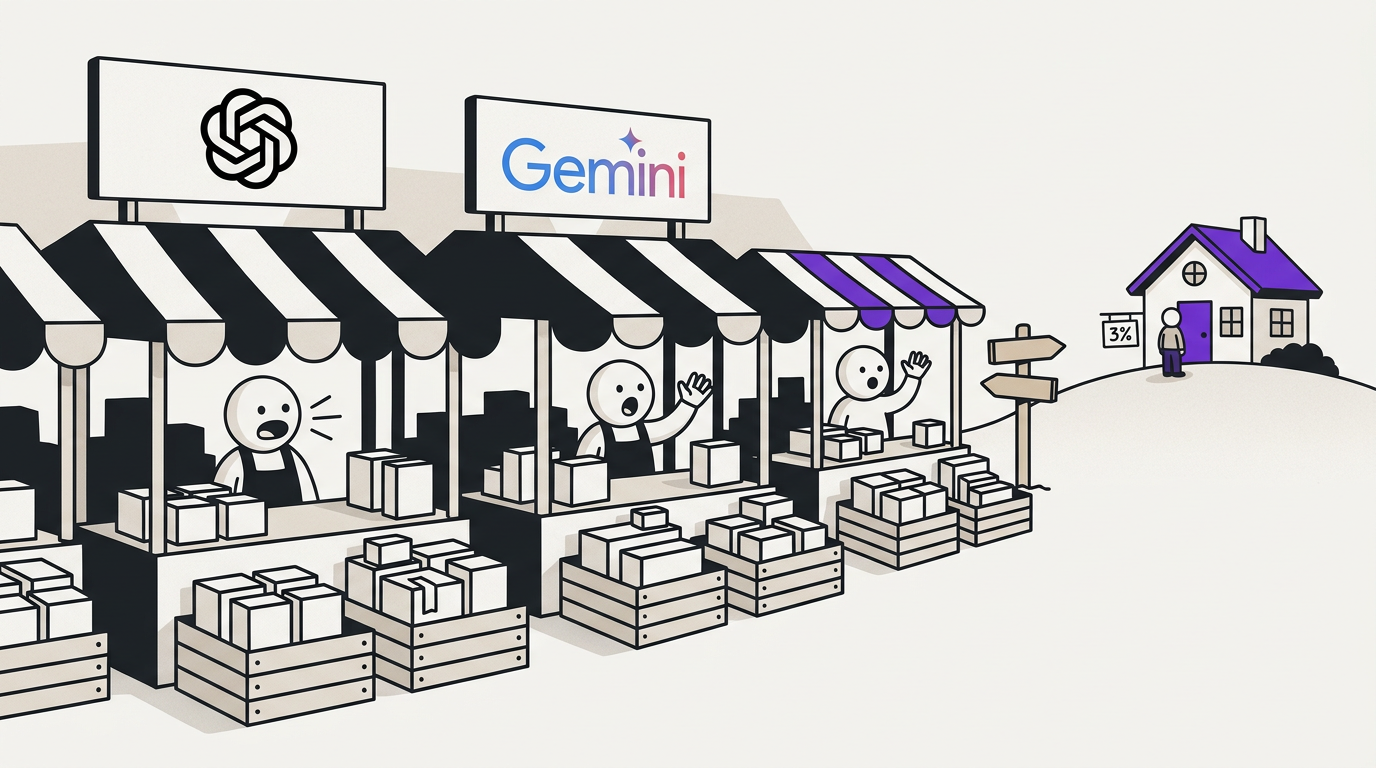
But owned content still does the heavy lifting where it lands. Owned citations last 3-9x longer than third-party ones, and up to 58% of all citations never reappear after their first showing. So a citation you earn on your own page is the stickier kind.
The better news is how much you can influence. Yext analysed 17.2 million AI citations in Q4 2025 and found 90.6% point to surfaces a brand can manage or influence. Brand-owned websites were 46.89%, managed third-party listings 43.71%, reviews and social 5.48%, and news, forums and other sources 3.92%.
There's a catch, though. Kevin Indig and Semrush analysed 3,981 domain appearances across ChatGPT, Gemini, AI Overviews and AI Mode. 61.7% were citations with no brand mention, and only 13.2% were both cited and named. Being quoted isn't the same as being remembered.
Where each AI model pulls brand citations from
| Model | Brand-owned website | Managed listing |
|---|---|---|
| Gemini | 51.62% | 39.15% |
| Perplexity | 46.11% | 43.41% |
| Claude | 41.27% | 45.93% |
| ChatGPT | 39.55% | 53.36% |
Pros
Owned citations last 3-9x longer than third-party ones.
Citations of your own content lift AI visibility 5x.
You control the facts, the wording and the page the buyer lands on.
Cons
Owned pages make up just 3% of bottom-of-funnel commercial-intent citations.
A citation without your brand name (61.7% in the Indig and Semrush sample) builds little recall.
Models differ, so one owned-page strategy won't fit ChatGPT and Gemini equally.
Run one pipeline: technical SEO, quotable content, third-party proof, conversion tracking
Most teams run technical SEO, content, PR and CRO as four separate projects with four reporting decks. That's why brand visibility stalls. With AI Overviews on 82.5% of US brand searches, your brand query pages and third-party profiles belong in the same plan as your blog.
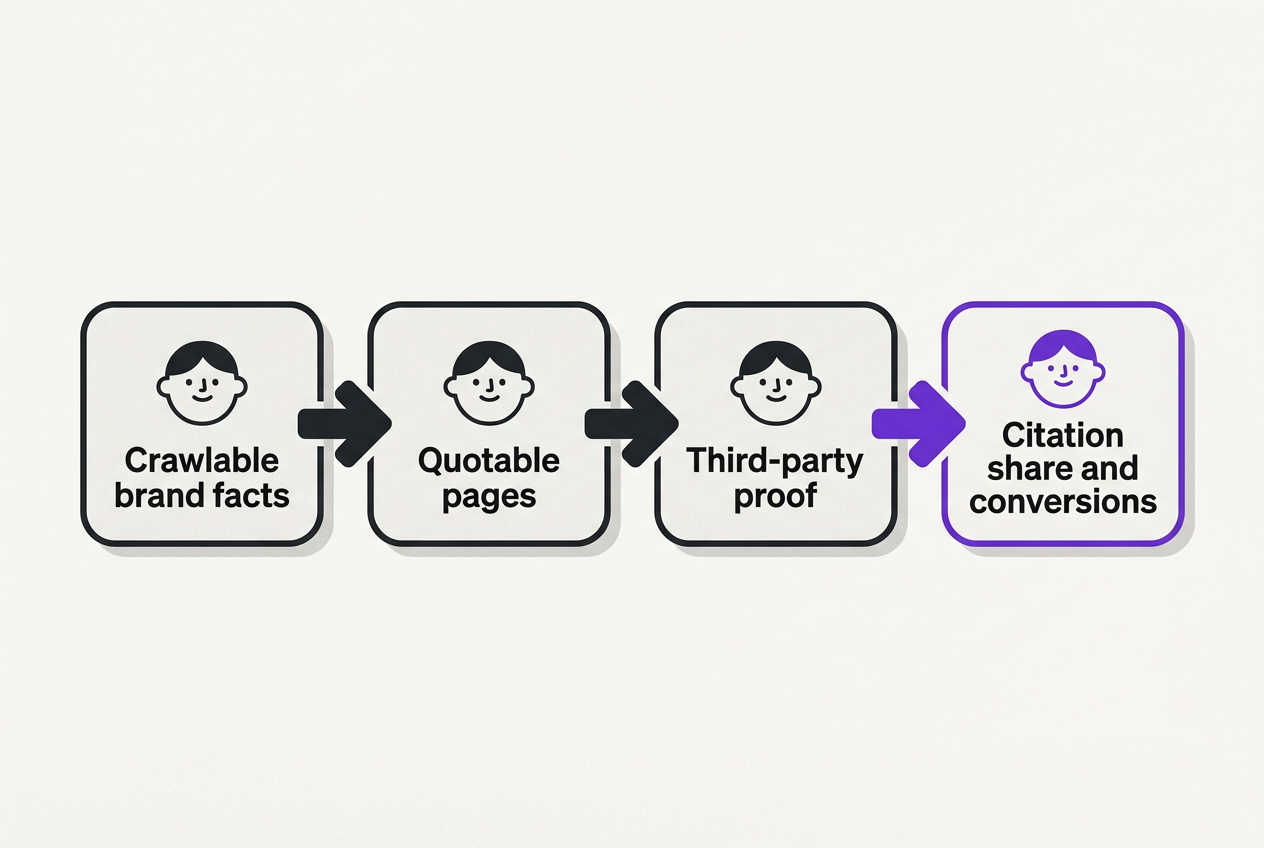
The nine moves
Make brand pages crawlable and fast, so AI systems and Google can read them.
Write one brand fact sheet (name, offer, pricing approach, locations, key claims) and keep it identical everywhere.
Build quotable pages: pricing, comparisons, integrations, docs, FAQs, case studies, named alternatives.
Open each page with a direct answer in two or three sentences.
Claim and clean the listings you can manage, such as Google Business Profile and industry directories.
Earn third-party proof on commercial prompts: reviews, comparison sites, credible mentions.
Put your brand name in the quotable copy, so you're cited and named, not just cited.
Track branded queries, AI Overview presence and citation share monthly.
Connect every brand landing page to conversion tracking and your CRM.
A test cadence I'd suggest (not a benchmark)
- Weeks 1-2Baseline
Pick 20 to 30 priority prompts and brand queries. Record who gets cited and named today.
- Weeks 3-6Fix and build
Resolve technical blockers, lock the brand fact sheet, publish your first quotable pages.
- Weeks 7-10Third-party proof
Clean up listings, request reviews, pitch comparison and directory placements.
- Week 11 onwardRe-measure
Run the same prompts again and publish your own before and after numbers.
Measure citations, branded demand and pipeline, not just rankings
Every study in this post measures AI Overview presence and citations. None measures answer accuracy, traffic or conversions, and Se Ranking says so explicitly. So don't report citation share as if it were revenue. I've seen that slide in decks, and it falls apart the moment a CFO asks one question.
Branded query volume: are more people searching your name?
AI Overview presence on your brand terms: is the answer surface there at all?
Citation share on priority prompts: how often are you cited vs competitors?
Brand mention share in AI answers: how often are you named, not just cited?
Assisted conversions: did brand-led visits help close deals?
Pipeline created: the number that justifies the budget.
How to read the numbers
Branded query volume
Treat it as a demand signal, not proof of impact. No source I've found ties branded search to measurable pipeline, so compare it against your own CRM and Search Console data.
Citation share vs mention share
Citation share tells you which page gets quoted. Mention share tells you whether your name appears. In the Indig and Semrush sample, only 13.2% of appearances were both.
Assisted conversions
This is where brand visibility meets revenue. Tag brand-landing sessions and check how many touch a closed deal before the last click.
Use the Ahrefs and Se Ranking figures as market context, then add your own data. Also check that the pages AI cites actually convert. Visibility that lands on a slow, vague page is wasted, which is why we pair this work with conversion rate optimization.
Sources
- AI Overviews Appear on 82.5% of US Brand Searches [Study] · Se Ranking
- AI Overviews Currently Appear for 83% of Branded Searches · Ahrefs
- What 9 million AI answers reveal about search visibility · Search Engine Land
- Brands Are Tracking AI Visibility. Are They Measuring The Right Things? · Search Engine Journal
- Cracking the ChatGPT Code: How to Grow Brand Visibility in OpenAI · Yext
- Is AI search ghosting your brand? Here's how to fight back · Search Engine Land
Find out who AI is quoting when someone searches your brand
We'll run your brand queries and priority prompts, show you which pages get cited and which don't, and map the fixes from technical SEO to conversion tracking. You'll leave with a baseline you can measure against.