How to Do SEO Like Zapier: Rank for Buyer Searches
Learn the Zapier SEO playbook: comparison, alternatives and how-to pages that capture high-intent buyers, plus a practical framework to apply it to your site.
 Written byPrithvi Jadwani
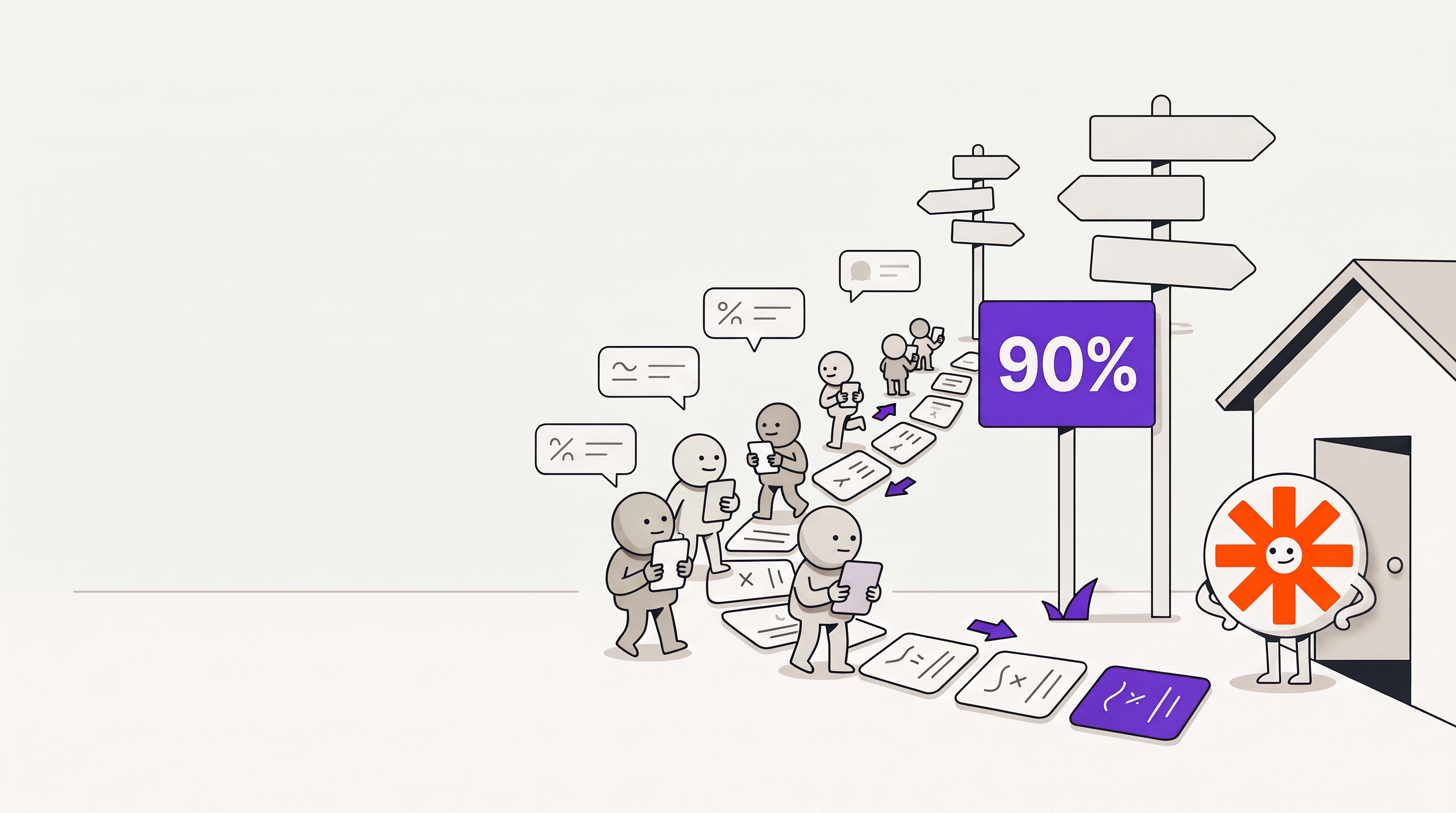
Table of contents
Summarize this article with AI
TL;DR
How to do SEO like Zapier comes down to one idea: rank for the searches buyers run before they pick a tool (comparisons, alternatives, integrations, how-tos), not for your own product pages. A small SaaS team can copy this with a tight alternatives and versus program, then add roundups and, much later, pair pages.
- Non-brand traffic wins. Over 90% of Zapier's 6 million visits came from searches that don't name Zapier.
- Alternatives first. 282 'alternative' and 'versus' URLs pull 171,200 organic visits a month.
- Programmatic last. Pair pages work at scale, but only with human-written walkthroughs on top of the template.
- Stay out of your own tables. Zapier kept its product out of roundups so the pages read as independent.
- Measure pipeline, not sessions. Nobody has published Zapier's comparison-to-revenue data, so track assisted pipeline yourself.
What doing SEO like Zapier actually means
How to do SEO like Zapier starts with a flip in thinking: Zapier doesn't rank by pushing product pages. It owns the searches buyers run before they know they need automation: tool comparisons, alternatives lists, integration pairs and how-to queries. Your product pages convert, but these pages get found.
The split is lopsided. Over 90% of Zapier's 6 million visits came from searches that don't include the Zapier brand, and the blog alone contributes over 67% of its organic traffic, according to The Zero to One. Think of a product page as a shop on a side street. Comparison and how-to pages are the signboards on the highway that send people there.
Look at that third number again. 282 URLs. That's a program a small team can plan, not a million-page machine you need fifty engineers for.
Why the money sits in searches for other people's tools
Zapier learned this by accident. Its App Directory started life as the 'Zapbook', a directory of every app that integrated with Zapier, because people were searching for Zapier's complements rather than for Zapier itself. Demand was sitting next to the product, not on it.
The cleanest example is the Goo.gl post. After Google announced in March 2018 that it was phasing out Goo.gl, Jill Duffy published an April 2018 guide to the best five alternative link shorteners. Per Overthink Group, it pulls about 200,000 organic visits a month, roughly 35% of the blog's overall organic search traffic, ranks for almost 6,000 queries and would cost about $159,000 a month via PPC. A buyer with a dying tool is a buyer with a deadline.
Alternatives and roundups: biggest volume, widest net, reader is still choosing.
Zap templates: a template with a roughly 100-word description ranks for 'everyday email' and 'send automatic email' and brings about 2,400 organic visitors a month.
Tool-specific tutorials: Google Sheets tutorials bring a couple thousand search visits a month. That's fewer than roundups, but these visitors are more likely to need and use Zapier.
The comparison and alternatives program, in the order to build it
Demand for alternatives is easy to see in Zapier's top performers: the ChatGPT alternatives page gets 32,700 organic visits a month, Canva alternatives 19,000 and Perplexity alternatives 14,000, per Kai Cromwell's LinkedIn tally. Almost every write-up describes what Zapier did. Hardly any hand a small team a build order. So here's mine, and to be clear, it's my judgement, not Zapier's published plan.
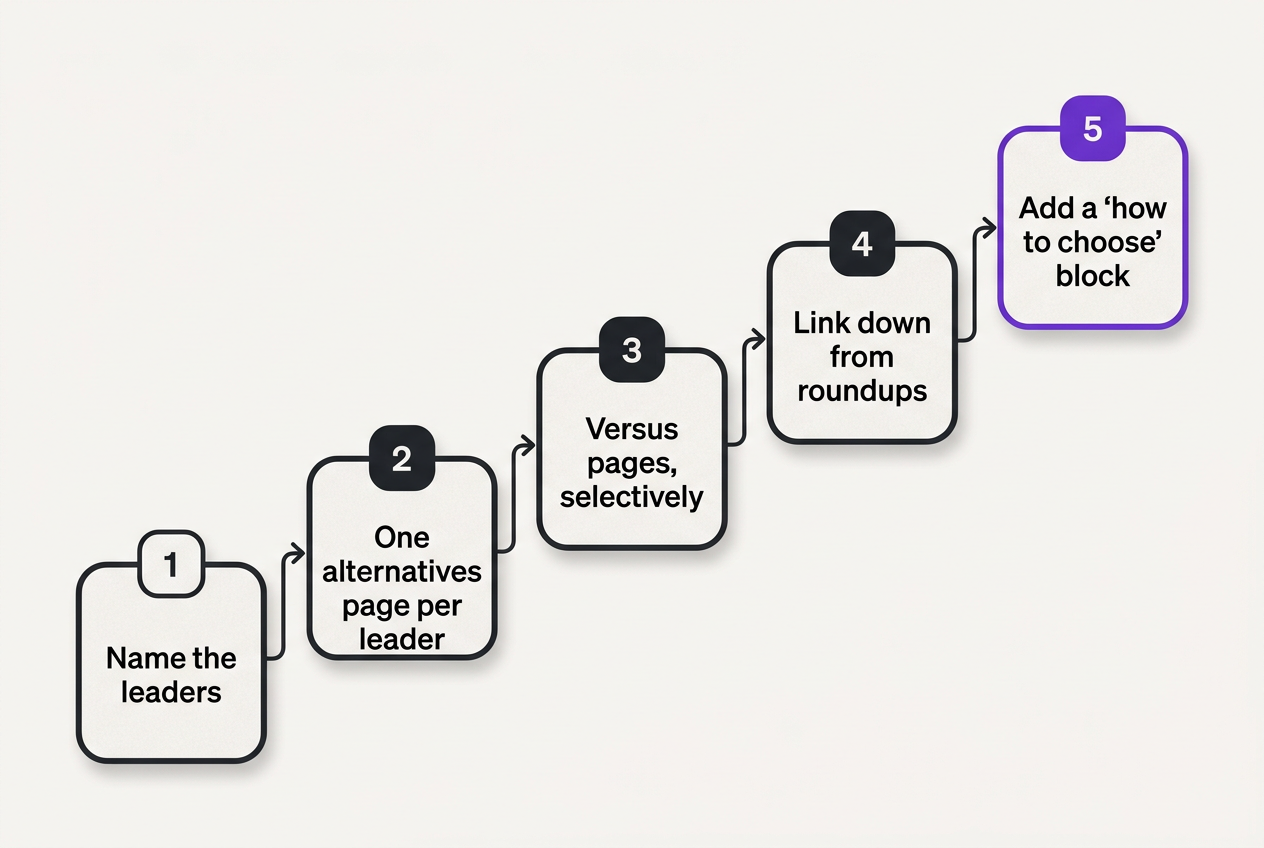
Build order for a small team
- Step 1Name the leaders
List the two or three category leaders your buyers already compare you to. Not ten. Two or three.
- Step 2One alternatives page per leader
Publish a 'X alternatives' page for each. This is the highest-volume, lowest-effort start.
- Step 3Versus pages, selectively
Publish head-to-head 'X vs Y' pages only for pairs with real, verifiable search demand.
- Step 4Link down from roundups
Connect your existing 'best X' roundups to both the alternatives and versus pages.
- Step 5Add a 'how to choose' block
Make the page useful even to someone who picks the competitor. That's what earns trust and links.
One intent, one URL
| Rung | Page type | Search a buyer types | Links to |
|---|---|---|---|
| 1 | Alternatives page | '[leader] alternatives' | Versus pages, your product page |
| 2 | Versus page | '[leader] vs [rival]' | Alternatives page, how-to guide |
| 3 | Roundup | 'best [category] tools' | Alternatives and versus pages |
| 4 | How-to guide | 'how to [task] in [tool]' | Roundup, product page |
Prioritise by demand you can verify in a keyword tool, not by which competitor annoys your sales team most. (Sales will have strong feelings. Search volume doesn't care.) If you want a method for finding which competitor terms you can realistically win, our guide on ranking against competitor keywords walks through it.
Programmatic pair pages when you have one engineer, not fifty
Here's an unpopular opinion: programmatic SEO is the most overrated part of the Zapier story for small teams. It's also the most copied. The scale is real, but it took years and a huge integration catalogue to get there.
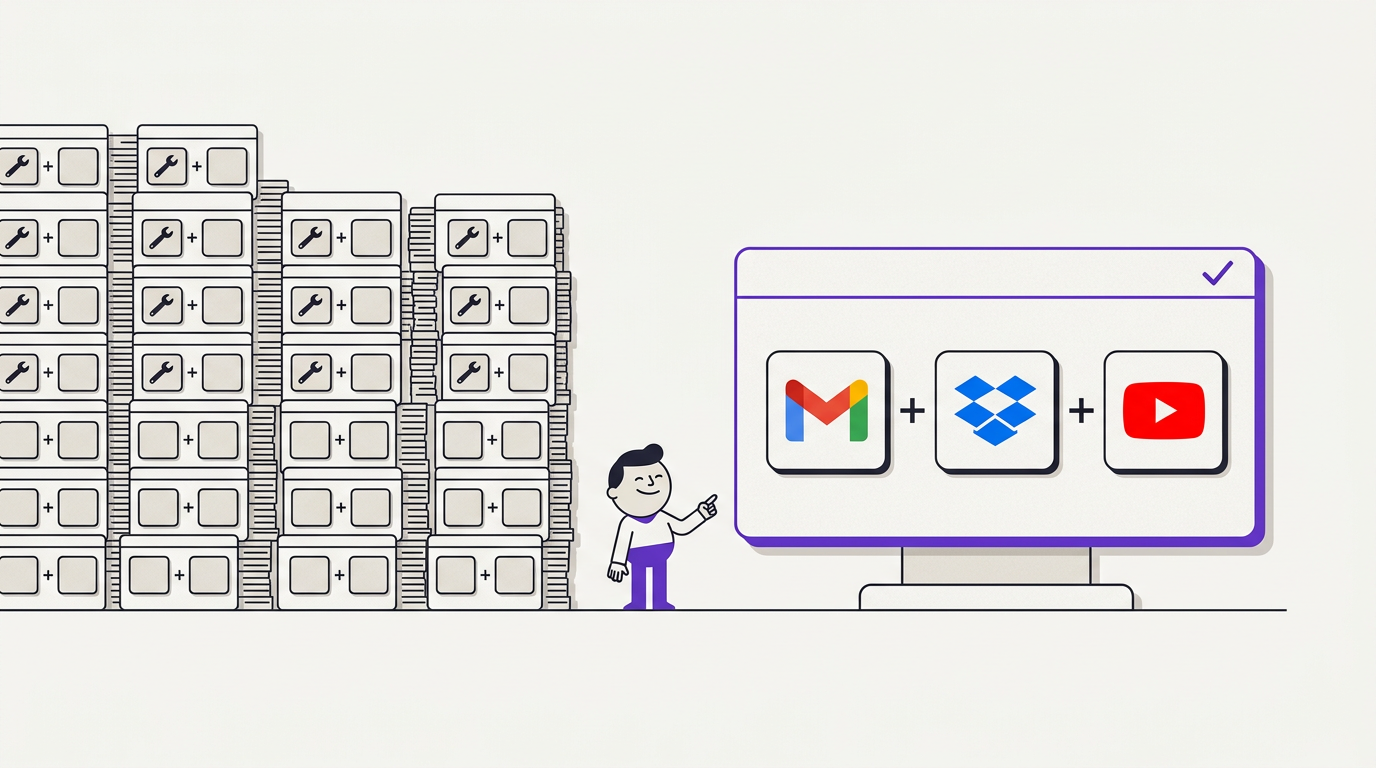
Those sources measure different things, so don't add them up. The point is the shape: a few combinations where demand was 'impossible to ignore' did outsized work. Zapier also dodged thin-content risk by having writers produce 500-word tested walkthroughs with screenshots for each app, fleshing out pages that otherwise used a couple of dozen preset sentences.
My threshold rule: build a pair page only when both tools have their own search demand and your product genuinely sits between them. Below that, the page earns nothing and costs you crawl budget.
Pros
Captures 'how do I connect X to Y' searches from buyers close to needing you
A handful of three-way pages can outweigh hundreds of two-way ones
Scales once the template and review process exist
Cons
Preset-sentence templates risk thin, duplicate content
Needs tested, human-written walkthroughs, which cost real time
Pages with no demand on either side just burn crawl budget
Listicles and tested roundups, and the rule that makes them work
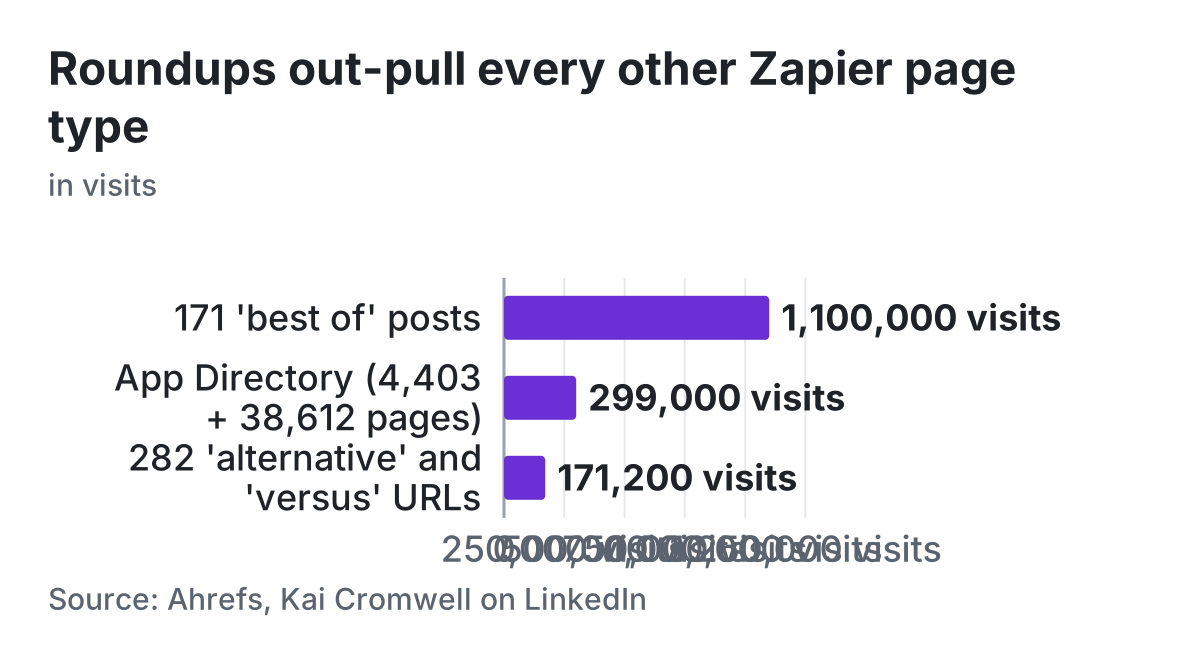
Roundups are Zapier's biggest engine. There are 171 'best of' posts live on its blog, and together they bring in an estimated 1.1 million organic visits each month. Foundation Inc found that just 100 listicles rank on 287,000 keywords and drive over 455,000 sessions a month, with 'best of' listicles driving over half of the blog's traffic. And Ahrefs data from 2022 showed 397 'best' pattern keywords where Zapier ranked in positions one to three in the U.S. alone.
Roundups out-pull every other Zapier page type
See the data
| Category | Organic visits a month |
|---|---|
| 171 'best of' posts | 1,100,000 visits |
| App Directory (4,403 + 38,612 pages) | 299,000 visits |
| 282 'alternative' and 'versus' URLs | 171,200 visits |
Depth is the price of entry. The original CRM roundup covered 25 tools and still brings in over 13,000 monthly organic visitors. The project management roundup ran past 8,000 words and covered 50 tools. Zapier tested every CRM it supported plus dozens more, and wrote reviews for each before writing the roundup.
Test the tools. Sign up, use them, take screenshots. Readers can smell a list built from landing pages.
Go deep before wide. Twenty-five tested tools beats a hundred skimmed ones.
Keep your own product out. Zapier's writers deliberately left Zapier out of roundups and comparison tables.
Link the roundup to the rest. It should feed your alternatives and versus pages.
Keeping the program alive: refresh, prune, cannibalisation and AI answers
Launching 20 pages is the easy part. Keeping them useful for two years is where most teams quietly give up. No public source covers upkeep for this program, so what follows is my working method, not a Zapier quote.
The maintenance rules
How often should I refresh?
Any 'best X' list older than two quarters needs re-testing. Remove dead tools, fix prices and change the updated date. A stale list ranks for a while, then loses to a fresher one.
When do I prune?
A page with zero impressions after six months gets merged into its parent roundup rather than left to rot. Zapier's directory pages needed human-written walkthroughs to avoid being thin, and yours will too.
How do I stop cannibalisation?
One URL per intent. The alternatives page owns 'X alternatives', the versus page owns 'X vs Y', the roundup owns 'best X'. If two of yours rank for the same query, merge them.
How should the pages link?
Pair pages link up to the app page, alternatives pages link sideways to versus pages, and roundups link down to both. Case studies describe the pages but rarely spell out this structure.
What about AI Overviews and LLM citations?
Comparison tables with named tools, prices and dates are easy to quote. Keep those facts in HTML tables, not screenshots, so both Google and AI tools can read them.
Before page one goes live
Verified search demand for each page in a keyword tool
One target query per URL, written down in a sheet
Test date and price date shown on every comparison
Your own product kept out of ranked tables
Legal sign-off on competitor names in titles and slugs
How to measure comparison pages beyond organic sessions
Here's the uncomfortable part. No public source ties Zapier's comparison pages to signups or revenue. Every cited metric is sessions, keywords or PPC-equivalent value. That's your opening: build the attribution nobody else publishes.
Organic sessions
Visits to your /alternatives/ and /vs/ URLs, tracked in Search Console and analytics.
Assisted pipeline
Deals in your CRM where a comparison URL appeared anywhere in the buyer's journey.
Branded search volume
The output of the program. Zapier's 90%+ non-brand share is the result, not the input.
Tag these URL paths in your CRM from day one. Last-click will undersell them, because a buyer who read your alternatives page in March may only search your brand name in May. If you'd rather not wire this up alone, that's the kind of work our SEO team does.
Sources
- How Zapier grows with programmatic SEO · The Zero to One
- 5 SEO Lessons from Zapier's Best Blog Post · Overthink Group
- How Zapier Built a Content Marketing Machine · Ahrefs
- Zapier has 282 pages that drive 171,200 organic visits a month · Kai Cromwell on LinkedIn
- 6 Things I Love About Zapier's SEO Strategy: A Case Study · Ahrefs
- Zapier's Use of Listicles To Drive 5M Sessions · Foundation Inc
- Zapier: Programmatic SEO Case Study · Practical Programmatic
- Case Study: Zapier's App Directory and the Million-Page SEO Playbook · seo.to
Want a comparison program built for your product, not Zapier's?
We'll look at which competitors your buyers actually compare you to, check the search demand, and map the first ten pages in build order. Bring your category and we'll bring the keyword data.